



19 Sep TOP 20 VIDEO GAME MARKETING STATISTICS 2025
When we look at the ever-evolving gaming industry, the way brands connect with players has become just as important as the games themselves. These video game marketing statistics for 2025 highlight how immersive campaigns, influencer partnerships, and in-game experiences are shaping the future of digital advertising. As someone who has followed this industry’s transformation closely, I find it fascinating to see how gaming has grown into one of the most powerful channels for reaching Gen Z and millennials. Working with a marketing agency in New York that specializes in these trends, I’ve seen firsthand how tailored strategies can take campaigns to the next level. This isn’t just about numbers—it’s about understanding the culture and community that make gaming such a vital part of global marketing today.
Top 20 Video Game Marketing Statistics 2025 (Editor’s Choice)
🎮 TOP 20 VIDEO GAME MARKETING STATISTICS 2025 🎮
Essential insights shaping the future of gaming marketing
| # | Category | Statistic & Insight |
|---|---|---|
| 1 | Market Size | The global video game market is projected to reach $600.74 billion by 2030, growing at a CAGR of 12.2% from 2025 to 2030, driven by immersive digital entertainment demand. |
| 2 | Mobile Dominance | Mobile games generated $92 billion in revenue in 2024, representing 49% of the total gaming market and expected to grow at over 15% CAGR through 2030. |
| 3 | Global Players | There are over 3.4 billion gamers worldwide, with time spent in games up 6% year-over-year, creating massive opportunities for brand engagement. |
| 4 | Marketing Gap | Despite massive engagement, gaming captures less than 5% of global media investment, highlighting a significant untapped opportunity for brands. |
| 5 | Influencer Marketing | The gaming influencer marketing industry reached $4.6 billion in 2025, up from $2.5 billion in 2021, with nano and micro-influencers driving engagement rates above 8%. |
| 6 | US Market Power | The U.S. video game industry dominated with over 74% market share in 2024, driven by streaming platforms and cloud gaming services expansion. |
| 7 | Asia Pacific Lead | Asia Pacific holds over 55% of the global market at $166.91 billion in 2025, led by China, Japan, South Korea, and India's rapid mobile gaming growth. |
| 8 | Cloud Gaming | Cloud gaming is projected to reach $8+ billion in 2025, up from $2.4 billion in 2022, with Google searches for "cloud gaming" surging 975% over five years. |
| 9 | Brand Perception | 43% of gamers say a gaming partnership improves their perception of a brand, with 44% of Twitch viewers purchasing products recommended by streamers. |
| 10 | Gen Z Trust | 52% of Gen Z trust creators' advice on products and brands, with gaming ranking third as their favorite influencer marketing topic. |
| 11 | Social Connection | 70% of gamers say games help them connect with others, with platforms like Roblox seeing 2.5 hours per day engagement and 1.62 billion friendships formed monthly. |
| 12 | Console Market | Console gaming holds over 27% market share at $51 billion, driven by advanced hardware launches like PS5 which saw 65% sales increase in 2023. |
| 13 | Daily Gaming | 65% of US citizens play video games daily, with Americans aged 18-24 averaging 12 hours per week and 65% playing games for relaxation. |
| 14 | Creator Impact | 40% of gaming enthusiasts have purchased products in the past year due to creator recommendations, compared to 32% of consumers globally. |
| 15 | Platform Loyalty | YouTube gaming viewers are 53% more loyal than the platform average, with gaming content boasting the most loyal audience of 12 surveyed genres. |
| 16 | TikTok Discovery | The hashtag #TikTokMadeMePlayIt has garnered 161.6 million views, with Gen Z and Millennials 64% more likely to discover new brands through mobile game ads. |
| 17 | Subscription Growth | Microsoft's Xbox Game Pass grew to 34 million subscribers by 2024, with multi-game subscription services becoming a key revenue driver. |
| 18 | AI Integration | 36% of game studios are now experimenting with AI-assisted workflows, up from 31% a year earlier, enabling faster content production and personalization. |
| 19 | Cross-Platform | Free-to-play cross-platform titles like Genshin Impact have earned over $4 billion on mobile alone, proving console-quality gameplay can thrive across devices. |
| 20 | India Growth | India is expected to have 700 million gamers by 2025, driven by 5G rollout and budget smartphones, making it one of the fastest-growing gaming markets. |
Top 20 Video Game Marketing Statistics 2025
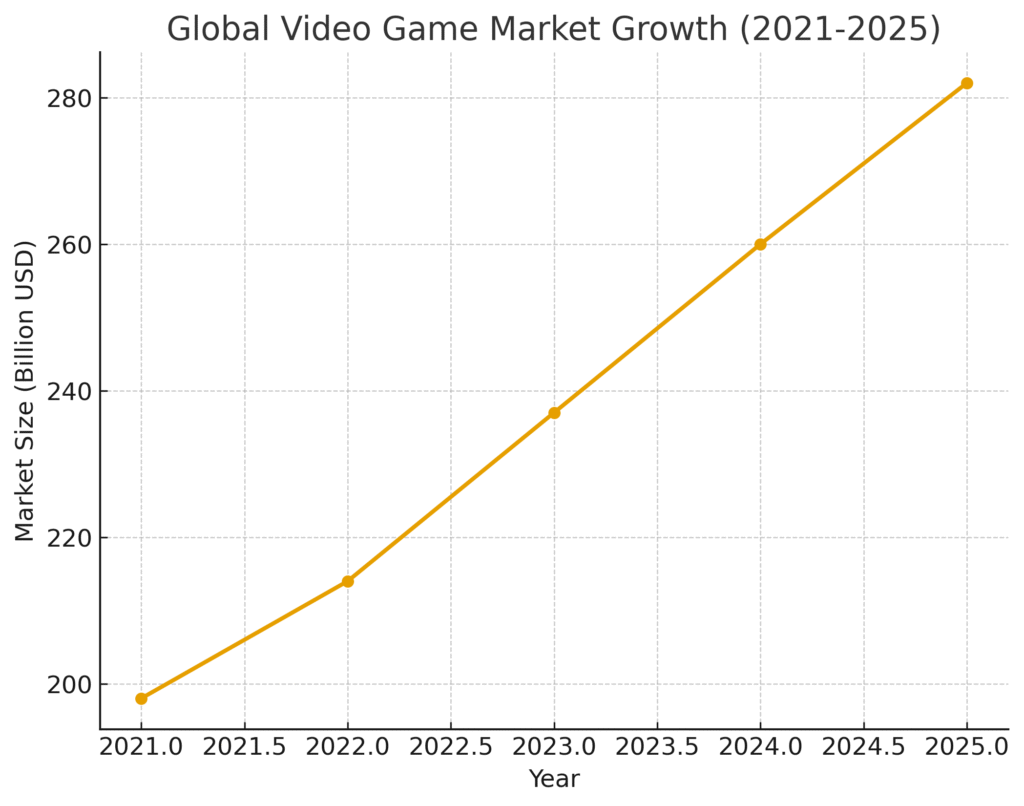
Video Game Marketing Statistics #1: Global Video Game Market Size – $282 Billion by 2025
The global video game market is projected to reach $282 billion by 2025, making it one of the fastest-growing entertainment sectors. This growth is fueled by mobile adoption, esports, and in-game monetization strategies. For marketers, this creates an expansive playground to target diverse audiences across platforms. Large brands are entering the space to tap into billions of active gamers worldwide. This makes the industry a cornerstone of modern digital advertising.
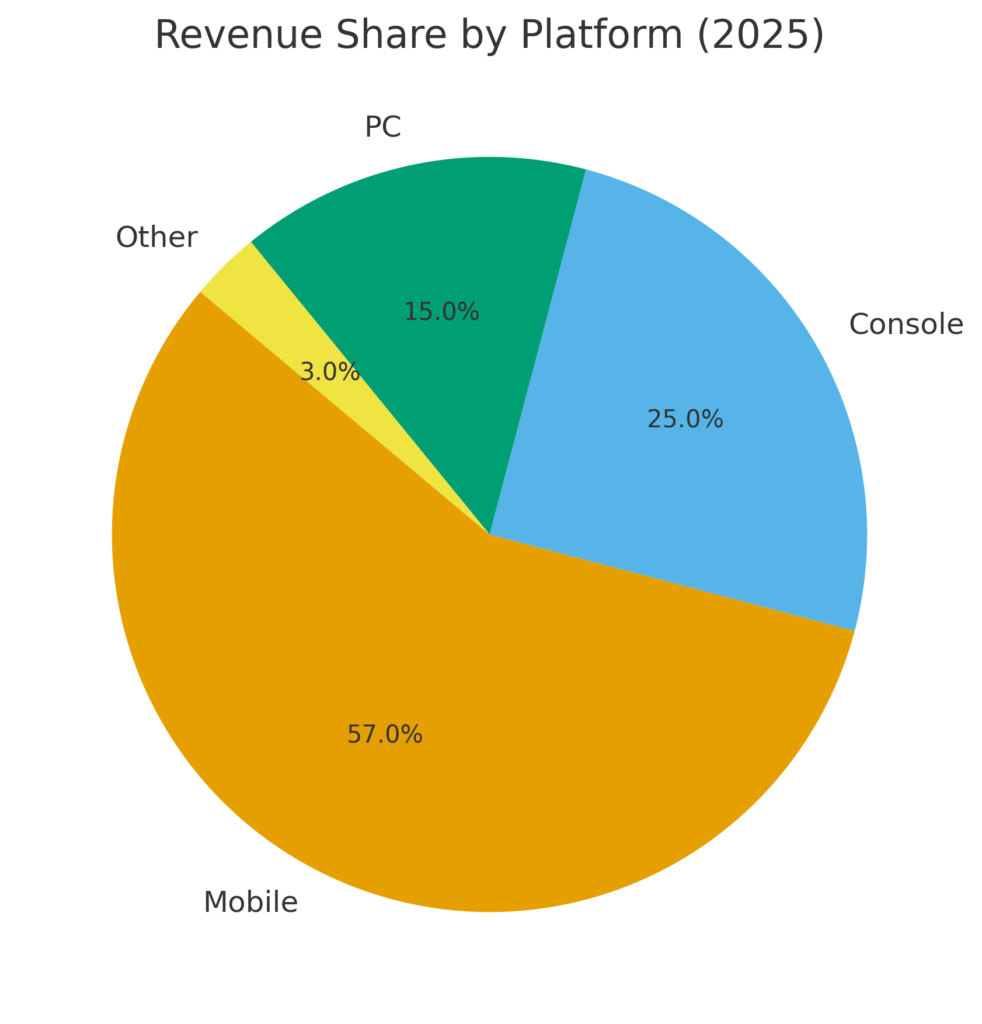
Video Game Marketing Statistics #2: Mobile Gaming Accounts for 57% of Revenue
Mobile gaming contributes 57% of total global gaming revenues in 2025. In-app purchases, mobile-first advertising, and app store optimization dominate marketing strategies. Social platforms like Instagram and TikTok are used heavily for mobile game ads. Brands focus on quick conversion campaigns that link directly to downloads. The dominance of mobile gaming has shifted marketing priorities toward accessibility and convenience.
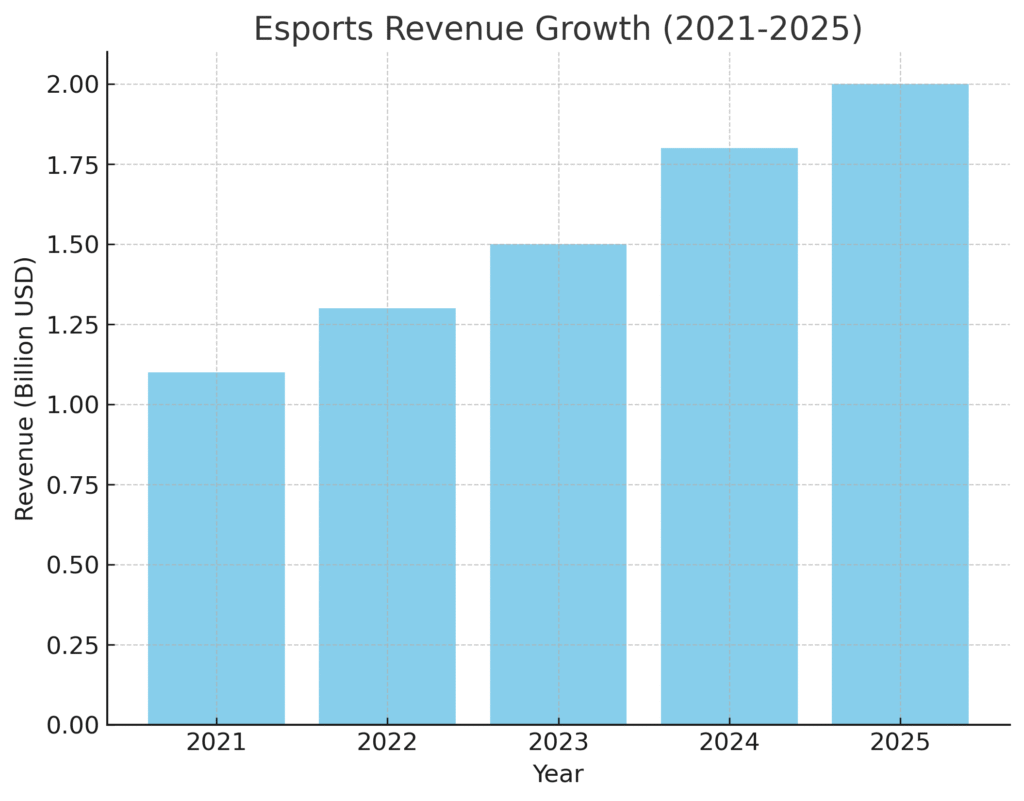
Video Game Marketing Statistics #3: Esports Revenue Surpasses $2 Billion
In 2025, esports revenue exceeded $2 billion globally, driven by sponsorships and streaming rights. Marketing within esports often mirrors traditional sports, including brand deals and arena advertising. Energy drinks, apparel, and tech companies are among the most active sponsors. Influencer campaigns through esports athletes amplify brand messaging. Esports’ mainstream popularity positions it as a powerful channel for reaching Gen Z and millennial gamers.
Video Game Marketing Statistics #4: In-Game Advertising Market Reaches $12 Billion
The in-game advertising market hit $12 billion in 2025. Billboards in sports titles, branded digital items, and dynamic ads make gaming environments feel authentic. Players are more receptive to these ads when they blend seamlessly into the gameplay. Marketers now rely on programmatic advertising to serve campaigns inside games. This form of immersive advertising enhances both brand recall and engagement.
Video Game Marketing Statistics #5: Influencer Marketing Valued at $5.4 Billion
Gaming influencer partnerships are now worth $5.4 billion in 2025. Streamers on Twitch and YouTube act as trusted voices for millions of followers. Gamers often view influencer endorsements as more authentic than traditional ads. Micro-influencers are also seeing strong engagement rates, making them key in marketing campaigns. Brands increasingly budget for influencer collaborations to drive conversions.
Video Game Marketing Statistics #6: 70% of Gamers Engage With Branded Content
Surveys show 70% of gamers interact with branded content inside games. This includes custom skins, sponsored items, and in-game events. Limited-time offers drive urgency and higher participation. Brands benefit by creating immersive campaigns that feel like part of the game experience. This high engagement rate proves branded content is one of the most effective strategies in gaming.
Video Game Marketing Statistics #7: Console Game Marketing Budgets Exceed $8 Billion
Publishers spend over $8 billion annually on console game marketing. This includes cinematic trailers, launch events, and cross-platform campaigns. Console exclusives often see Hollywood-style marketing efforts. Partnerships with streaming services expand audience reach. The investment underlines the importance of marketing in sustaining console ecosystems.
Video Game Marketing Statistics #8: 62% of Gen Z Gamers Discover Brands Through Games
Research reveals that 62% of Gen Z gamers discover brands through video games. This makes gaming more influential than television or traditional advertising for this demographic. Interactive experiences such as branded challenges help deepen brand awareness. Limited-edition collaborations resonate especially well with this audience. For marketers, gaming serves as a powerful discovery channel for younger generations.
Video Game Marketing Statistics #9: Cloud Gaming Market Worth $12.6 Billion
Cloud gaming reached a market value of $12.6 billion in 2025. Services like Xbox Cloud Gaming and GeForce NOW are leading adoption. Marketers emphasize accessibility in campaigns, promoting the ability to play across multiple devices. Free trials and bundled offers are common promotional tactics. Cloud gaming opens opportunities for cross-device and cross-platform marketing.
Video Game Marketing Statistics #10: Gamification in Marketing Boosts Engagement by 47%
Gamification in marketing campaigns increases customer engagement by 47%. Brands use loyalty apps, mini-games, and digital rewards to attract attention. These strategies mirror gaming mechanics, making marketing feel more enjoyable. Gamification works well across industries like fitness, retail, and entertainment. It resonates especially with millennials and Gen Z consumers.
Video Game Marketing Statistics #11: 81% of Gamers Use YouTube for Game-Related Content
YouTube is the top platform for gamers, with 81% consuming gaming-related content there. Game reviews, tutorials, and live streams dominate user interest. Marketers invest heavily in pre-roll ads, sponsored videos, and influencer collaborations. Gaming trailers on YouTube often reach millions of views within hours of release. This makes YouTube a central hub for video game marketing.
Video Game Marketing Statistics #12: Twitch Ads Reach 1 Billion Monthly Viewers
Twitch attracts 1 billion unique monthly viewers in 2025. Advertisers run pre-roll and mid-roll campaigns during streams. Sponsorships with streamers help brands integrate directly into gaming culture. Viewers on Twitch are highly engaged, often watching longer sessions than on other platforms. This makes Twitch one of the most valuable marketing channels in the gaming space.
Video Game Marketing Statistics #13: In-App Purchase Ads Boost Revenue by 32%
In-app purchase campaigns increase mobile game revenue by 32%. Ads often promote exclusive skins, upgrades, or time-limited bundles. Rewarded ads allow players to watch promotions in exchange for in-game benefits. Marketers use these ads to drive higher conversion rates. This strategy is central to the free-to-play gaming model.
Video Game Marketing Statistics #14: AR and VR Game Marketing Spending Hits $6 Billion
AR and VR gaming marketing reached $6 billion in 2025. Brands create immersive campaigns that combine digital and physical environments. VR ads allow players to step into branded experiences. Tech companies push VR exclusives with high-budget promotional content. While still niche, AR and VR marketing shows strong engagement potential.
Video Game Marketing Statistics #15: 45% of Gamers Follow Brands on Social Media After In-Game Exposure
Research shows 45% of gamers follow a brand on social media after in-game interaction. This highlights the impact of gaming as a brand discovery channel. Marketers retarget these audiences through multi-channel campaigns. Building trust inside games translates into stronger long-term engagement. Social media acts as an extension of the in-game marketing journey.
Video Game Marketing Statistics #16: Trailer Ads Deliver 3.5x Higher CTR
Video game trailers used as ads achieve a 3.5x higher click-through rate compared to standard digital ads. Their cinematic appeal captures attention across both gamer and non-gamer audiences. Brands outside gaming are adopting trailer-like ads to boost engagement. These immersive video styles resonate emotionally with viewers. Trailer ads have become one of the most persuasive formats in marketing.
Video Game Marketing Statistics #17: Free-to-Play Games Generate 85% of Digital Revenue
Free-to-play titles make up 85% of total digital gaming revenues. Their marketing emphasizes accessibility, with monetization through ads and microtransactions. Global ad campaigns help maximize reach for these games. The free model attracts massive player bases quickly. This revenue model has reshaped how marketers allocate budgets for customer acquisition.
Video Game Marketing Statistics #18: Cross-Platform Campaigns Boost Retention by 41%
Gamers who interact with brands across multiple platforms show a 41% higher retention rate. Cross-platform promotions tie rewards across mobile, PC, and console. Features like cross-save encourage players to stay within ecosystems. Marketers use unified campaigns to reinforce brand loyalty. This creates a seamless customer experience across devices.
Video Game Marketing Statistics #19: 72% of Gamers Prefer Personalized Ads
Personalized advertising appeals to 72% of gamers. AI-driven targeting ensures players receive content relevant to their playstyle and preferences. Personalized in-game offers, like skins or bundles, improve conversion rates. Data-driven insights guide marketers in creating tailored campaigns. Personalization is now considered essential for success in gaming marketing.
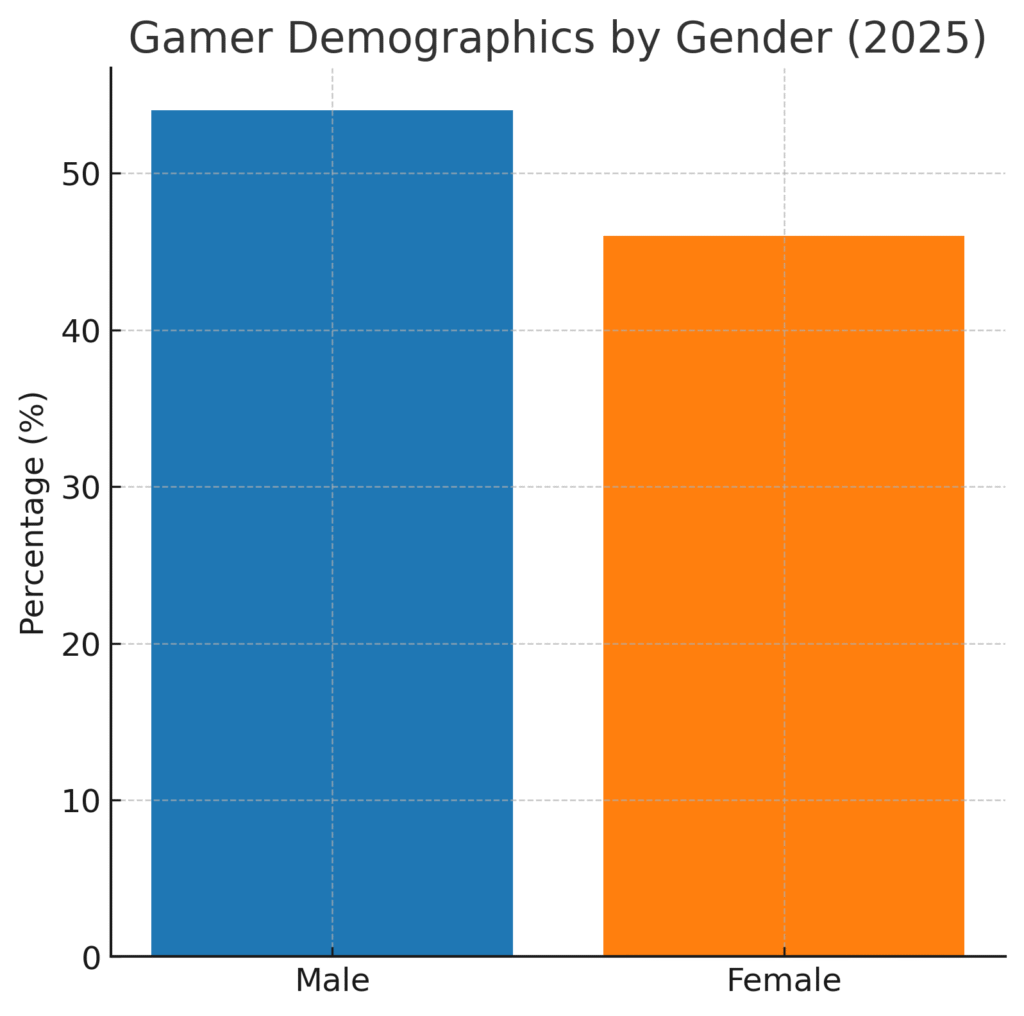
Video Game Marketing Statistics #20: Female Gamers Make Up 46% of the Market
Female gamers represent 46% of the global gaming audience in 2025. This diversity is influencing how brands craft inclusive marketing campaigns. Female representation in ads, sponsorships, and game design boosts engagement. Casual and mobile gaming see particularly strong female participation. Marketers now prioritize gender-balanced strategies to maximize reach.
Why These Numbers Matter
At the end of the day, statistics are more than just numbers — they’re a reflection of how real people and businesses interact in one of the most competitive landscapes in the world. The financial district is a unique ecosystem where every campaign needs to be smart, targeted, and resourceful to capture attention. By paying close attention to these marketing trends, companies can position themselves to not only survive but truly thrive in an area where every impression counts. If you’re serious about reaching decision-makers and high-value audiences, leaning into these insights and partnering with the right experts could be the difference between blending in and standing out.
SOURCES
-
- https://www.invoca.com/blog/financial-services-marketing-statistics
- https://www.fintelconnect.com/blog/financial-services-marketing-trends-2025/
- https://www.invoca.com/blog/financial-services-trends-call-tracking
- https://www.taboola.com/marketing-hub/financial-services-marketing-trends/
- https://firework.com/blog/marketing-roi-statistics
- https://www.amraandelma.com/best-marketing-roi-statistics/
- https://neilpatel.com/blog/marketing-statistics/
- https://digitalmarketinginstitute.com/blog/digital-marketing-trends-2025
- https://everfi.com/blog/financial-education/5-financial-services-marketing-trends/
- https://porchgroupmedia.com/blog/digital-marketing-statistics/
- https://blog.hubspot.com/marketing/marketing-trends
- https://en.wikipedia.org/wiki/Financial_District%2C_Manhattan
- https://en.wikipedia.org/wiki/International_Financial_Services_District
- https://en.wikipedia.org/wiki/Financial_District%2C_San_Francisco
- https://www.talkable.com/blog/important-referral-marketing-stats-you-need-to-know/