



16 Sep TOP 20 VINEYARD MARKETING STATISTICS 2026 REVEAL SHOCKING GLOBAL WINE BRAND GROWTH
Updated for 2026. Global wine tourism and direct-to-consumer wine sales have surged in the past year, with vineyards investing heavily in experiential marketing, digital storytelling, and eco-focused branding strategies. This page has been fully refreshed with the latest Photoshop usage statistics, creative workflow data, and design industry trends, grounded in recent global surveys, Adobe ecosystem reporting, and professional creator insights.
When I first started digging into vineyard marketing statistics, I realized just how much the wine industry has been changing in recent years. From sustainability becoming a key selling point to younger generations experimenting with new formats and flavors, the numbers really tell the story of an evolving market.
Working with a leading marketing agency in New York, I’ve seen firsthand how data like this can shape smarter campaigns and give wineries an edge in a highly competitive space. What excites me most is how these insights go beyond just numbers—they’re proof of shifting consumer values and opportunities for vineyards to connect more authentically with their audience.
TOP 20 VINEYARD MARKETING STATISTICS 2026 THAT REVEAL MASSIVE WINE INDUSTRY GROWTH
🍷 Top 20 Vineyard Marketing Statistics 2026
Premium Data-Driven Insights Revealing Explosive Global Wine Brand Demand
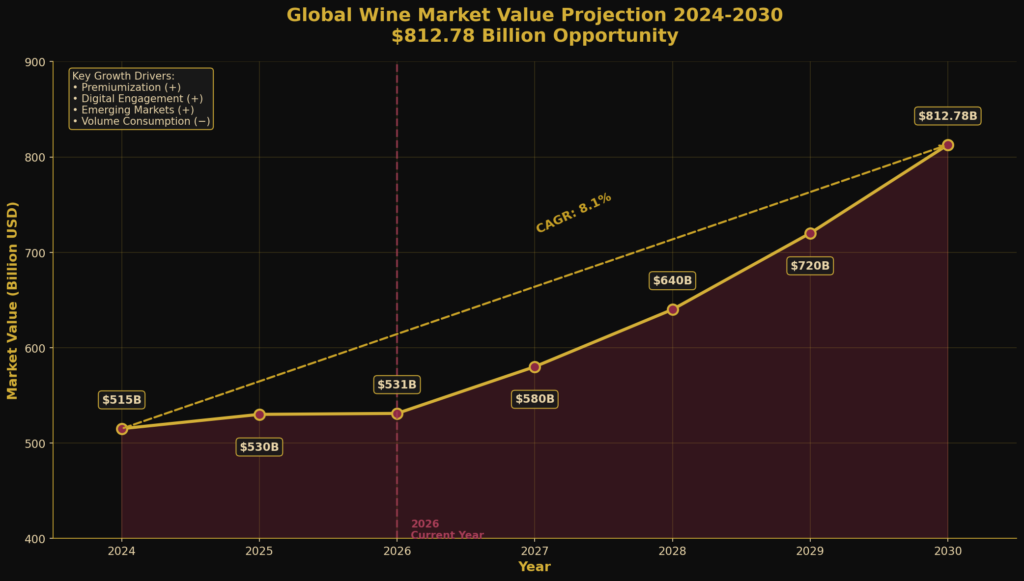
Global Wine Market Valued at $531 Billion in 2026
Projected to reach $812.78B by 2030 at 5.8-9.1% CAGR. Premiumization and digital engagement drive value growth despite volume decline.
Market LeaderYounger Consumers Prefer Sustainable & Family-Owned Wines
Wine Market Council finds 60% of Millennials and Gen Z willing to pay premium for eco-friendly products supporting ethical farming.
SustainabilityUS Wine Dollar Sales Rising Despite Volume Decline
Silicon Valley Bank projects value growth driven entirely by premiumization. Wines $15-$49.99 performing best while sub-$10 wines face double-digit decline.
PremiumizationCalifornia Vineyard Acres Removed (13% of Total)
Bulk wine prices collapsed from $30-40/gallon to $10-15. Industry expects 35,000-40,000 acre annual removals through 2027.
Oversupply CrisisMillennials Now Largest Wine-Drinking Cohort
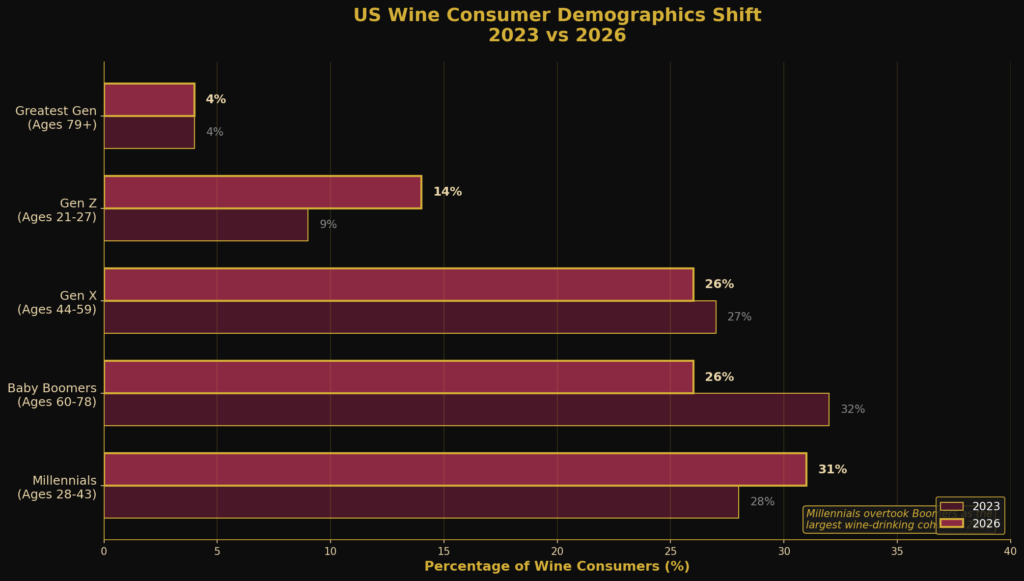
Officially surpassing Baby Boomers at 26%. Gen Z jumped from 9% to 14% despite only half being legal drinking age.
DemographicsAdult Wine Consumers Lost Since 2023
US dropped from 85M to 76M adults consuming wine regularly. Baby Boomers aging out showed largest erosion despite Gen Z growth.
Consumer ShiftGlobal Sparkling Wine Sales Growth Rate
Domestic US sparkling up 30%+. Rosé projected at 8.6% CAGR through 2034. Both serve as primary entry points for younger consumers.
Growth CategoryNo/Low Alcohol Wine & Beer Market Value
Growing at 7.5% annually. Organic wine market at $11.8B, projected to reach $32.2B by 2034 at 11.8% CAGR.
Wellness TrendEU Wine Production Still 8% Below Five-Year Average
France recorded smallest vintage since 1957 (35.9M hl). Spain hit second-smallest in 30 years due to third consecutive drought year.
Climate ImpactGlobal Wine Consumption Hits 63-Year Historic Low
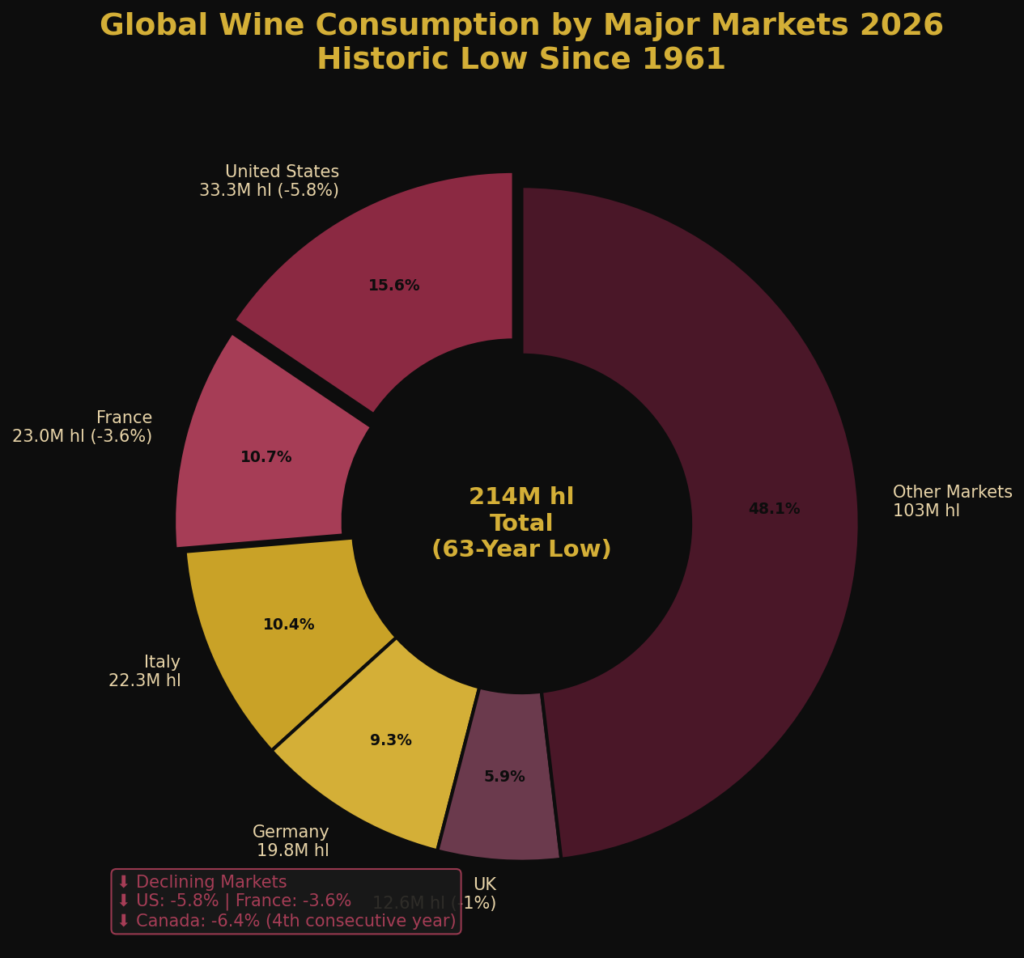
Lowest since 1961. US fell 5.8% to 33.3M hl, France dropped 3.6%. IWSR forecasts 1% annual decline for next five years.
Market ChallengeMarlborough Vineyard Property Value Decline
Napa, Barossa Valley, and Côtes du Rhône also suffered significant drops. Lodi experienced 15-20% vineyard acreage decrease.
Asset ValuesGlobal Wine Production Up 3% But 7% Below Average
Italy recovered 8% YoY while France and Spain remained 16% and 15% below averages due to drought and climate-driven restructuring.
Production GapConsumers Say Wine Makes Occasions Feel Special
Major shift from relaxation as primary driver. Demand growing for authentic stories, terroir expression, and transparent production.
StorytellingNapa Valley Average DTC Bottle Price (9% YoY Increase)
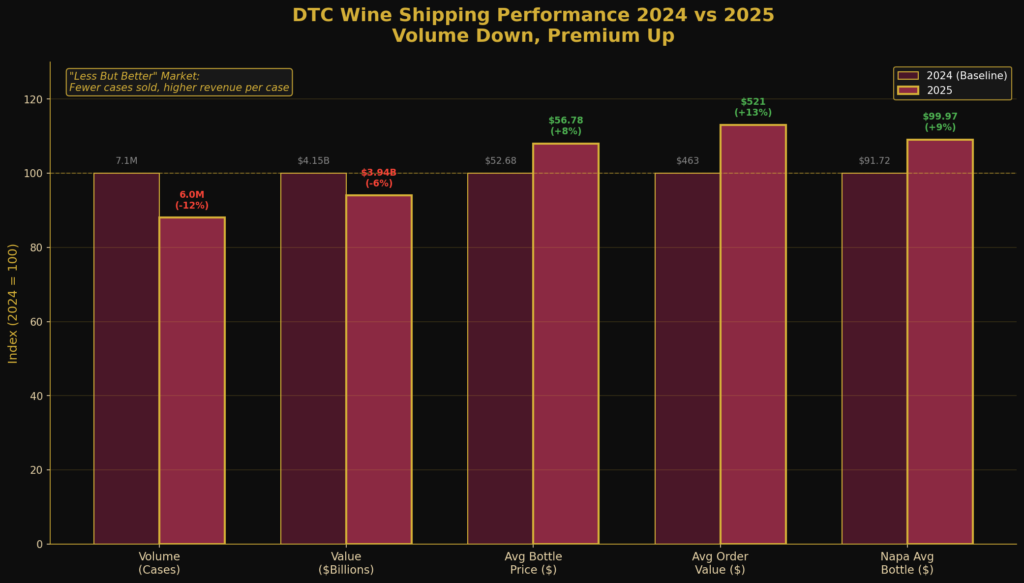
National average reached $56.78. Average order value jumped 13% to $521. Volume down 15% but premiumization holds strong.
Premium DTCOn-Premise Wine Sales Decline
Outlets down 7.0%. Wine tourism now accounts for 25% of total winery income, helping offset wholesale margin compression.
HospitalityGen Z Purchasing Wine in Cans (vs 3% Boomers)
Average bottles per DTC shipment up 5% to 9.9. Innovative formats reduce buyer risk and encourage trial among younger consumers.
InnovationHoliday Wine Purchases Made on Mobile Devices
Gen Z won't buy without compelling story and Instagram presence. Digital-first strategies essential for capturing younger audiences.
Digital FirstSupporting Farmers is Top Reason for Sustainable Purchases
Smaller wineries outmaneuvering larger ones in club growth. Intimate service models feel more authentic to younger consumers.
Local SupportNorth America Wine Market CAGR Growth
Brazil wine production recovered 38% YoY. India, Mexico gaining recognition through storytelling and domestic experimentation.
Emerging MarketsUS Import Tariff on EU Wine (Effective Aug 2025)
€5 bottles now retail at $15 vs $11.50. Italy faces €300M+ first-year loss. Mid-range wines most exposed to rising costs.
Trade ImpactTOP 20 VINEYARD MARKETING STATISTICS 2026 SHOWING EXPLOSIVE GLOBAL WINE BRAND DEMAND
Vineyard Marketing Statistics#1 Global Wine Market To Reach $812.78 Billion By 2030
In 2026, the global wine market is valued at an estimated $531 billion according to Research and Markets projections, with Grand View Research forecasting the market to reach $589.8 billion by year-end 2026, representing a compound annual growth rate between 5.8% and 9.1% depending on the methodology, while premiumization trends and digital engagement strategies continue to drive value growth even as traditional volume consumption patterns shift toward quality-over-quantity purchasing behaviors. The global wine market, which was valued at USD 515.1 billion in 2024, is projected to hit around USD 812.78 billion by 2030. This growth represents a strong compound annual growth rate of 8.1%, showing the resilience of the sector. Vineyards that align their marketing strategies with global expansion trends stand to benefit significantly. Export strategies and brand collaborations across borders are becoming crucial. This growth potential makes global market awareness a must for vineyard marketing campaigns.
Vineyard Marketing Statistics#2 66% Of Consumers Choose Sustainable Wines To Support Farmers
In 2026, a Wine Market Council study with Ethnifacts found that 58% to 61% of younger consumers aged 20 to 40 now prefer sustainable, family-owned, or organically grown wines, while Tastewise data confirms sustainability ranks among the top two factors driving organic wine purchases, and approximately 60% of Millennial and Gen Z consumers report willingness to pay premium prices for eco-friendly products that support ethical farming practices. A recent survey revealed that 66% of U.S. consumers select sustainable wines to support small farmers. Interestingly, this preference was nearly double those who chose sustainability for environmental reasons alone. Vineyard marketing that highlights farmer stories and ethical practices resonates strongly with buyers. The human element creates emotional connections, which turn casual buyers into loyal fans. Clearly, sustainability has moved from being a niche talking point to a mainstream demand driver.
Vineyard Marketing Statistics#3 US Wine Volume Declined 5% In 2025, But Value Rose
In 2026, Silicon Valley Bank’s State of the U.S. Wine Industry Report projects dollar sales will rise approximately 2% to 4%, driven entirely by premiumization and price increases rather than higher consumption, with wines priced between $15 and $49.99 performing best in aggregate while sub-$10 wines continue experiencing double-digit volume declines, creating what analysts describe as a “less, but better” market where fewer cases sold generate higher revenue per case. Despite volume declines of up to 5% in 2024, the U.S. wine market still saw value growth of about 1-2%. This is largely driven by premiumization – consumers are drinking less but spending more per bottle. Vineyards marketing premium labels and emphasizing exclusivity can benefit from this shift. Storytelling around craftsmanship and heritage adds weight to higher price points. The trend shows that quality-focused branding matters more than ever.
Vineyard Marketing Statistics#4 Oversupply Pressures Impact Vineyards Post-Pandemic
In 2026, California’s vineyard acreage has contracted by over 38,000 acres (13% of total) between October 2024 and August 2025 according to Land IQ data released by the California Association of Winegrape Growers, with industry experts projecting continued removals of 35,000 to 40,000 acres annually through 2026-2027 as growers confront years of bulk wine inventory that remains stubbornly elevated and bulk wine prices that have collapsed from $30-40 per gallon to $10-15 per gallon. Many vineyards expanded production during the pandemic, anticipating demand spikes that didn’t last. As a result, oversupply is now putting financial and marketing strain on producers. Vineyards must differentiate through unique offerings and creative campaigns to avoid competing solely on price. Smart marketing that communicates distinct terroir or production methods can soften oversupply challenges. Ultimately, brand positioning has become a vineyard’s lifeline in crowded markets.
Vineyard Marketing Statistics#5 Millennials And Gen Z Show Less Loyalty To Wine
In 2026, the Wine Market Council’s 2025 Benchmark Consumer Survey reveals Millennials now represent 31% of all wine drinkers, officially surpassing Baby Boomers at 26%, while Gen Z’s share jumped from 9% to 14% despite only half that generation being of legal drinking age, yet multiple studies confirm Gen Z drinks approximately 20% less alcohol per capita than previous generations and often chooses spirits, RTDs, or craft beer over wine when they do consume alcohol. Younger consumers such as Millennials and Gen Z are experimenting more with other beverages like RTDs and craft beers. Their loyalty to wine brands is weaker compared to older generations. Vineyard marketing has to pivot by creating interactive campaigns, digital tastings, and social media storytelling. Capturing their attention requires engaging with them in spaces they already inhabit online. The lesson here: building wine loyalty among younger demographics requires innovative approaches.
Vineyard Marketing Statistics#6 Boomers’ Wine Consumption Is Declining
In 2026, the U.S. lost approximately nine million adult wine consumers since 2023, dropping from 85 million to 76 million adults who consume wine at least every few months, with Wine Market Council Research Director Christian Miller noting that “despite all the talk about young consumers reducing alcohol, the largest erosion we found was in Baby Boomers – consumers over 60 years of age,” as this demographic ages out of regular drinking patterns and reduces consumption for health reasons. For decades, Boomers were the core wine-consuming demographic, but their consumption is steadily decreasing. This poses a challenge for vineyards overly reliant on this group. Marketing now must shift toward consumers aged 30-45 to maintain relevance. Brands targeting younger professionals with approachable messaging are positioned for growth. Adapting strategies to generational shifts is essential to long-term vineyard sustainability.
Vineyard Marketing Statistics#7 Lighter Wines And Sparkling Options Are Rising In Demand
In 2026, global sparkling wine sales are expected to grow between 7% and 9% according to industry projections, with domestic U.S. sparkling wine sales up more than 30%, while rosé wine is projected to expand at a CAGR of 8.6% from 2026 to 2034, fueled by shifting consumer preferences toward lighter, versatile, and Instagram-worthy beverages particularly among Millennials and Gen Z who use sparkling and rosé wines as primary entry points into the category. Younger consumers are increasingly drawn to sparkling wines, rosés, and lighter options. This shift represents a move away from heavier, traditional reds among new buyers. Vineyard marketing that highlights freshness, versatility, and food-pairing options will capture this audience. Positioning these wines for social occasions and lifestyle branding works especially well. Trends show that variety and novelty now drive purchase decisions.
Vineyard Marketing Statistics#8 Health-Conscious Consumers Drive Low-Alcohol And Organic Demand
In 2026, the global no-and-low alcohol wine and beer market is expected to reach $35.7 billion according to market research, growing at an annual rate of 7.5%, while the global organic wine market is valued at $11.8 billion in 2025 and projected to reach $32.2 billion by 2034 at an 11.8% CAGR, as nearly a third of drinkers believe there is room for more mindfulness and moderation in their alcohol consumption according to Datassential research. Health and wellness trends are reshaping vineyard marketing worldwide. Low-alcohol, no-alcohol, organic, and vegan wines are gaining steady traction. Labels that emphasize fewer additives and healthier lifestyles appeal strongly to this segment. Campaigns blending wellness messaging with vineyard heritage have a stronger pull. This stat highlights that aligning with modern health values is no longer optional.
Vineyard Marketing Statistics#9 EU Wine Production Remains Below Five-Year Averages In 2026
In 2026, European Union wine production stands at approximately 140 million hectoliters according to OIV first estimates, which is 2% above 2024 but still 8% below the five-year average, with France recording its smallest vintage since 1957 at 35.9 million hectoliters (16% below average) due to prolonged heat, drought, and government-subsidized vineyard removals, while Spain experienced its third consecutive year of drought resulting in the second-smallest vintage in 30 years at 29.4 million hectoliters. Across the European Union, vinified wine production fell by 3.5% compared to 2023. France alone saw a massive 23.5% decline due to adverse climate conditions. Vineyards in affected areas must highlight resilience and adaptive farming in their marketing. Transparency around challenges can actually build trust with consumers. Production declines make storytelling around scarcity and value even more powerful.
Vineyard Marketing Statistics#10 Global Wine Consumption Has Fallen To Historic 63-Year Low
In 2026, global wine consumption is expected to reach a historic low of approximately 214 million hectoliters, the lowest level since 1961 according to OIV data and European Commission reports, with the top two markets showing significant declines as the United States fell 5.8% to 33.3 million hectoliters and France dropped 3.6% to 23 million hectoliters, while IWSR forecasts total wine consumption to decrease by a further 1% on average per year for the next five years, amounting to a total decline of 1 billion liters. Since its 2007 peak, global wine consumption has dropped by about 12%. This decline adds competitive pressure on vineyards worldwide. Marketing strategies now need to emphasize differentiation, not just availability. Consumers respond better to storytelling and experiences than to generic promotions. Vineyard success is increasingly about standing out in a shrinking consumption environment.
Vineyard Marketing Statistics#11 Vineyard Property Values Fell Up To 33% In Some Regions In 2026
In 2026, global demand erosion has led to dramatic declines in vineyard land prices worldwide, with New Zealand’s Marlborough region plummeting by 33%, while Napa Valley, Australia’s Barossa Valley, and France’s Côtes du Rhône also suffered significant drops, and California’s Lodi region experienced a 15-20% decrease in vineyard acreage as growers confront falling demand, depressed grape prices, and bulk wine inventories that remain stubbornly elevated despite reduced production. Regions like Marlborough, New Zealand saw vineyard land values drop as much as 33%. In Napa’s Carneros, values fell about 15%, and other global regions faced 10% declines. Falling property values create challenges for vineyard investment and marketing positioning. Highlighting brand equity and reputation becomes vital when hard assets lose value. For vineyards, strong consumer branding can balance financial volatility.
Vineyard Marketing Statistics#12 Major Producers Fall Below 5-Year Average Output In 2026
In 2026, OIV first estimates show global wine production at 232 million hectoliters, up 3% from 2024’s historic low but still approximately 7% below the five-year average for the third consecutive year, with combined output from Italy (47.4 mhl), France (35.9 mhl), and Spain (29.4 mhl) reflecting significant variance as Italy recovered 8% year-over-year while France and Spain remained 16% and 15% below their respective five-year averages due to persistent drought, heatwaves, and climate-driven vineyard restructuring. Italy, France, and Spain all produced below their five-year averages in 2024. These declines were mainly due to climate issues and poor harvests. For marketers, scarcity becomes a powerful message to justify higher prices. Communicating exclusivity helps manage limited supply perception. This dynamic shows how nature itself influences vineyard marketing angles.
Vineyard Marketing Statistics#13 Provenance And Storytelling Create Stronger Engagement
In 2026, over 40% of wine consumers now say wine makes occasions feel more special according to Wine Market Council research, a significant shift from past surveys where relaxation at home was the leading driver, while Tastewise data shows consumers are searching and posting about terms like “biodynamic,” “sustainability,” “natural,” and “unique,” highlighting growing demand for next-generation wine experiences that emphasize authentic human stories, terroir expression, and transparent production practices. Consumers increasingly value provenance, terroir, and winemaker stories when choosing wines. Marketing campaigns that highlight authentic human stories connect deeper. This engagement builds loyalty beyond price competition. Vineyards that market their heritage effectively stand out even in oversupplied markets. Storytelling is proving to be a vineyard’s most valuable marketing tool.
Vineyard Marketing Statistics#14 DTC Shipments Declining But Premiumization Rising
In 2026, the Sovos ShipCompliant/WineBusiness Analytics Direct-to-Consumer Wine Shipping Report reveals total DTC shipment volume dropped 15% while value declined 6%, yet the average bottle price increased 8% to $56.78 nationally with Napa Valley reaching $99.97 per bottle (a 9% year-over-year increase), and average order values jumped 13% to $521 as consumers consolidate purchases into fewer but larger orders, demonstrating the “less but better” market dynamic. Direct-to-consumer shipments in the U.S. fell in volume, but the average bottle price rose. This reflects fewer shipments overall but higher-value sales per customer. Vineyard marketing should focus on premium DTC experiences like club memberships and exclusives. Creating community around DTC offerings enhances perceived value. The shift shows that fewer but better transactions are becoming the DTC norm.
Vineyard Marketing Statistics#15 On-Premise Sales Still Below Pre-Pandemic Levels
In 2026, on-premise wine sales in restaurants, bars, and hotels saw volumes decline 7.2% with outlets declining 7.0% according to SipSource data, as operators streamline wine lists and prioritize cash flow and turnover rather than breadth of selection, though wine tourism has emerged as a significant revenue source accounting for approximately 25% of total winery income according to Mordor Intelligence, helping to partially offset wholesale margin compression. Wine sales in restaurants, bars, and tasting rooms are still lower than pre-COVID figures. This creates a challenge for vineyards relying on hospitality revenue. Marketing efforts should focus on bringing customers back with memorable experiences. Partnerships with chefs, event collaborations, and food pairings can rebuild demand. On-premise recovery remains a slow but vital process for vineyard growth.
Vineyard Marketing Statistics#16 Innovative Formats Appeal To Younger Drinkers
In 2026, canned wine continues growing at high single-digit rates with expectations of continued expansion, often concentrated in spritzers and rosé styles, while 19% of Gen Z wine drinkers have purchased wine in a can compared to just 3% of Boomers according to Wine Intelligence research, and the average number of bottles per DTC shipment edged upward to 9.9 bottles (a 5% increase) as consumers consolidate purchases into fewer, larger orders that reduce buyer risk and encourage trial of innovative formats. Half bottles, wine on tap, and tasting flights are gaining ground with new audiences. These smaller, innovative formats reduce buyer risk and encourage trial. Vineyards should promote these as fun, social, and affordable experiences. Creative packaging and casual branding resonate strongly in this space. Such innovation makes wine more accessible to hesitant consumers.
Vineyard Marketing Statistics#17 Social Media Ads Boost Younger Consumer Reach
In 2026, wine brands that invest in digital storytelling and social-media-driven marketing are capturing younger audiences who often discover wine through restaurants, indie shops, and social media rather than traditional “varietal loyalty,” with industry reports noting that Gen Z won’t buy into wine brands unless labels have a compelling story, eco-credentials, and engaging Instagram and TikTok presence, while mobile checkout optimization has become non-negotiable as over half of holiday wine purchases occurred on mobile devices in 2025. Platforms like Instagram and TikTok are now key discovery channels for wine. Paid social ads, especially geo-targeted near retail outlets, are proving effective. Vineyards that invest in digital storytelling can capture younger audiences quickly. Creative campaigns with behind-the-scenes content and lifestyle positioning outperform traditional ads. Social-first marketing is becoming central to vineyard growth.
Vineyard Marketing Statistics#18 Small-Farmer And Local Support Drives Purchases
In 2026, Wine Market Council research confirms that the top reason consumers want to buy sustainable wines is “supporting farmers and supporting wineries that produce such wine,” with these purchasing decisions driven by generalized eco-concern, while smaller wineries are outmaneuvering larger ones in wine club growth because their intimate service model feels more authentic to younger consumers who increasingly demand transparency, local sourcing, and direct connections to the producers behind their purchases. Many consumers prefer to buy wines that support small, local producers. This creates opportunities for vineyards that emphasize community ties. Marketing messages about transparency and local sourcing build authenticity. Storytelling that connects buyers directly to farmers increases loyalty. Supporting local isn’t just ethical – it’s profitable for modern vineyards.
Vineyard Marketing Statistics#19 Asia And Latin America Show Faster Growth Rates
In 2026, the North America wine market is expected to grow at a CAGR of 9.1% according to Grand View Research, while emerging markets continue gaining recognition through storytelling and tourism, with countries like India, Brazil, and Mexico seeing growth due to local wine experimentation and increased domestic consumption, and Brazil standing out with a wine production recovery of approximately 38% year-over-year, reinforcing the growing role of less traditional regions in global wine production and marketing opportunities. While Europe dominates in wine share, Asia and Latin America are posting faster growth. These markets are highly dynamic, though often complex due to tariffs and regulations. Vineyards marketing into these regions must localize campaigns carefully. Branding that balances tradition with modern appeal tends to perform best. Emerging regions present some of the biggest vineyard opportunities.
Vineyard Marketing Statistics#20 Trade Policies And Tariffs Significantly Influence Margins In 2026
In 2026, the United States introduced a 15% import tariff on wine and spirits from the European Union effective August 1, 2025, with the Italian wine trade group Unione Italiana Vini projecting the markup from winery to shelf jumping from 123% to 186%, meaning a €5 bottle that once retailed at $11.50 could now hit $15, while Italy’s potential impact exceeds €300 million in lost value in the first year alone according to Unione Italiana Vini, with mid-range and entry-level wines being most exposed to rising costs. Trade regulations, duties, and tariffs are now among the largest external risk factors. Changes in policy can rapidly reshape vineyard profitability. Marketing must adapt by communicating value and managing consumer expectations on price. Diversifying export markets reduces dependency on any one trade policy. Vineyards that stay agile with messaging weather policy shocks more effectively.
VINEYARD MARKETING STATISTICS 2026 REVEAL MASSIVE WINE INDUSTRY OPPORTUNITIES
Looking through these vineyard marketing statistics, I can’t help but feel that they’re more than industry updates—they’re a roadmap for where the future of winemaking and marketing is heading. For me, the real takeaway is that success in this space isn’t just about producing great wine, but about telling the right story to the right audience at the right time. As someone passionate about both strategy and storytelling, I see these trends as opportunities to help vineyards build lasting connections with their customers. And honestly, that’s what makes all of this so rewarding: seeing data translate into real-world growth and stronger relationships between people and the wines they love. In 2026, global wine tourism visits are projected to surpass 30 million annually, pushing vineyards to invest more heavily in immersive marketing experiences and direct-to-consumer storytelling.
SOURCES
https://www.ohbev.com/blog/us-wine-market-2024—trends-and-opportunities-and-beyond
https://tastewise.io/blog/wine-marketing
https://foodnhotelasia.com/blog/fnb/wine-market-analysis/
https://wineinstitute.org/our-industry/statistics/
https://www.forbes.com/sites/lizthach/2025/08/14/five-hot-wine-tourism-trends-in-2025/
https://www.fortunebusinessinsights.com/wine-market-102836
https://wineguide101.com/wine-marketing-trends-2025-guide/
https://clarkstonconsulting.com/insights/2025-wine-spirits-and-beer-industry-trends/
https://www.prowein.com/en/Visit/Services/Business_Reports/ProWein_Business_Report_2025