



30 Sep TOP 20 VIRTUAL MARKETING ENERGY CONSUMPTION STATISTICS 2025
As I’ve been diving deeper into virtual marketing energy consumption statistics, I’ve started to realize how much the digital world we rely on every day comes with its own environmental cost. From streaming ads to hosting campaigns on massive platforms, each click and impression quietly uses energy behind the scenes. It fascinates me to see how marketing choices can shape not just engagement and sales, but also sustainability goals. While researching this, I leaned on insights from a leading marketing agency in New York, who have been at the forefront of connecting smart digital strategies with mindful energy practices. For me, exploring this topic feels less like a report and more like a personal journey into how the future of marketing can balance growth with responsibility.
Top 20 Virtual Marketing Energy Consumption Statistics 2025 (Editor’s Choice)
| No. | Statistic | Details |
|---|---|---|
| 1 | Online ads energy share | Advertising may contribute 10–20% of total internet energy use. |
| 2 | Ad energy footprint | Global online ads consume 20.38–282.75 TWh, with 11.53–159.93 Mt CO₂ emissions. |
| 3 | Internet electricity demand | ICT systems use 3.7%–10% of global electricity. |
| 4 | ICT sector share | ICT accounted for 4–6% of global electricity in 2020. |
| 5 | User devices energy | Laptops and smartphones consume more energy than networks and data centers combined. |
| 6 | Data centers 2022 | Consumed 240–340 TWh, ~1–1.3% of global electricity (excluding crypto). |
| 7 | Virtual vs in-person conferences | Virtual events cut 90% energy demand and 94% carbon footprint per participant. |
| 8 | Virtual event footprint | ~46 kg CO₂-eq and 767 MJ energy per participant. |
| 9 | Average video conferencing use | Users spend 207 hrs/year in video conferencing. |
| 10 | Streaming data load | Streaming consumes ~1.3–2.4 GB/hour. |
| 11 | Ad rendering energy | Browser ad rendering consumes measurable energy per ad. |
| 12 | Cooling overhead | Data center cooling/power losses add 30–50% extra energy use. |
| 13 | AI/ML workload energy | ML workloads can reach 10–15% of a company’s total energy use. |
| 14 | Digital marketing CO₂ | Data centers emit ~2.5% of global CO₂, more than aviation. |
| 15 | Ad campaign footprint | 1M ad impressions ≈ round-trip Boston–London flight in emissions. |
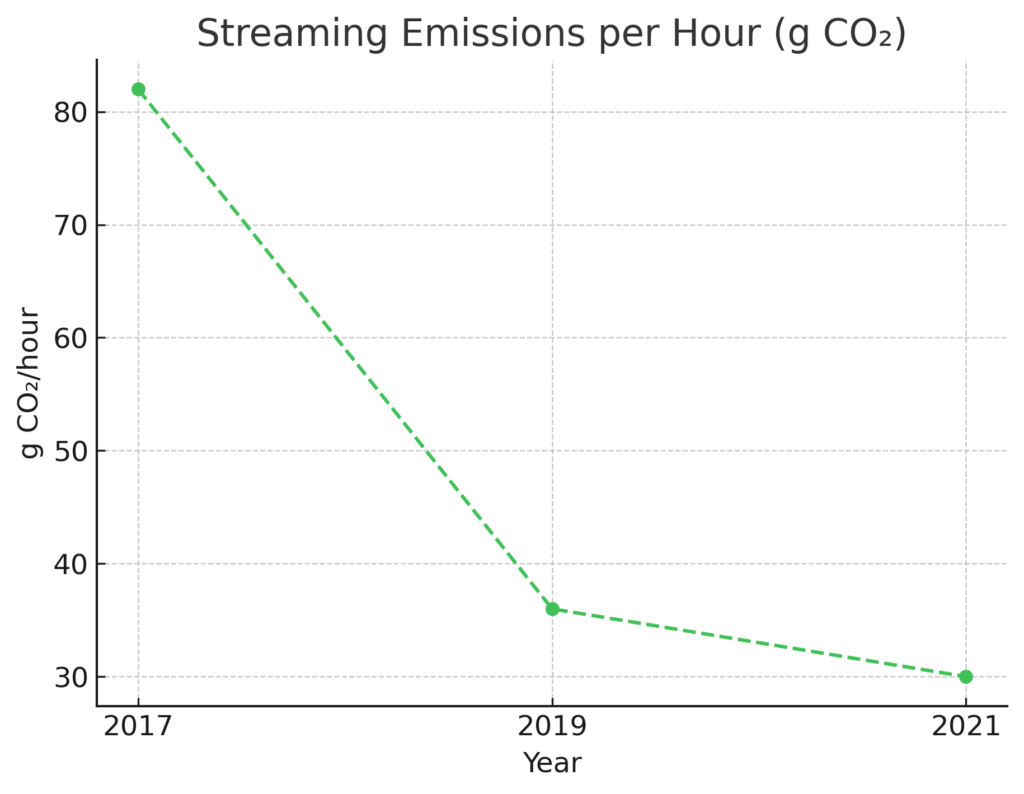
| 16 | Streaming emissions | ~36 g CO₂ per hour of video streaming (IEA estimate). |
| 17 | Digital content time | Average user consumes 3,230 hours of digital content yearly. |
| 18 | Social media footprint | ~353,466 g CO₂ per user annually from social media. |
| 19 | ICT demand growth | ICT energy demand may outpace renewable energy deployment. |
| 20 | Estimation challenges | High uncertainty due to geographic, boundary, and methodology differences. |
Top 20 Virtual Marketing Energy Consumption Statistics 2025
Virtual Marketing Energy Consumption Statistics #1 – Online Ads Energy Share
Online advertising is estimated to account for 10–20% of total internet energy use. This means the infrastructure behind ads—servers, networks, and user devices—consume a significant amount of electricity. As campaigns grow larger and more interactive, this share can increase even further. Businesses often overlook this hidden cost when planning digital strategies. By understanding this statistic, marketers can evaluate ways to minimize unnecessary ad impressions and reduce energy impact.
Virtual Marketing Energy Consumption Statistics #2 – Ad Energy Footprint
Global online ads consume between 20.38 and 282.75 terawatt-hours (TWh) of electricity annually. Alongside this, they produce between 11.53 and 159.93 million tons of CO₂ emissions. This massive range highlights the variability of campaigns, platforms, and regions involved. The emissions footprint of ads can rival those of traditional industries. Marketers must factor in these environmental costs when designing large-scale ad campaigns.
Virtual Marketing Energy Consumption Statistics #3 – Internet Electricity Demand
The internet is responsible for an estimated 3.7% to 10% of global electricity consumption. This range reflects uncertainties in measuring energy use across data centers, networks, and devices. Digital marketing plays a role in this total since campaigns drive traffic, video views, and user interactions. With electricity demand growing rapidly, sustainability concerns around digital platforms are intensifying. Recognizing this impact is critical for companies that heavily rely on virtual marketing.
Virtual Marketing Energy Consumption Statistics #4 – ICT Sector Share
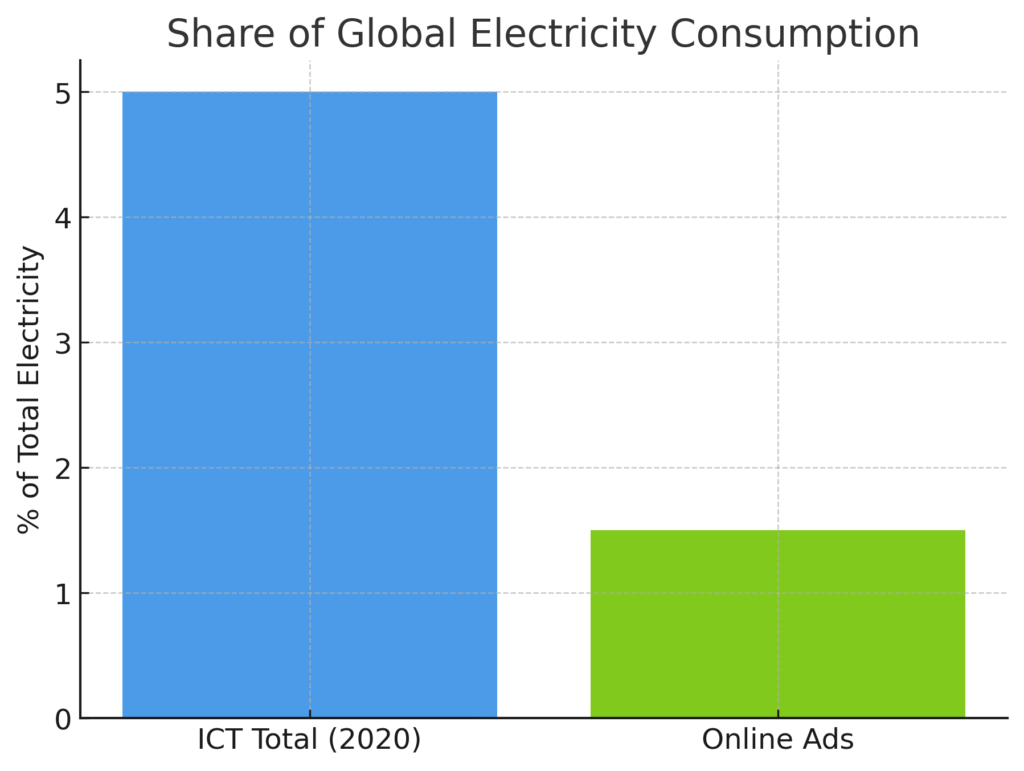
In 2020, the ICT (information and communication technology) sector accounted for 4–6% of global electricity demand. This includes digital marketing operations, social media, streaming, and more. Although small compared to some industries, ICT is expanding at an unprecedented pace. As digital marketing becomes more energy-intensive, its share of ICT demand will rise. Businesses must start integrating greener technologies to balance growth with environmental responsibility.
Virtual Marketing Energy Consumption Statistics #5 – User Devices Energy
User devices such as laptops, tablets, and smartphones consume more energy collectively than networks and data centers combined. This is because billions of users access content simultaneously. Each video ad or campaign that loads on a smartphone contributes to cumulative energy use. Optimizing content for efficiency helps reduce unnecessary load. Marketers can create lightweight ad formats to help users save battery life and reduce electricity consumption.
Virtual Marketing Energy Consumption Statistics #6 – Data Centers 2022
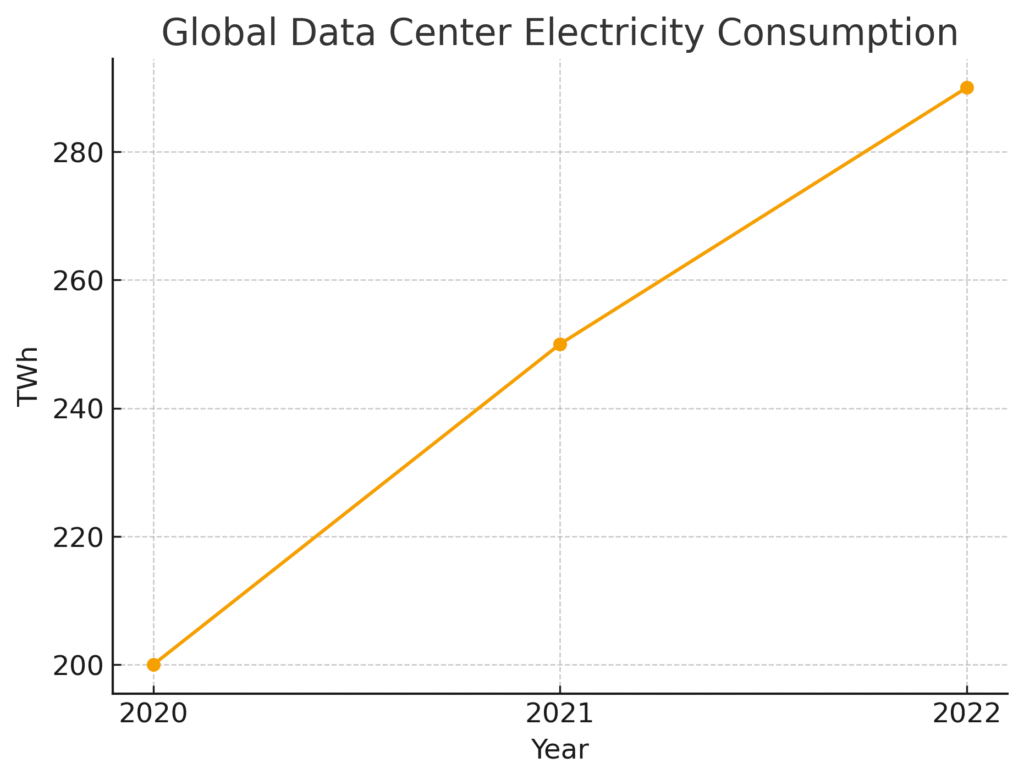
In 2022, global data centers consumed between 240 and 340 TWh of electricity. This accounts for about 1–1.3% of total worldwide demand, excluding cryptocurrency operations. Virtual marketing campaigns hosted on these servers rely heavily on this infrastructure. The more campaigns delivered, the higher the demand on data centers. Energy efficiency improvements in hosting facilities can significantly cut marketing-related emissions.
Virtual Marketing Energy Consumption Statistics #7 – Virtual Vs In-Person Conferences
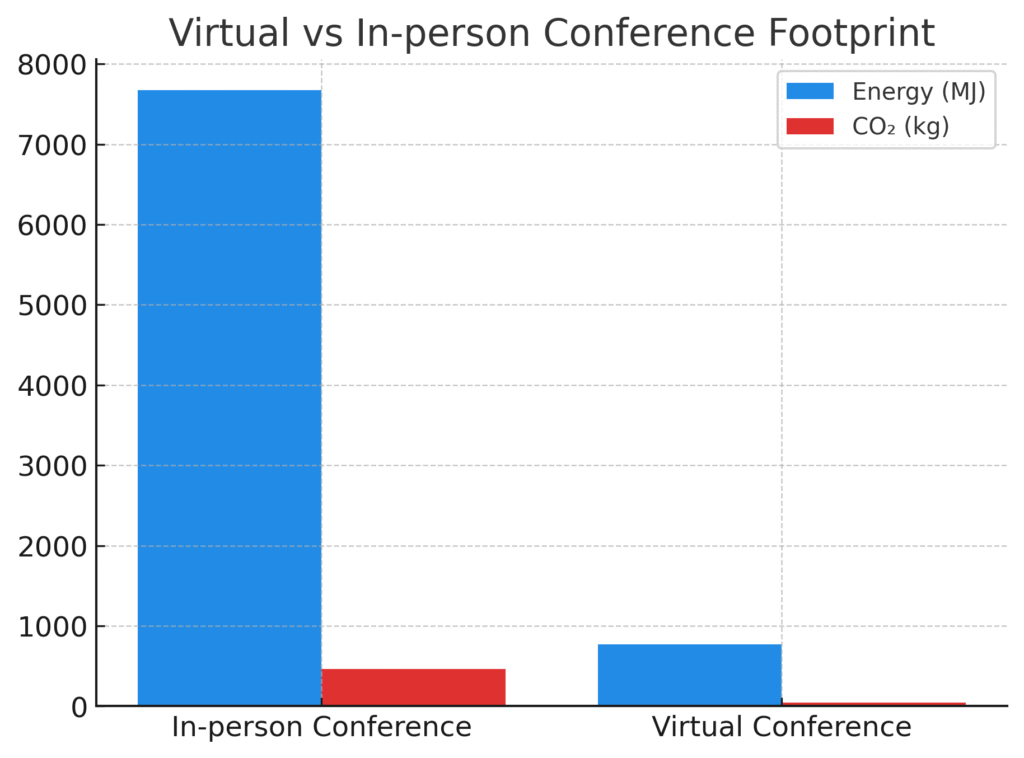
Switching from physical to virtual events reduces energy demand by up to 90%. It also cuts carbon emissions by 94% per participant. This highlights how virtual marketing events and webinars are more sustainable compared to traditional gatherings. While physical events provide face-to-face networking, they carry high travel and venue energy costs. Businesses that embrace virtual formats achieve both cost savings and sustainability benefits.
Virtual Marketing Energy Consumption Statistics #8 – Virtual Event Footprint
A single participant in a virtual event generates about 46 kg of CO₂ emissions. This also requires around 767 megajoules of energy. While far lower than in-person events, it still represents a measurable environmental impact. The choice of streaming quality, duration, and platform all affect the footprint. Awareness of this statistic can guide companies in designing lower-impact virtual conferences.
Virtual Marketing Energy Consumption Statistics #9 – Average Video Conferencing Use
Globally, users spend around 207 hours per year on video conferencing. These hours contribute to energy usage through data transmission, servers, and device operation. For marketers, this includes virtual client meetings and online pitch sessions. Although efficient compared to travel, the energy costs are not negligible. Companies can reduce impact by adopting optimized conferencing tools with greener technology.
Virtual Marketing Energy Consumption Statistics #10 – Streaming Data Load
Streaming video ads or campaigns consumes roughly 1.3–2.4 GB per hour. This heavy data demand translates directly into electricity use across servers and networks. High-definition formats intensify the footprint compared to standard resolution. Marketers can choose optimized streaming formats to balance engagement with sustainability. Understanding this helps businesses manage both costs and environmental responsibility.
Virtual Marketing Energy Consumption Statistics #11 – Ad Rendering Energy
Even rendering ads in browsers requires significant energy. Each display involves computational power that adds up across billions of impressions. Lightweight ad design reduces the burden on user devices. Overly complex creative formats can increase unnecessary load times and energy use. Streamlined campaigns are both user-friendly and environmentally responsible.
Virtual Marketing Energy Consumption Statistics #12 – Cooling Overhead
Cooling and power losses in data centers add 30–50% more energy use beyond the servers themselves. Virtual marketing relies heavily on these facilities to deliver campaigns. Every video ad, webinar, or online campaign is tied to this infrastructure. Energy-efficient cooling technologies can reduce overall footprints. Businesses should consider providers with low Power Usage Effectiveness (PUE) scores when selecting partners.
Virtual Marketing Energy Consumption Statistics #13 – AI/ML Workload Energy
Artificial intelligence and machine learning workloads account for 10–15% of total company energy use in some cases. Many modern marketing campaigns leverage AI for targeting and personalization. This increases computational demand and, consequently, electricity use. As AI-driven ads expand, so does their environmental cost. Marketers must explore energy-efficient AI solutions to balance innovation with responsibility.
Virtual Marketing Energy Consumption Statistics #14 – Digital Marketing CO₂
Digital marketing may now generate more carbon emissions than aviation. Data centers, which are critical to campaigns, produce around 2.5% of global CO₂ emissions. This shocking comparison highlights the scale of digital activity. As marketing becomes increasingly digital, the industry must confront its ecological impact. Awareness is the first step toward meaningful change in how campaigns are designed.
Virtual Marketing Energy Consumption Statistics #15 – Ad Campaign Footprint
Delivering one million ad impressions produces emissions equivalent to a round-trip flight from Boston to London. This comparison makes the invisible footprint of digital campaigns tangible. Many businesses are unaware of these hidden environmental costs. By measuring footprints per campaign, companies can make smarter choices. Using this knowledge, marketers can reduce excessive impressions while achieving strong engagement.
Virtual Marketing Energy Consumption Statistics #16 – Streaming Emissions
Streaming an hour of video produces approximately 36 grams of CO₂ emissions. This is a significant reduction from earlier estimates of 82 grams per hour. However, with billions of hours streamed daily, the cumulative effect is massive. Virtual marketing campaigns that rely on streaming therefore carry global consequences. Optimizing quality and reducing autoplay can make campaigns more sustainable.
Virtual Marketing Energy Consumption Statistics #17 – Digital Content Time
On average, users consume around 3,230 hours of digital content annually. This includes streaming, social media, and online marketing campaigns. Each hour adds to electricity use across multiple infrastructures. The statistic reflects how deeply embedded digital content is in daily life. For marketers, it shows how campaigns form a significant part of users’ yearly energy footprint.
Virtual Marketing Energy Consumption Statistics #18 – Social Media Footprint
Social media activity produces an estimated 353,466 grams of CO₂ annually per user. Marketing campaigns are a major part of this activity through ads and sponsored content. The sheer volume of scrolling, video playback, and engagement compounds energy demand. For brands, this underscores the hidden cost of maintaining active social presences. Choosing greener platforms or formats could help reduce these emissions.
Virtual Marketing Energy Consumption Statistics #19 – ICT Demand Growth
The rapid growth of ICT means energy demand may soon outpace renewable energy development. This creates a serious challenge for sustainable digital marketing. As campaigns become more data-heavy, demand rises even further. Without major efficiency breakthroughs, digital growth may strain global energy systems. Marketers need to advocate for eco-conscious practices before this imbalance worsens.
Virtual Marketing Energy Consumption Statistics #20 – Estimation Challenges
Accurately measuring energy use in virtual marketing remains difficult. Differences in methodology, regional electricity mixes, and system boundaries all cause uncertainty. This means that reported statistics often vary widely. Marketers must interpret these numbers cautiously, using them as guides rather than absolutes. Greater transparency in reporting will help improve decision-making for sustainable marketing.
Reflecting on the Bigger Picture
Looking through these virtual marketing energy consumption statistics reminded me that the way we market online is more than just a strategy—it’s a responsibility. Every campaign, every video, every interaction leaves a digital footprint, and being conscious of that can help businesses make smarter, greener decisions. What excites me is how innovation and sustainability can actually go hand in hand, turning digital campaigns into not just revenue-drivers but also eco-friendly efforts. As someone who believes in building for the long term, I find comfort in knowing that agencies and brands are starting to think this way too. By weaving together creativity, technology, and care for the planet, we can create a marketing future that truly makes sense both for businesses and the world we live in.
SOURCES
- https://www.sciencedirect.com/science/article/pii/S0195925517303505
- https://www.adverity.com/blog/how-to-measure-the-environmental-impact-of-digital-marketing
- https://theecologist.org/2025/mar/05/digital-marketings-carbon-footprint
- https://bluetext.com/blog/embracing-sustainability-in-digital-marketing-a-path-to-a-greener-future/
- https://www.nature.com/articles/s41467-024-47621-w
- https://www.51tocarbonzero.com/why-a-sustainable-digital-marketing-agency-matters/
- https://www.cloudzero.com/blog/tech-carbon-footprint/
- https://www.nexd.com/blog/how-to-reduce-the-carbon-footprint-of-your-marketing/
- https://www.techtimes.com/articles/292699/20230616/importance-combining-environmental-consciousness-digital-marketing-practices.htm
- https://omcp.org/the-rise-of-sustainability-in-digital-marketing-trends-benefits-best-practices/
- https://www.sustainabilitybynumbers.com/p/ai-energy-demand
- https://www.footsprint.co/the-hidden-carbon-cost-of-digital-advertising/
- https://arxiv.org/abs/2211.00071
- https://arxiv.org/abs/2304.00927
- https://arxiv.org/abs/2401.09854
- https://arxiv.org/abs/2304.01646