




29 Sep TOP 20 VIRTUAL MARKETING ONBOARDING PROCESS STATISTICS 2025
When I first started researching virtual marketing onboarding process statistics, I was amazed at how much impact a well-structured onboarding plan can have on both team performance and long-term retention. As someone who values efficiency and connection in remote environments, I’ve seen firsthand how the right strategies can transform the way new hires adjust to their roles. Partnering with a leading marketing agency in New York has also shown me that successful onboarding goes beyond just paperwork—it’s about culture, clarity, and engagement from day one. I want to share these insights with you in a way that feels practical and human, because I know how overwhelming the onboarding journey can feel at times.
Top 20 Virtual Marketing Onboarding Process Statistics 2025 (Editor’s Choice)
| # | Statistic | Insight |
|---|---|---|
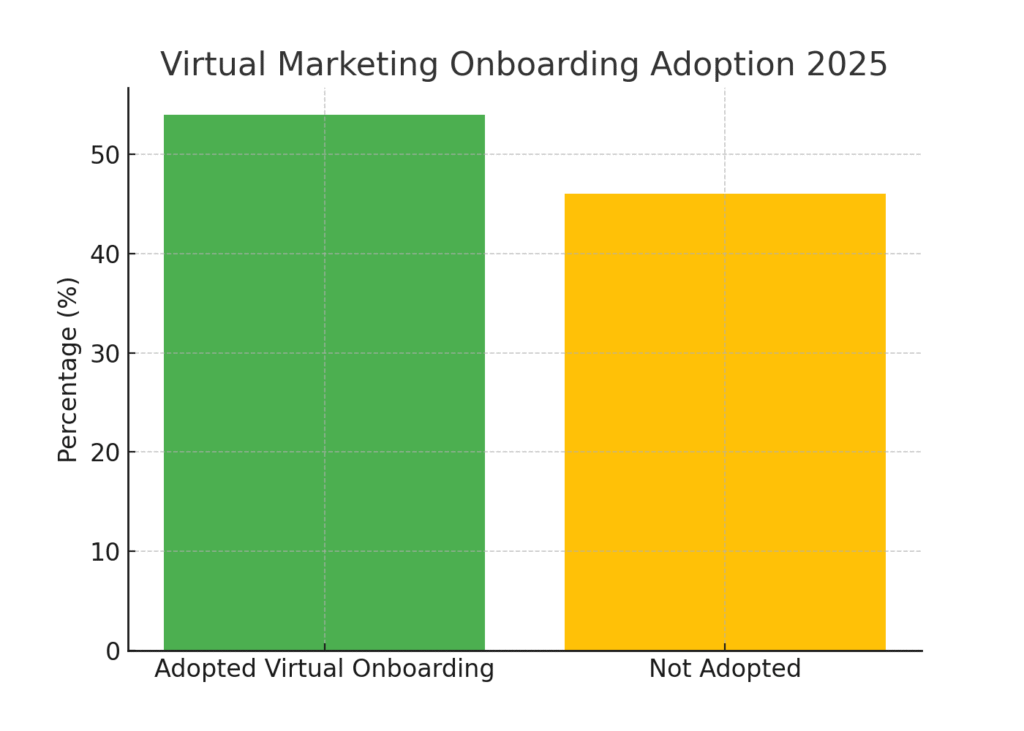
| 1 | 54% of companies adopted virtual onboarding post-COVID | Shows the shift toward digital-first hiring practices. |
| 2 | 59% moved recruitment and applications online | Recruiting has aligned with virtual onboarding trends. |
| 3 | Effective onboarding boosts retention by 82% | Virtual onboarding plays a key role in keeping hires. |
| 4 | New hires complete 54 onboarding tasks on average | Highlights complexity in virtual processes. |
| 5 | 58% focus more on process than people during onboarding | Indicates need for more human-centered virtual onboarding. |
| 6 | 47% struggle with infrastructure and access setup | Tech readiness is a common onboarding challenge. |
| 7 | 41% believe lack of structure hurts onboarding | Virtual programs must be well-planned to succeed. |
| 8 | 36% have no formal onboarding process | Many companies still lag in structured onboarding. |
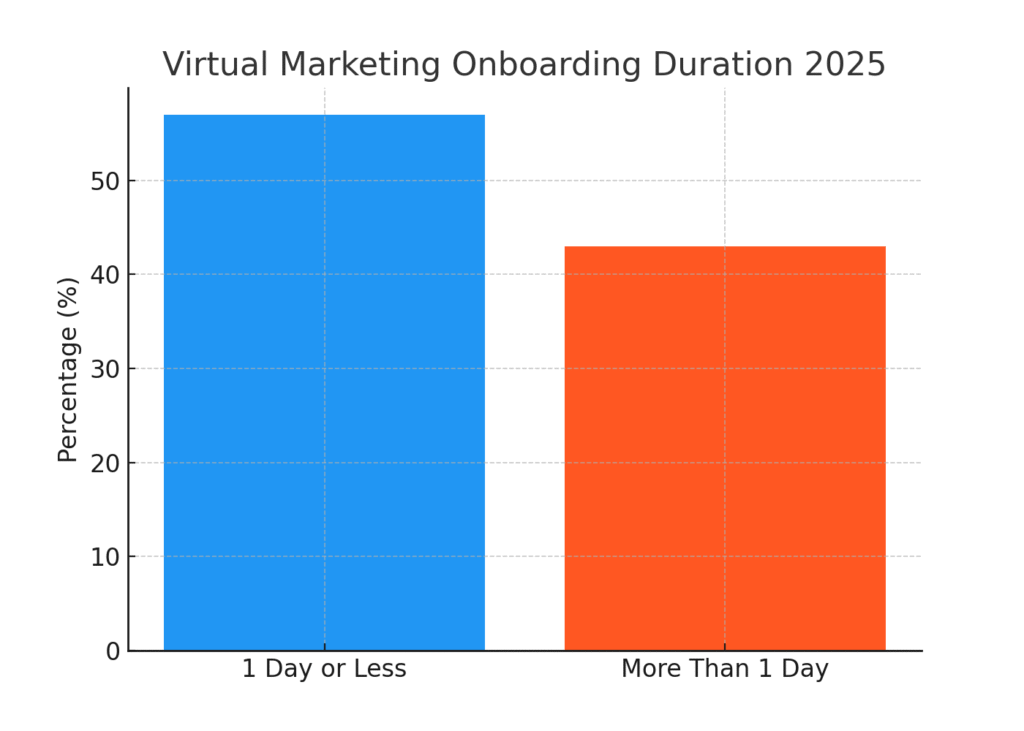
| 9 | Only 43% get onboarding lasting more than one day | Short onboarding reduces long-term effectiveness. |
| 10 | 69% stay 3+ years if onboarding is strong | Shows onboarding’s impact on loyalty and retention. |
| 11 | Effective onboarding makes employees 18× more committed | Strong engagement can be built virtually too. |
| 12 | 37.9% of leavers go within the first year | Poor onboarding often drives early turnover. |
| 13 | 63% of remote workers feel undertrained | Training gaps remain a big challenge online. |
| 14 | 60% of remote employees report feeling disoriented | Virtual onboarding must address clarity and structure. |
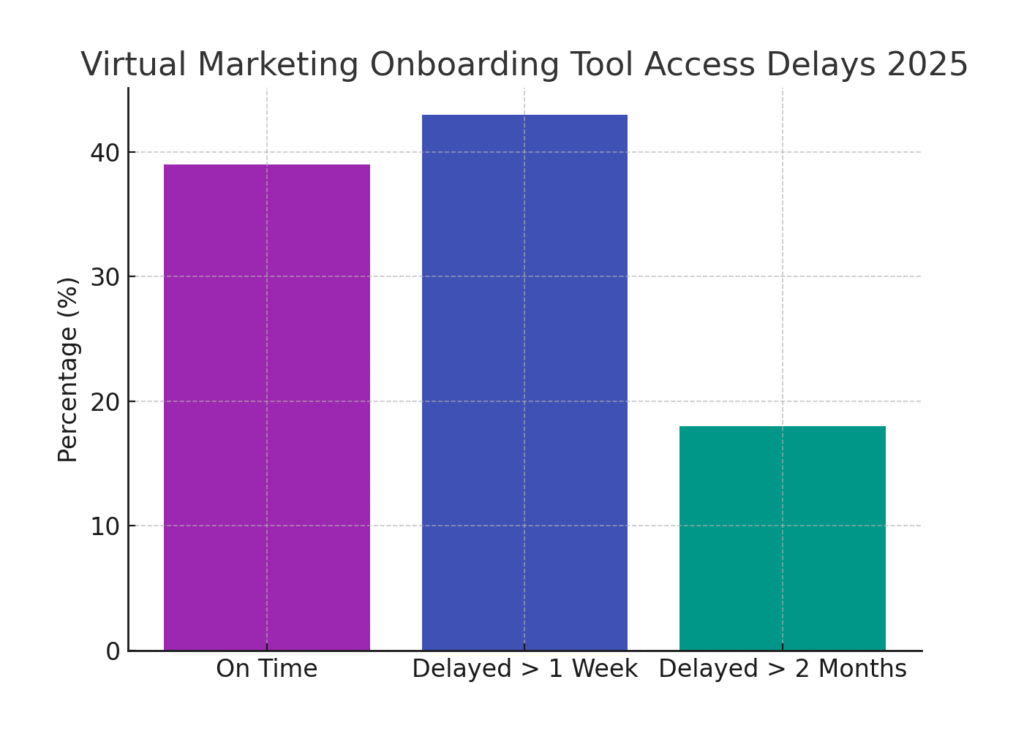
| 15 | 43% waited more than a week for tools | Access delays slow productivity in remote onboarding. |
| 16 | 18% still lacked tools after two months | Long gaps show poor onboarding planning. |
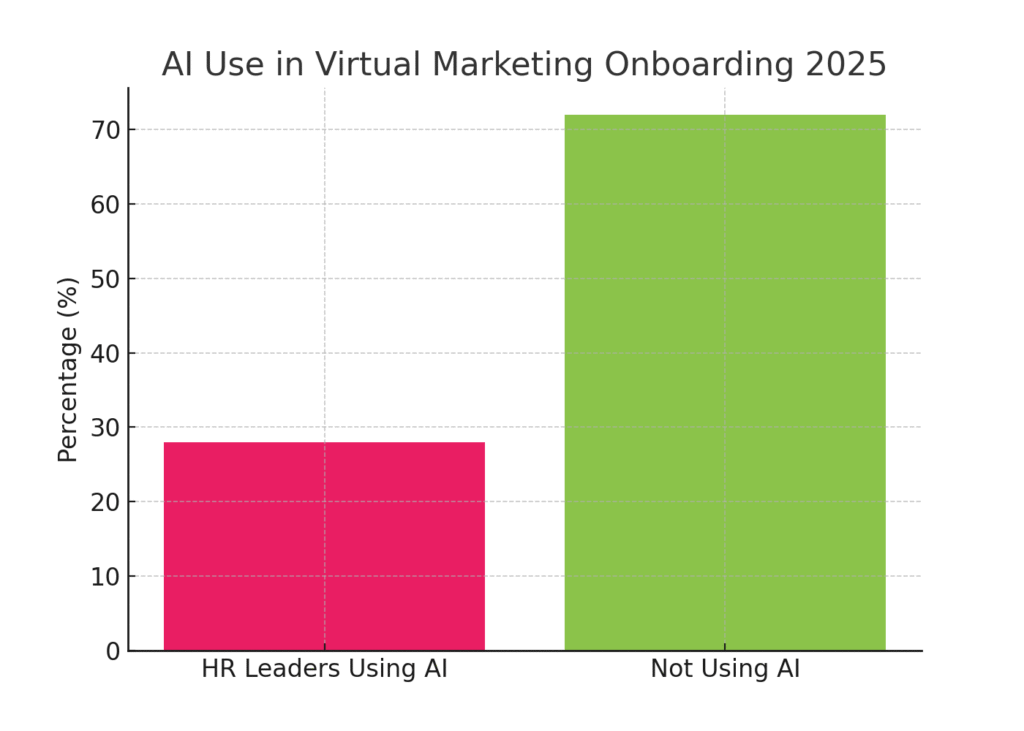
| 17 | 28% of HR leaders use AI in onboarding | AI is transforming how virtual onboarding is delivered. |
| 18 | 92% of HR professionals familiar with AI onboarding | AI integration is becoming mainstream. |
| 19 | Onboarding software market: $1.4B in 2023, $2.4B by 2031 | Shows the fast growth of digital onboarding tools. |
| 20 | Only 12% strongly agree their company has great onboarding | Highlights massive room for improvement. |
Top 20 Virtual Marketing Onboarding Process Statistics 2025
Virtual Marketing Onboarding Process Statistics #1: 54% Of Companies Adopted Virtual Onboarding Post-COVID
The adoption of virtual onboarding surged after COVID-19, with more than half of companies moving their processes online. This shift reflects the need for flexibility and accessibility in remote environments. It also shows how organizations adapted quickly to global disruptions while maintaining operational efficiency. Marketing teams, in particular, benefited from digital tools that allowed new hires to collaborate without physical presence. This statistic highlights the permanence of virtual onboarding as a standard practice.
Virtual Marketing Onboarding Process Statistics #2: 59% Moved Recruitment And Applications Online
Nearly 60% of companies moved their recruitment and application systems to digital platforms. This aligns with virtual onboarding, creating a seamless journey from hiring to integration. For marketing professionals, this transition ensures smoother communication and quicker setup times. It also reduces the barriers for global talent acquisition. This statistic underlines the interconnectedness of recruitment and onboarding in today’s digital age.
Virtual Marketing Onboarding Process Statistics #3: Effective Onboarding Boosts Retention By 82%
Companies with strong onboarding see retention rates rise by 82%. In virtual settings, structured programs can greatly reduce early turnover. Marketing hires who feel supported in their first days are more likely to stay engaged long term. This underscores how crucial digital onboarding is for reducing attrition. The statistic proves that onboarding is not a formality but a retention strategy.
Virtual Marketing Onboarding Process Statistics #4: New Hires Complete 54 Onboarding Tasks On Average
On average, employees face 54 tasks during onboarding, many of which can be digitized. In marketing, these tasks may include system access, training modules, and communication workflows. While this may seem overwhelming, digital tools help automate and simplify steps. A structured task list provides clarity and reduces confusion for new hires. This highlights the complexity of onboarding and the need for streamlined processes.
Virtual Marketing Onboarding Process Statistics #5: 58% Focus More On Process Than People During Onboarding
Over half of organizations admit they focus on processes rather than people. This statistic reveals a gap in creating a more human-centered onboarding journey. Virtual marketing hires need more than forms and checklists; they need mentorship and cultural integration. Companies risk disengagement if they overlook personal connections. The number serves as a reminder to balance administrative duties with meaningful interactions.
Virtual Marketing Onboarding Process Statistics #6: 47% Struggle With Infrastructure And Access Setup
Nearly half of companies face challenges in providing proper access during onboarding. In marketing, this could mean delays in accessing analytics tools or creative platforms. Such delays can slow productivity and frustrate new employees. Ensuring infrastructure readiness is vital for smooth digital onboarding. This statistic shows how technology gaps can disrupt the employee experience.
Virtual Marketing Onboarding Process Statistics #7: 41% Believe Lack Of Structure Hurts Onboarding
About 41% of employers agree that weak structure harms the onboarding process. A virtual program without clarity leads to confusion and disengagement. Marketing teams thrive when there is a clear roadmap for new hires. Properly structured onboarding creates consistency and builds confidence. This number highlights the importance of planning and organization in virtual onboarding.
Virtual Marketing Onboarding Process Statistics #8: 36% Have No Formal Onboarding Process
Shockingly, over a third of companies don’t have formal onboarding processes at all. For marketing professionals, this lack can result in role confusion and missed expectations. Virtual environments make this absence even more challenging. A standardized program ensures fairness and consistency across hires. This statistic highlights the urgent need for companies to formalize onboarding systems.
Virtual Marketing Onboarding Process Statistics #9: Only 43% Get Onboarding Lasting More Than One Day
Less than half of employees experience onboarding beyond a single day. Short onboarding limits exposure to company culture and responsibilities. In marketing, this leaves new hires underprepared for campaign cycles and strategy execution. Virtual settings especially need extended programs to compensate for lack of in-person cues. The statistic stresses the value of continuous onboarding, not just a quick introduction.
Virtual Marketing Onboarding Process Statistics #10: 69% Stay 3+ Years If Onboarding Is Strong
Nearly 70% of employees remain with a company for three or more years if onboarding is effective. This retention rate emphasizes the long-term benefits of good onboarding. Marketing roles often involve steep learning curves, making support essential. Virtual onboarding ensures hires feel equipped and valued early on. This statistic shows how onboarding investments pay off in loyalty.
Virtual Marketing Onboarding Process Statistics #11: Effective Onboarding Makes Employees 18× More Committed
Well-structured onboarding boosts commitment by eighteen times. For marketing teams, this means greater dedication to creative projects and deadlines. Virtual platforms can deliver training and support that build this loyalty. When employees feel connected, their engagement translates into performance. This number reinforces onboarding as a driver of workplace commitment.
Virtual Marketing Onboarding Process Statistics #12: 37.9% Of Leavers Go Within The First Year
Almost 38% of employees leave within their first year, often due to poor onboarding. In marketing, where teamwork and deadlines matter, this can be disruptive. Virtual programs must close gaps in guidance and support to reduce turnover. Early exits create added hiring and training costs for companies. This statistic emphasizes why onboarding must be prioritized.
Virtual Marketing Onboarding Process Statistics #13: 63% Of Remote Workers Feel Undertrained
More than 60% of remote workers say they feel undertrained during onboarding. In marketing, this can mean uncertainty in tools like CRMs, ad platforms, or design software. Training modules need to be thorough and engaging online. Without proper training, productivity drops and frustration grows. This statistic calls for more robust e-learning systems in onboarding.
Virtual Marketing Onboarding Process Statistics #14: 60% Of Remote Employees Report Feeling Disoriented
A majority of remote employees feel disoriented during onboarding. This disorientation stems from unclear communication and lack of cultural integration. Marketing hires often need clarity to align with brand identity and messaging. Virtual programs should emphasize orientation sessions and mentorship. This number highlights the emotional side of digital onboarding.
Virtual Marketing Onboarding Process Statistics #15: 43% Waited More Than A Week For Tools
Almost half of new hires wait over a week for essential tools. In marketing, this could delay access to email platforms, analytics dashboards, or content systems. Waiting this long creates frustration and slows performance. Virtual onboarding should focus on delivering resources before day one. This statistic points to the importance of preparation in digital onboarding.
Virtual Marketing Onboarding Process Statistics #16: 18% Still Lacked Tools After Two Months
A surprising 18% of employees lacked tools even after two months. In marketing, such delays can derail entire campaigns. This shows a failure in onboarding logistics and planning. Virtual processes must anticipate tool needs early on. The statistic underscores how long-term inefficiencies can harm performance.
Virtual Marketing Onboarding Process Statistics #17: 28% Of HR Leaders Use AI In Onboarding
AI is now used by 28% of HR leaders for onboarding. Marketing onboarding benefits from AI-driven personalization and automation. These tools reduce repetitive tasks and improve learning experiences. Virtual settings make AI particularly valuable for real-time support. This number shows how technology is reshaping onboarding.
Virtual Marketing Onboarding Process Statistics #18: 92% Of HR Professionals Familiar With AI Onboarding
Nearly all HR professionals know about AI’s role in onboarding. This familiarity reflects the growing mainstream adoption of AI solutions. For marketing, AI can streamline training on campaigns and analytics. Virtual environments enhance these possibilities with chatbots and digital guides. The statistic points toward AI becoming a standard in onboarding.
Virtual Marketing Onboarding Process Statistics #19: Onboarding Software Market To Reach $2.4B By 2031
The global onboarding software market is projected to grow from $1.4 billion in 2023 to $2.4 billion by 2031. This growth reflects rising demand for digital onboarding tools. Marketing teams increasingly rely on platforms that integrate training, communication, and analytics. Virtual adoption fuels this industry expansion. The statistic demonstrates that virtual onboarding is now a global business priority.
Virtual Marketing Onboarding Process Statistics #20: Only 12% Strongly Agree Their Company Has Great Onboarding
Just 12% of employees strongly agree their company has great onboarding. This shows that most organizations fall short of employee expectations. For marketing hires, weak onboarding can harm creativity and confidence. Virtual programs must close these satisfaction gaps. This statistic highlights the urgency of improving onboarding experiences worldwide.
Building Strong Foundations with Virtual Onboarding
Looking at these virtual marketing onboarding process statistics, I can’t help but think about the importance of creating a truly supportive experience for new hires. I’ve noticed that when people feel welcomed and guided in the early stages, they are more confident, more creative, and more likely to succeed in the long run. For me, the numbers aren’t just data—they’re reminders that every click, every training call, and every check-in has the power to shape someone’s future in a company. Working alongside a leading marketing agency in New York has reinforced my belief that onboarding is an investment, not just a formality. If there’s one thing these statistics make clear, it’s that taking the time to build strong foundations pays off in ways that last far beyond the first week.
SOURCES
- https://eddy.com/article/onboarding-statistics/
- https://www.forbes.com/sites/philkirschner/2024/12/02/onboarding-and-unburdening-new-rules-for-employee-experience-in-2025/
- https://www.devlinpeck.com/content/employee-onboarding-statistics
- https://www.strongdm.com/blog/employee-onboarding-statistics
- https://www.aihr.com/blog/employee-onboarding-statistics/
- https://pmc.ncbi.nlm.nih.gov/articles/PMC9190770/
- https://enboarder.com/blog/employee-engagement-onboarding-stats/
- https://www.applicantstack.com/blog/5-challenges-of-remote-onboarding-and-how-to-overcome-them/
- https://link.springer.com/article/10.1007/s11846-025-00864-3
- https://www.appical.com/resources/blog/employee-onboarding-statistics
- https://backlinko.com/employee-onboarding-stats
- https://thirst.io/blog/employee-onboarding-statistics-for-2025/
- https://www.linkedin.com/pulse/top-7-employee-onboarding-trends-2025-experts-share-insight-ac04e
- https://www.iseazy.com/blog/onboarding-statistics/
- https://userguiding.com/blog/employee-onboarding-statistics-trends
- https://high5test.com/employee-training-statistics/
- https://www.linkedin.com/pulse/hybrid-remote-onboarding-best-practices-ensuring-virtual-anveeg-sinha-o6qje