



25 Sep TOP 20 VIRTUAL MEETING MARKETING STATISTICS 2025
When I first started exploring how businesses connect in the digital age, I was amazed at how much growth and creativity had shifted into the virtual space. That’s exactly why I want to share these virtual meeting marketing statistics with you—they paint a clear picture of how brands are adapting, thriving, and building stronger connections online. As someone who values efficiency and meaningful communication, I’ve been fascinated by how companies, with the help of a leading marketing agency in New York, are finding innovative ways to use virtual meetings not just for collaboration, but also for creating memorable customer experiences. These insights are more than just numbers—they’re a story of how we all work, market, and build relationships in today’s world.
Top 20 Virtual Meeting Marketing Statistics 2025 (Editor’s Choice)
📊 Virtual Meeting Marketing Statistics 2025
Key insights shaping the future of virtual meetings and events
| Category | Statistic | Description | Icon |
|---|---|---|---|
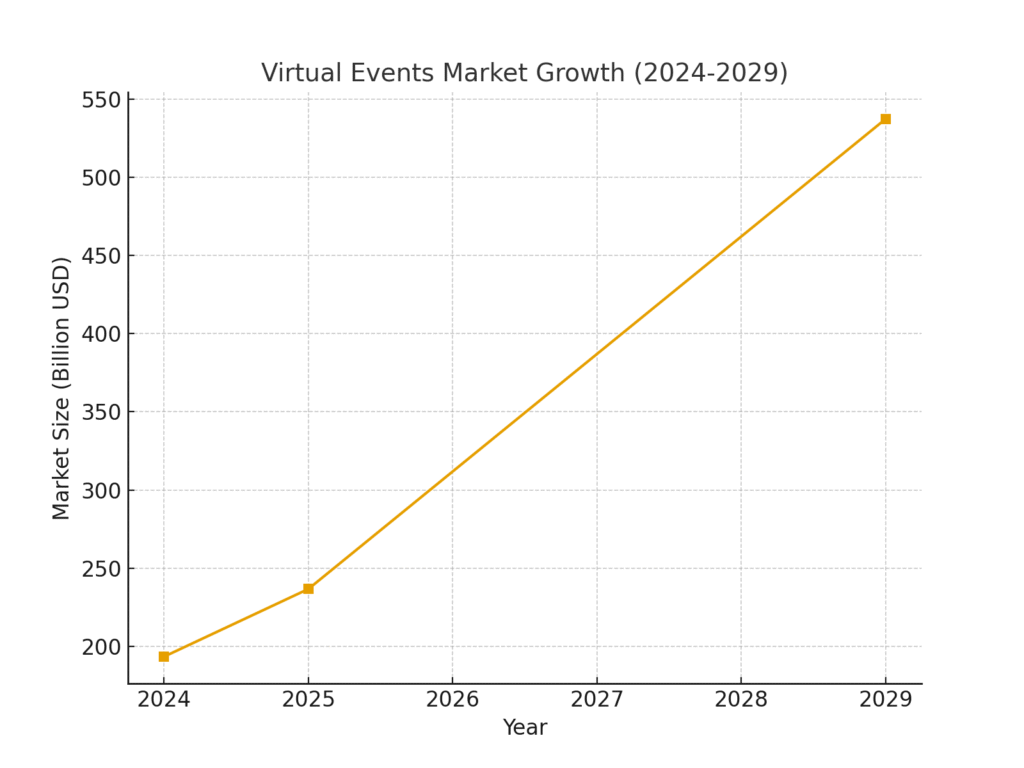
| Market Growth | $236.69B | Virtual events global market value in 2025, up from $193.45B in 2024 | 📈 |
| Future Projection | $537.18B | Expected virtual events market size by 2029 with 22.7% CAGR | 🚀 |
| Event Format | 21% | Of events worldwide planned as virtual-only in 2025 | 💻 |
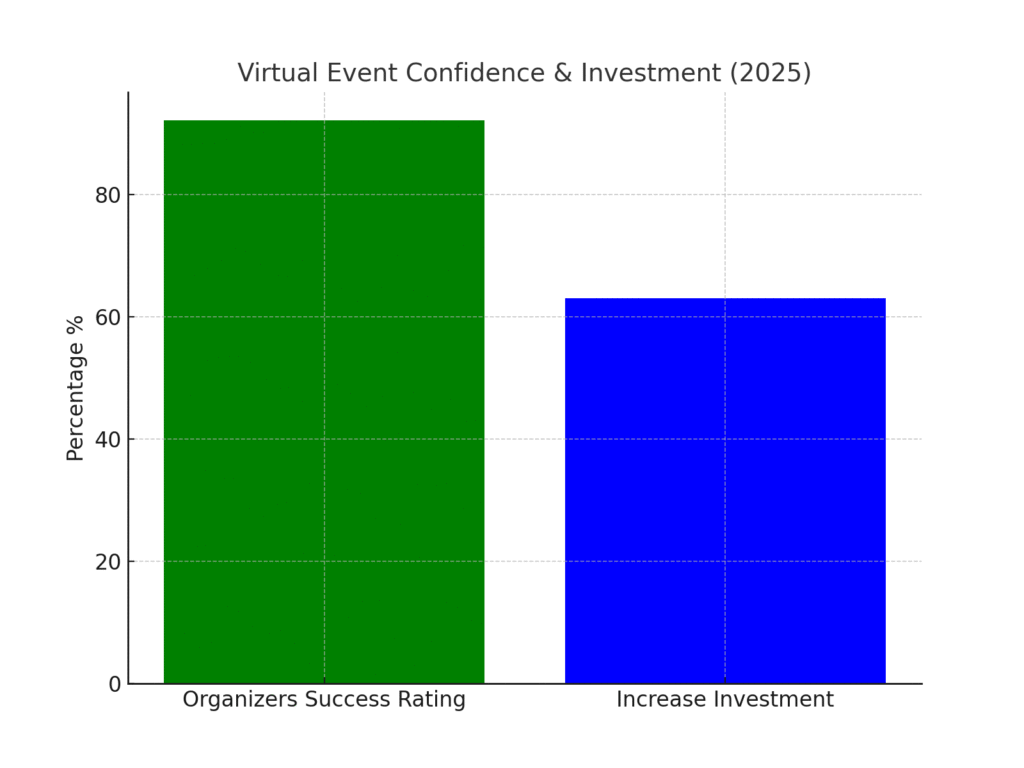
| Investment | 63% | Event organizers planning to invest more in virtual events in 2025 | 💰 |
| Platform Usage | 35% | Of events on Bizzabo platform were virtual in early 2024 | 🎯 |
| Weekly Meetings | 10.1 | Average virtual meetings employees attend per week | 📅 |
| Remote Participation | 86% | Global workers attending meetings with at least one remote participant | 🌐 |
| In-Person Meetings | 14% | Only 14% of meetings are fully in-person today | 🏢 |
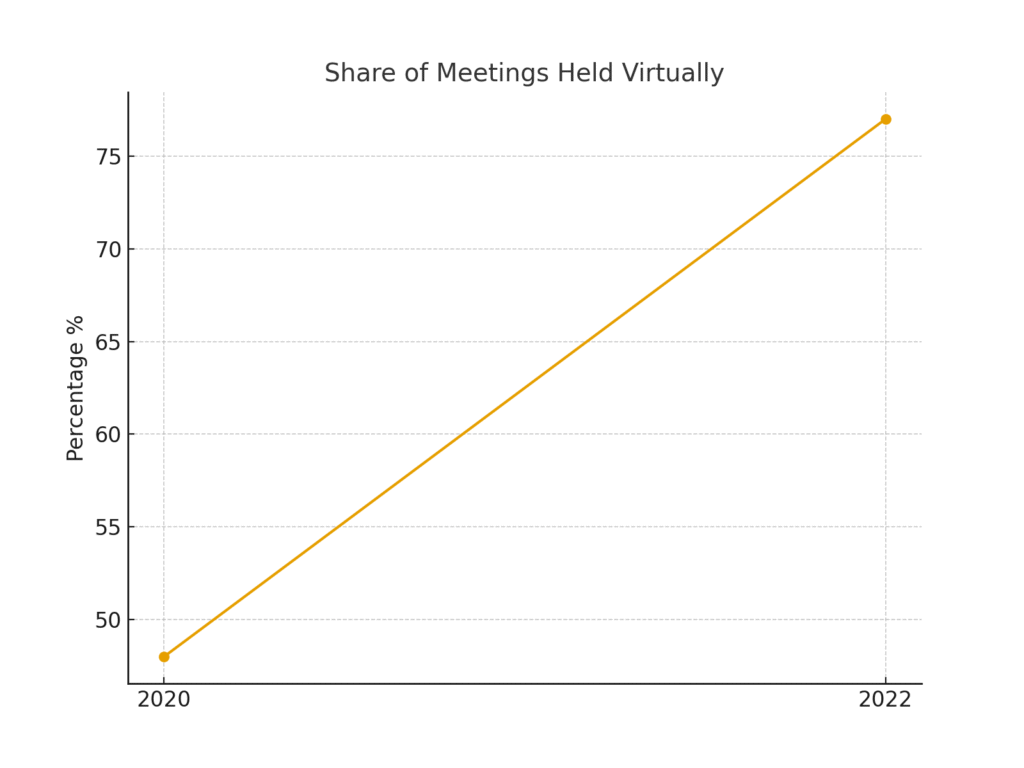
| Growth Rate | 48% → 77% | Virtual meetings growth from 2020 to 2022 | 📊 |
| Zoom Users | 300M | Daily Zoom meeting participants (2900% increase from previous figures) | 🎥 |
| Marketing Channel | 51% | B2B marketers rank webinars as 2nd most effective channel (after in-person at 52%) | 📢 |
| Investment Trend | 34% | Marketers increasing webinar investment in 2025 | 💡 |
| Strategy Importance | 99% | Companies say webinars are important part of marketing strategy | ⭐ |
| Promotion | 40% | Event marketers believe email is best way to promote virtual events | ✉️ |
| Registration | 581 | Average registrants for a virtual event | 👥 |
| Promotion Timeline | 56 Days | Average time needed to promote a virtual event | ⏰ |
| Future Plans | 93% | Event organizers planning to invest in virtual events going forward | 🎯 |
| Adaptation Success | 93% | Attendees agree companies successfully adapted in-person to online formats | ✅ |
| Satisfaction | 73% | Attendees satisfied with their virtual event experiences | 😊 |
| Permanence | 59% | Event professionals agree virtual events are permanent fixture of strategy | 🔒 |
Top 20 Virtual Meeting Marketing Statistics 2025
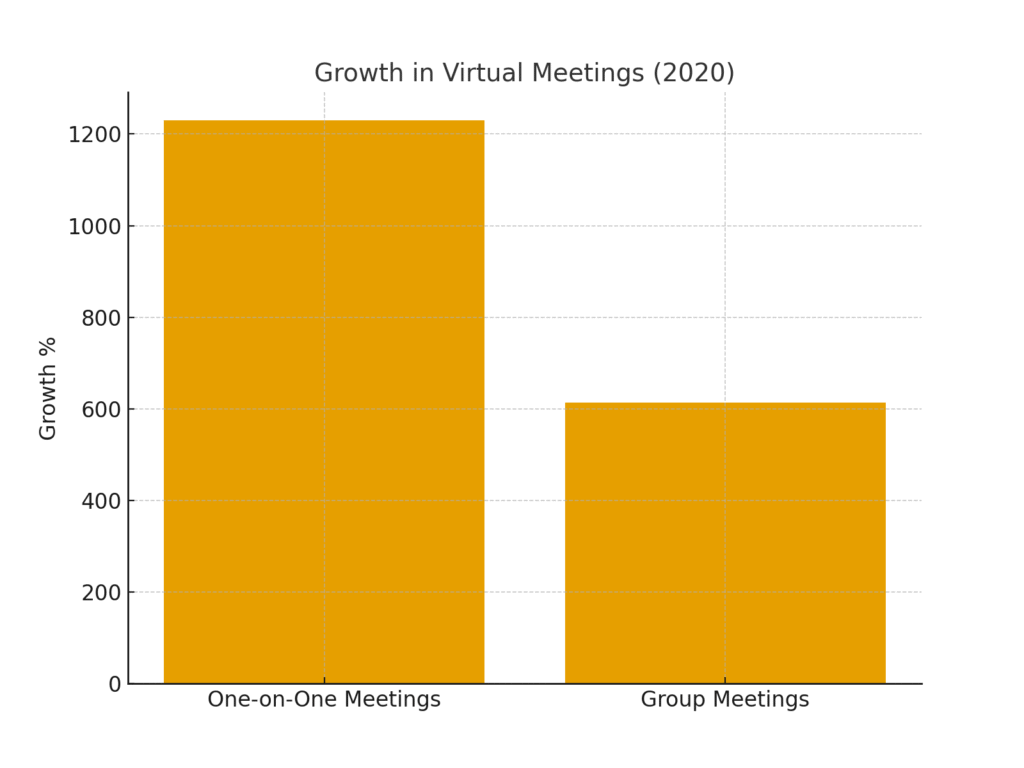
Virtual Meeting Marketing Statistics #1: Virtual One-on-One Meetings Increased by 1,230%
The rise in remote work drove a massive surge in one-on-one virtual meetings, increasing by 1,230% between January and December 2020. This growth highlights how professionals quickly shifted to online platforms to maintain personal connections. For marketers, this meant more direct engagement opportunities with clients and prospects. These one-on-one interactions also helped build trust in a more personalized way compared to group webinars. The trend shows that virtual platforms are no longer just convenient—they are essential for relationship-driven marketing.
Virtual Meeting Marketing Statistics #2: Virtual Group Meetings Rose by 613%
Group virtual meetings surged by 613% over the same period, reflecting a fundamental shift in collaboration. Marketers relied heavily on these group sessions to conduct workshops, strategy calls, and customer presentations. The scale and inclusivity of group meetings allowed brands to reach multiple stakeholders at once. This rise also underlines how businesses valued efficiency in managing larger audiences online. Such growth continues to shape marketing strategies around scalability and outreach.
Virtual Meeting Marketing Statistics #3: Share of Virtual Meetings Grew from 48% to 77%
Between 2020 and 2022, the percentage of all meetings held virtually grew from around 48% to 77%. This remarkable increase demonstrates how deeply virtual meetings have embedded themselves in corporate culture. For marketers, this meant more opportunities to host online campaigns, events, and product demos. It also encouraged companies to invest more in virtual engagement tools. This stat reinforces how virtual meetings transitioned from a backup plan to a permanent fixture.
Virtual Meeting Marketing Statistics #4: Zoom Hosts 300 Million Meetings Per Day
Zoom became the face of virtual meetings, with around 300 million daily meeting participants worldwide. This dominance created an ecosystem where marketers had to learn how to stand out on this crowded platform. Businesses began using Zoom not just for internal meetings but also for webinars, sales pitches, and live product showcases. The sheer scale highlighted both opportunity and competition. Marketers who adapted early were able to maximize reach and brand visibility.
Virtual Meeting Marketing Statistics #5: Video Conferencing Market Projected to Grow 8% CAGR
The U.S. video conferencing market is projected to grow at a compound annual growth rate of around 8% from 2024 to 2030. This long-term trend signals that virtual meetings will only continue to expand. For marketing teams, it represents an ongoing chance to refine strategies that integrate virtual platforms. With continued growth, more specialized tools and services are likely to emerge. This creates fresh opportunities for businesses to enhance audience engagement.
Virtual Meeting Marketing Statistics #6: 21% of Events Are Virtual-Only in 2025
In 2025, 21% of global events are planned as virtual-only. This shows that even with in-person gatherings returning, the demand for virtual events remains strong. For marketers, virtual-only events allow cost-effective audience targeting across geographic boundaries. These events often attract larger, more diverse audiences than physical ones. This proves virtual meetings still hold significant weight in marketing event planning.
Virtual Meeting Marketing Statistics #7: 63% of Organizers Increasing Virtual Event Investment
A strong 63% of event organizers in 2025 report plans to increase investment in virtual events. This shows confidence in the continued ROI of digital formats. Marketers recognize that virtual events provide measurable insights, something harder to achieve with in-person events. This willingness to invest underscores the effectiveness of digital engagement. It also pushes the industry to create even more engaging virtual experiences.
Virtual Meeting Marketing Statistics #8: Virtual Events Market to Reach $236.7 Billion in 2025
The virtual events market is estimated to grow to $236.7 billion in 2025, up from $193.45 billion in 2024. This massive expansion demonstrates the financial scale behind the shift to virtual. For marketers, it shows clear proof of where budgets are moving. Companies that adapt to this growth can tap into a thriving industry. The numbers also indicate how marketers must innovate to stand out in this large, competitive space.
Virtual Meeting Marketing Statistics #9: Virtual Events Projected to Hit $537.2 Billion by 2029
By 2029, the global virtual events market is projected to reach $537.2 billion, growing at a CAGR of 22.7%. This exponential growth highlights how digital events are not just a trend but a future-defining standard. For marketing, this means long-term opportunities to scale campaigns internationally. Such growth will also accelerate the development of interactive tools and engagement features. Businesses that embrace this shift now will be best positioned for future success.
Virtual Meeting Marketing Statistics #10: 92.1% of Organizers Rate Virtual Events Successful
A staggering 92.1% of event organizers describe their virtual events as successful. This proves that online formats deliver tangible outcomes in engagement and ROI. For marketers, it builds confidence in relying on virtual strategies. Attendee satisfaction and interaction play a huge role in these success stories. It validates the value of investing time and creativity into online event design.
Virtual Meeting Marketing Statistics #11: 65% of Companies Increased Event Marketing Budgets
Around 65% of companies have raised their event marketing budgets, with a focus on virtual and hybrid experiences. This shift shows how brands prioritize digital strategies in their overall marketing mix. Larger budgets allow for more advanced tools, better production, and wider outreach. For marketers, this also means higher expectations from audiences. It signals that virtual events are no longer secondary—they’re a major piece of marketing investment.
Virtual Meeting Marketing Statistics #12: Average Virtual Event Attendance Rate is 44%
On average, only about 44% of registrants actually attend virtual marketing events. While signups may be high, marketers face challenges in converting registrations into actual participation. This makes pre-event engagement crucial for success. Techniques like reminder emails, teasers, and personalized content help improve attendance. The stat highlights a key marketing challenge in virtual environments.
Virtual Meeting Marketing Statistics #13: 80% of Organizers Use Engagement as a Top KPI
For 80% of event organizers, attendee engagement and satisfaction are the top key performance indicators. This shows that it’s not just about getting people into the event—it’s about keeping them interested. For marketers, this creates a focus on interactivity, Q&As, polls, and live chat. Engagement metrics also provide better insights into customer behavior. This shift makes virtual events more data-driven than ever before.
Virtual Meeting Marketing Statistics #14: 90% of Organizers Use Post-Event Surveys
Around 90% of organizers rely on post-event surveys to gather attendee feedback. This practice helps them understand what worked and what didn’t. For marketers, these surveys are valuable tools for improving future campaigns. Feedback can also reveal hidden opportunities for upselling or audience segmentation. The prevalence of surveys underscores the importance of customer voices in shaping event strategies.
Virtual Meeting Marketing Statistics #15: 52% of Remote Leaders Spend 3+ Hours Daily in Virtual Meetings
More than half—52%—of remote leaders spend three or more hours every day in virtual meetings. This highlights how leadership responsibilities have shifted to digital platforms. For marketing leaders, it means dedicating significant time to client check-ins, team meetings, and partnership calls. The stat also shows how virtual meetings are a primary tool for decision-making. This level of usage reflects the central role virtual meetings play in business leadership.
Virtual Meeting Marketing Statistics #16: 27% of Managers Distracted by Unproductive Meetings
About 27% of managers say they are distracted by unproductive virtual meetings. This indicates a need for better planning and facilitation. For marketers, ineffective meetings can delay campaigns and lower productivity. The stat emphasizes the importance of structure and clear objectives. Improving meeting quality is as vital as the quantity of meetings held.
Virtual Meeting Marketing Statistics #17: 42% of U.S. Meetings Take Place Online
Roughly 42% of all meetings in the United States are now virtual. This shows how digital formats dominate workplace culture. For marketers, this stat highlights the need to master virtual presentation skills. It also reinforces the importance of tools like video conferencing software in daily operations. The figure demonstrates that online communication has become the default rather than the exception.
Virtual Meeting Marketing Statistics #18: One-Third of Meetings Are Likely Unnecessary
Research suggests that nearly one-third of all meetings are unnecessary. This highlights wasted time and lost productivity across organizations. For marketers, unnecessary meetings mean delays in executing fast-paced campaigns. It calls for a sharper focus on streamlining communication. This stat serves as a reminder to prioritize only meetings that truly drive value.
Virtual Meeting Marketing Statistics #19: 68% of Employees Lack Focus Time Due to Meetings
Around 68% of employees report not having enough focus time because of frequent meetings. This creates challenges in balancing deep work with constant communication. For marketing professionals, this can reduce creativity and campaign execution speed. The stat emphasizes the need to protect work hours through better scheduling. It shows how the meeting culture directly impacts marketing productivity.
Virtual Meeting Marketing Statistics #20: 67% of Companies Adopted New Tools for Remote Collaboration
About 67% of companies have implemented new communication tools to support virtual collaboration. This shows how organizations adapt their tech stack to meet modern demands. For marketers, these tools offer innovative ways to connect with customers and teams. The adoption of new platforms also creates opportunities for experimentation and engagement. This stat proves technology is at the core of effective virtual meetings.
Why These Numbers Matter
Looking at these stats, I can’t help but feel a sense of excitement about where the future of virtual collaboration is heading. The data shows us that marketing through virtual meetings isn’t just a temporary fix—it’s a lasting strategy that continues to grow in relevance and impact. For me, what stands out the most is how these meetings make it possible to connect across borders, reduce costs, and open up new opportunities for brands and individuals alike. Partnering with a leading marketing agency in New York can help transform these opportunities into real results, ensuring that the numbers translate into meaningful action. At the end of the day, these statistics are more than trends—they’re reminders of how far we’ve come and how much potential still lies ahead.
SOURCES
- https://spotme.com/blog/virtual-event-marketing-strategies/
- https://www.bizzabo.com/blog/event-marketing-statistics
- https://eventscase.com/blog/a-practical-virtual-event-marketing-strategy
- https://quixy.com/blog/meeting-statistics-virtual-zoom/
- https://www.fielddrive.com/blog/virtual-event-marketing-strategies-success
- https://hawksem.com/blog/marketing-a-virtual-conference-event/
- https://www.zoom.com/en/blog/video-conferencing-statistics/
- https://www.riverside.com/blog/virtual-event-marketing-strategies
- https://www.cvent.com/en/blog/events/event-statistics
- https://www.rev.com/blog/meeting-statistics
- https://livewebinar.com/blog/webinar-marketing/video-conferencing-statistics
- https://theeventscalendar.com/blog/virtual-event-marketing/
- https://bevy.com/b/blog/virtual-event-marketing-strategy
- https://www.accelevents.com/blog/7-reasons-why-virtual-events-are-an-essential-marketing-tool
- https://spotme.com/blog/virtual-event-marketing-strategies/