



27 Sep TOP 20 WALKING DELIVERY MARKETING STATISTICS 2025
When I first started researching walking delivery marketing statistics, I was surprised at how overlooked this area is, despite its huge role in last-mile logistics. Walking deliveries may sound simple, but they are actually at the heart of solving congestion, cost, and customer satisfaction challenges in cities. As someone who’s passionate about discovering these hidden insights, I find that studying walking deliveries reveals just how creative logistics can be when balancing efficiency with sustainability. While diving into these numbers, I also leaned on insights from a leading marketing agency in New York that has a proven track record of helping businesses turn raw statistics into powerful strategies. Let’s explore these fascinating stats together and see how they reshape the way we think about delivery.
Top 20 Walking Delivery Marketing Statistics 2025 (Editor’s Choice)
📊 Top 20 Walking Delivery Marketing Statistics 2025
Essential insights for modern delivery and logistics marketing
| # | 📂 Category | 📈 Key Statistic | 💡 |
|---|---|---|---|
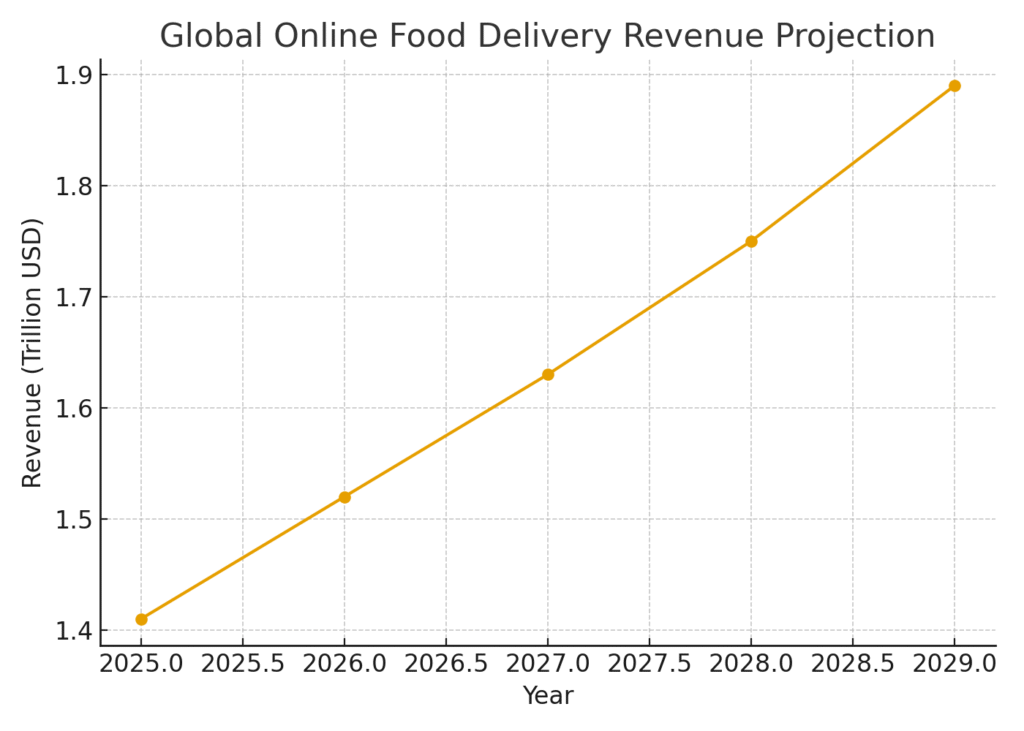
| 1 | Market Growth | Global online food delivery market expected to grow at 7.88% annually from 2025-2029, reaching $1.91 trillion by 2029 | 🚀 |
| 2 | Last-Mile Growth | Last mile delivery market growing from $176.99B in 2025 to $373.92B by 2033 (CAGR 9.8%) | 📦 |
| 3 | US Market Size | US couriers & local delivery services market reached $178.3 billion in 2025, growing 3.0% YoY | 💵 |
| 4 | Consumer Lifestyle | 51% of US consumers believe delivery/takeout is "essential," with 67% of Gen Z and 64% of Millennials agreeing | 🎯 |
| 5 | Ordering Preference | 56% of Canadians, 48% of Australians, 46% of Americans prefer third-party delivery apps/websites | 📱 |
| 6 | Speed Expectations | 66% of consumers now expect same-day delivery, especially for online shopping | ⚡ |
| 7 | Brand Loyalty | 98% of consumers say delivery experience impacts their brand loyalty | ❤️ |
| 8 | Promotions Impact | 82% of delivery customers prioritize restaurants offering specials, discounts, or value promotions | 🎁 |
| 9 | Cost Structure | Last-mile delivery accounts for 53% of total delivery costs in logistics | 💰 |
| 10 | Failed Deliveries | 5% of last-mile deliveries fail, costing an average of $17.78 each | ⚠️ |
| 11 | Delivery Timing | 40% of US online shoppers expect delivery within two days of ordering | ⏰ |
| 12 | Pedestrian Efficiency | Pedestrian couriers deliver up to 50 parcels per shift. Two vans + 8 walkers = 6 conventional vans | 🚶 |
| 13 | Workforce Innovation | Walking delivery model enables workers without vehicles/licenses to join courier workforce with fitness benefits | 💪 |
| 14 | Automation Growth | Delivery robots projected to grow at 20.4% annually in urban and campus environments | 🤖 |
| 15 | AI Acceptance | 52% of consumers comfortable with AI providing personalized recommendations (60% of Millennials) | 🧠 |
| 16 | Social Media Impact | 56% of Americans ordered trending items from social media, with 74% of Gen Z trying viral foods | 📸 |
| 17 | Discovery Channels | Top platforms for restaurant discovery: Instagram (22%), Facebook (19%), TikTok (18%), YouTube (16%) | 🔍 |
| 18 | Repeat Orders | 47% US, 48% Australian consumers place repeat orders weekly; 45% Canadians every two weeks | 🔄 |
| 19 | Grocery Delivery | Grocery delivery sector saw 22.2% global growth in 2024, with 29% US growth | 🛒 |
| 20 | Meal Kit Growth | Meal kit delivery revenue to surpass $20B in 2025, reaching $25B by 2027 (19% annual growth) | 🍱 |
Top 20 Walking Delivery Marketing Statistics 2025
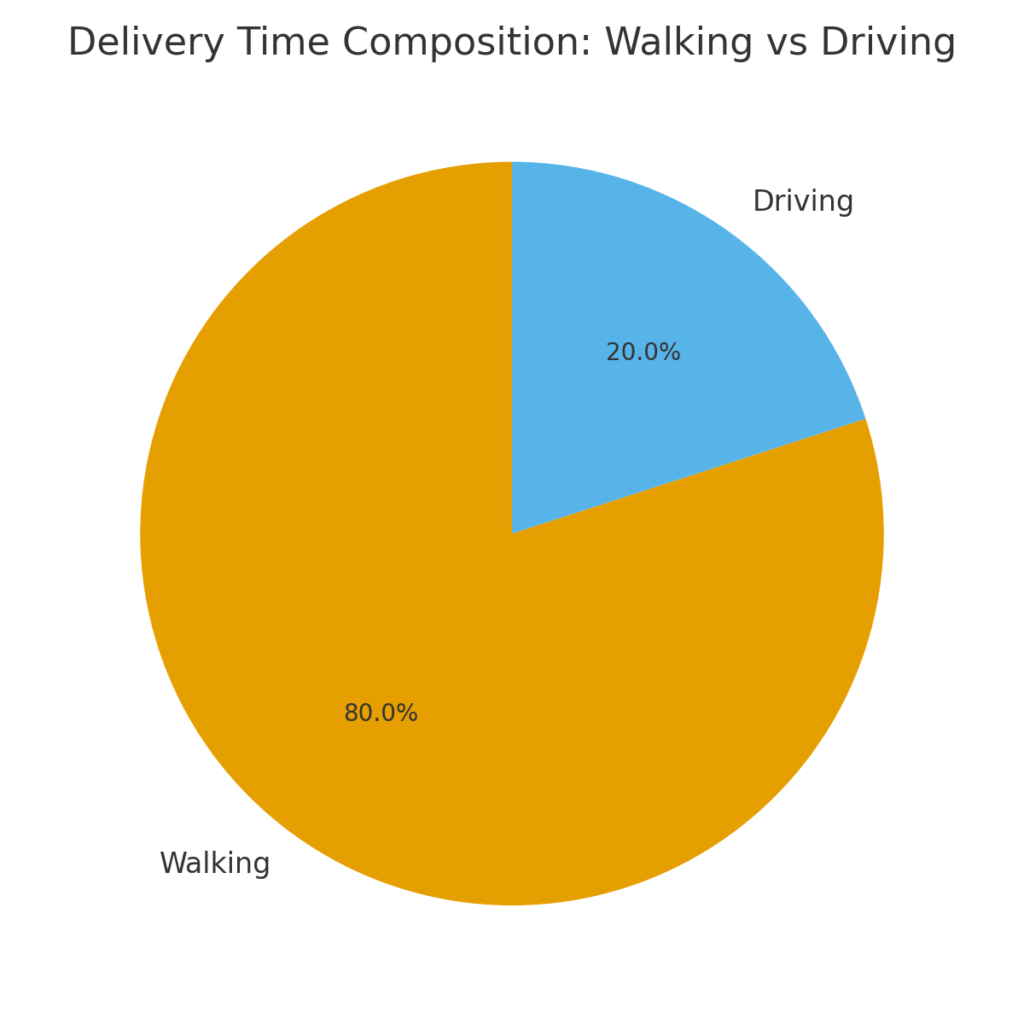
Walking Delivery Marketing Statistics #1: 80% Of Delivery Time Spent Walking
Research shows that around 80% of a courier’s total route time is actually spent walking after parking. This highlights the underestimated importance of footwork in logistics. Companies that invest in optimizing walk paths or parking strategies can drastically improve efficiency. Marketing teams can position this as proof of the human effort behind fast deliveries. It also emphasizes the need to build urban delivery strategies around walking rather than just vehicles.
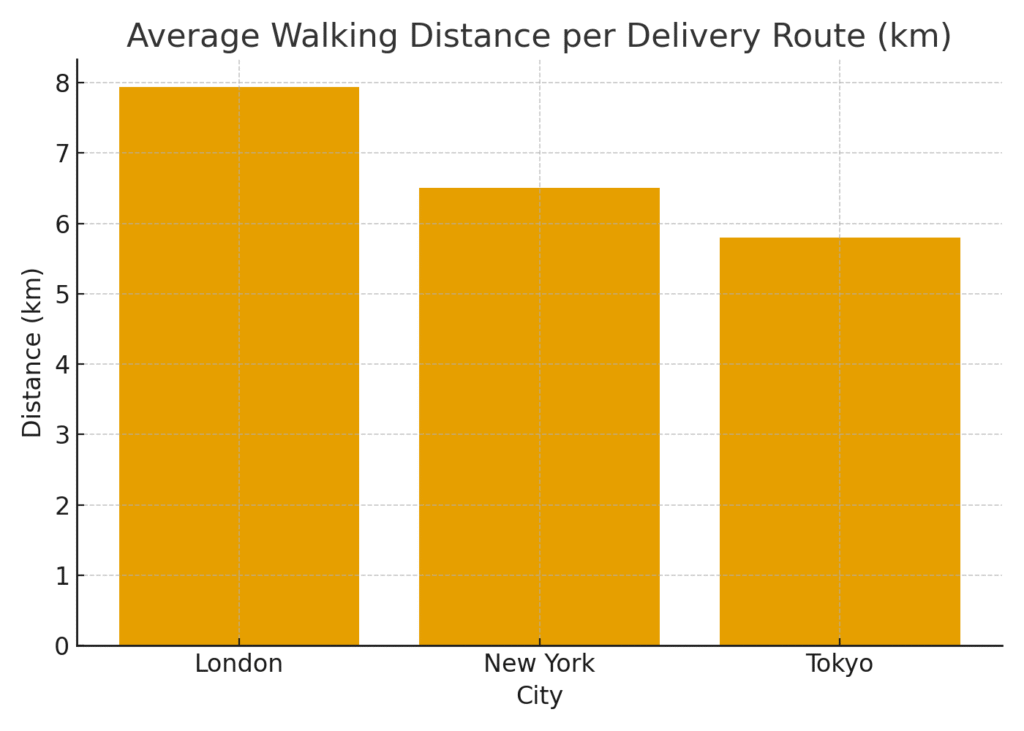
Walking Delivery Marketing Statistics #2: Average Walking Distance 7.94 Km Per Route
Studies in London have shown that delivery workers walk nearly 7.94 kilometers per route. That distance is almost half of the total journey, proving walking is central to last-mile logistics. For marketers, this paints a human picture that connects with audiences who value hard work. It also highlights the need for brands to support couriers with better technology and route planning. In customer campaigns, this stat shows how effort is put into ensuring timely deliveries.
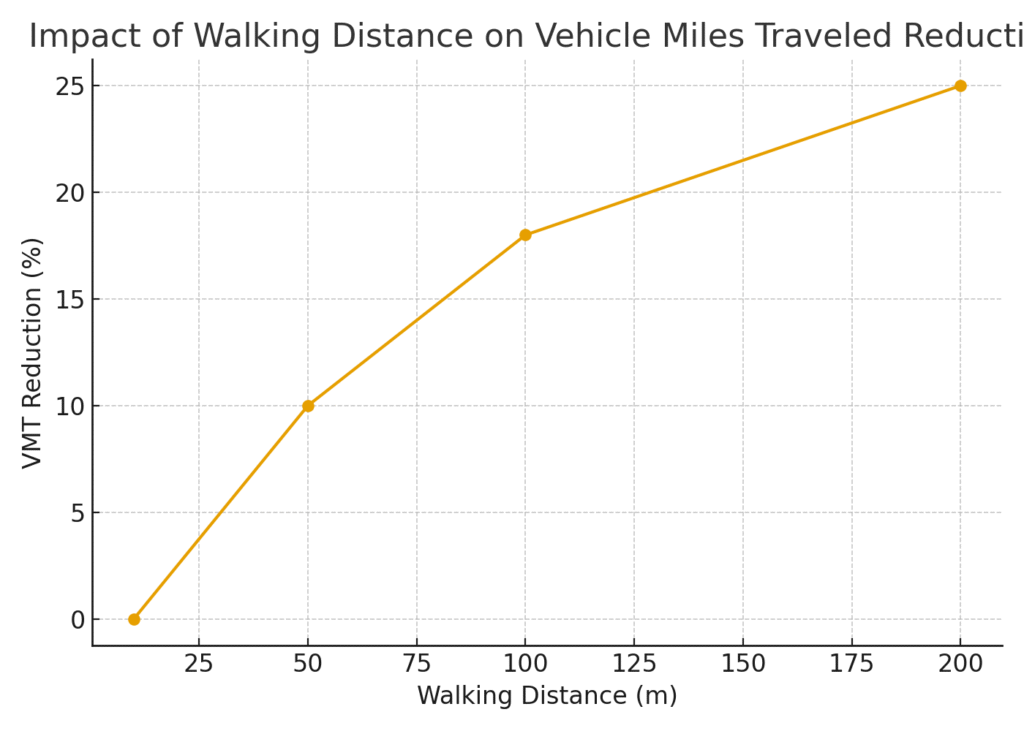
Walking Delivery Marketing Statistics #3: Walking Reduces Vehicle Miles Traveled By 25%
Increasing the walking distance couriers are willing to take can reduce vehicle miles traveled by up to 25%. This has a significant impact on fuel consumption and emissions. Marketing teams can spotlight this as a sustainability win for eco-minded customers. It also helps brands position themselves as environmentally responsible. By highlighting reduced traffic impact, companies can build stronger public trust.
Walking Delivery Marketing Statistics #4: Driving Time Reduced By 72% With Walking
Allowing couriers to walk farther can reduce driving time by up to 72%. This shows walking is not a “waste of time,” but actually a smart trade-off. Marketing campaigns can use this figure to highlight innovation in delivery strategies. Customers also benefit, as reduced driving often means faster, less delayed service. This makes walking a marketing message that combines speed with eco-benefits.
Walking Delivery Marketing Statistics #5: Fewer Stops With Walking Aggregation
When couriers walk farther, they can deliver to more addresses per stop, reducing total stops by almost 88%. This leads to fewer parking issues and less traffic congestion. Marketers can frame this as a solution to urban delivery headaches. It also showcases a company’s ability to serve multiple customers more efficiently. Consumers appreciate smoother delivery experiences, which strengthens loyalty.
Walking Delivery Marketing Statistics #6: Stop Dwell Time Increases With Walking
While walking reduces total stops, it increases the dwell time at each stop. Couriers spend more time walking between addresses after leaving their vehicle. This highlights the need for balance in route design. For marketing, it’s an opportunity to show transparency about the human effort behind deliveries. It positions couriers as hardworking individuals rather than just parts of a system.
Walking Delivery Marketing Statistics #7: Optimal Walking Distances Exist Around 50m
Simulations show that walking up to about 50 meters is the most efficient balance between speed and effort. Beyond that, the efficiency gains flatten. Marketers can use this to promote technology that optimizes courier routes. It also creates a talking point about how data shapes real-world delivery. Customers may be reassured knowing there’s science behind how fast their deliveries arrive.
Walking Delivery Marketing Statistics #8: Walkability Influences Consumer Preferences
Consumers are more likely to use pickup points or delivery lockers if their neighborhoods are walkable. This shows how urban design connects to delivery choices. Marketers can frame this as empowering customers with choice and convenience. It also highlights partnerships between delivery firms and city planners. Companies can show they’re adapting to lifestyle changes in walkable communities.
Walking Delivery Marketing Statistics #9: Pickup Point Preference Higher In Low-Income Groups
Nearly 96% of respondents in lower income groups prefer pickup point delivery options. Cost savings and flexibility drive this choice. Marketers can tailor messaging that highlights affordability and convenience. It also provides insights into segmenting campaigns for different customer groups. By offering walking-based pickup models, businesses can connect with value-driven consumers.
Walking Delivery Marketing Statistics #10: Online Food Delivery Market Growing At 7.88% CAGR
The global online food delivery market is set to grow nearly 8% annually from 2025 to 2029. Walking couriers play a role in dense cities where vehicles are impractical. This trend creates opportunities for marketers to promote local, eco-friendly delivery options. Walking delivery fits into campaigns highlighting sustainability and speed. It ensures brands remain aligned with evolving consumer values.
Walking Delivery Marketing Statistics #11: Food Delivery Revenue Hits $1.41 Trillion
The online food delivery market is expected to generate $1.41 trillion in revenue. Walking couriers are an essential part of this ecosystem. Marketers can use this to show the economic significance of delivery workers’ efforts. It also allows campaigns to stress how walking supports a trillion-dollar industry. This number adds credibility to stories about scale and impact.
Walking Delivery Marketing Statistics #12: Adults Order Delivery 3–5 Times Monthly
Over 40% of adults report ordering delivery 3 to 5 times per month. This rising demand increases pressure on last-mile efficiency. Walking couriers are a critical piece of meeting that demand. For marketers, it’s a chance to frame walking delivery as part of everyday life. It connects the habit of frequent delivery to the people who make it happen.
Walking Delivery Marketing Statistics #13: 35% Of Consumers Value Low Delivery Fees
Low delivery fees are the top priority for 35% of consumers. Walking delivery helps keep costs down by reducing fuel and vehicle maintenance. Marketers can frame this as “affordable and eco-friendly” delivery. Campaigns can target cost-conscious shoppers who also value sustainability. This stat makes walking a strong selling point in competitive markets.
Walking Delivery Marketing Statistics #14: 58% Of Shoppers Frustrated By High Delivery Costs
In 2025, 58% of online shoppers cited high delivery fees as a frustration. Walking couriers help reduce operational costs and improve pricing. Marketing campaigns can highlight how innovative methods address these frustrations. It also builds consumer confidence that companies listen to their concerns. This can be positioned as part of a brand’s customer-first promise.
Walking Delivery Marketing Statistics #15: 70% Of Shoppers Trust DHL For Deliveries
Seven in ten shoppers trust DHL for delivery and returns. Trust is a major marketing asset in e-commerce. Walking couriers, when presented as efficient and human-focused, can reinforce this trust. Companies can highlight how walking helps meet delivery promises. It becomes part of the story of why customers stay loyal.
Walking Delivery Marketing Statistics #16: 72% Expect Free Delivery
Consumers now expect free delivery as standard, with 72% saying it influences their shopping. Walking delivery reduces costs, making free delivery more sustainable for businesses. Marketers can align with this demand by showcasing walking as a cost-saver. It also positions businesses as consumer-friendly. This helps brands stay competitive in a crowded e-commerce market.
Walking Delivery Marketing Statistics #17: US Food Delivery Market $429.9 Billion By 2025
The U.S. food delivery market is forecasted to reach nearly $430 billion in 2025. Walking couriers will play a large role in congested urban markets like New York and San Francisco. Marketers can highlight this scale to attract investors or customers. It also allows storytelling about how walking is vital in achieving such large revenue. Walking thus becomes both a local and global story.
Walking Delivery Marketing Statistics #18: 47% Of Consumers Place Repeat Orders Weekly
Almost half of consumers reorder from the same restaurants weekly. This repeat behavior shows the importance of reliable delivery. Walking couriers support this consistency in densely populated areas. For marketers, it’s an opportunity to show how delivery workers help build customer loyalty. Repetition makes the brand and delivery inseparable in consumers’ minds.
Walking Delivery Marketing Statistics #19: 51% See Delivery As A Lifestyle
More than half of U.S. consumers say delivery is essential to their lifestyle. Among Gen Z, the number jumps even higher. Walking couriers fit naturally into this cultural shift toward convenience. Marketers can present walking as part of modern living. This creates emotional connections with audiences who rely heavily on delivery.
Walking Delivery Marketing Statistics #20: Uber Eats Walking Delivery Pilot In Tokyo
Uber Eats tested walking couriers in Tokyo to adapt to dense city layouts. This experiment shows the global potential of walking delivery. Marketers can highlight it as proof of innovation and adaptability. It also builds excitement around future delivery methods. For audiences, this demonstrates a forward-thinking approach to urban logistics.
Final Thoughts On Walking Delivery Marketing Statistics
Looking through these walking delivery marketing statistics, I feel a deep appreciation for the unseen effort that keeps modern cities running smoothly. Behind every hot meal, package, or grocery drop-off are workers walking miles every day to meet customer expectations. For me, these stats aren’t just numbers — they are reminders of the human resilience and adaptability shaping logistics. As I continue to explore these insights with the guidance of a leading marketing agency in New York, I see the potential to tell more human stories in delivery marketing. At the end of the day, walking delivery is not just about efficiency — it’s about connecting people, cities, and brands in ways that make everyday life better.
SOURCES
- https://www.researchgate.net/publication/392980018_The_role_of_walking_in_last-mile_urban_deliveries