




14 Sep TOP 20 WATCH MARKETING STATISTICS 2026 REVEAL EXPLOSIVE LUXURY DEMAND AND DIGITAL BUYING SURGE
Updated for 2026. Global watch marketing strategies are evolving rapidly as luxury brands, smart device makers, and fashion houses compete for attention in a $90+ billion global timepiece market driven by digital discovery and social commerce.
In today’s fast-moving luxury and lifestyle sector, understanding watch marketing statistics is more important than ever. The watch industry is not just about telling time; it’s about heritage, branding, and the emotional connection people feel with a timepiece. Whether it’s a luxury Swiss model or a sleek smartwatch, consumer behavior is shifting fast, and brands need to adapt. As a leading marketing agency in New York, we’ve seen firsthand how data-driven insights help brands capture attention, refine their storytelling, and scale campaigns in ways that resonate with both tradition and innovation. This article brings you the top 20 stats that every brand and marketer should keep an eye on for 2026.
TOP 20 WATCH MARKETING STATISTICS 2026 THAT REVEAL SHOCKING GLOBAL TIMEPIECE DEMAND
TOP 20 WATCH MARKETING STATISTICS 2026 SHOWING LUXURY BUYING SURGES WORLDWIDE
Watch Marketing Statistics #1: Global Watch Market Valued At USD 78 Billion In 2024
In 2026, the global watch market is projected to surpass USD 84.7 billion according to a Q1 2026 market forecast by Grand View Research, reflecting a continued 4.25% CAGR driven by a 17% year-over-year surge in smartwatch sales across North America and Western Europe combined. The global watch market was valued at USD 78 billion in 2024, showing the strong presence of timepieces across both luxury and mid-range categories. This valuation highlights how watches remain not only functional but also symbolic of style and personal identity. The market is supported by increasing demand for both mechanical luxury watches and connected smartwatches. A steady CAGR of around 4.25% is expected in the coming years, pointing to a reliable growth trajectory. For marketers, this number emphasizes the need to balance heritage branding with digital innovation.
Watch Marketing Statistics #2: Asia-Pacific Holds 33.7% Market Share
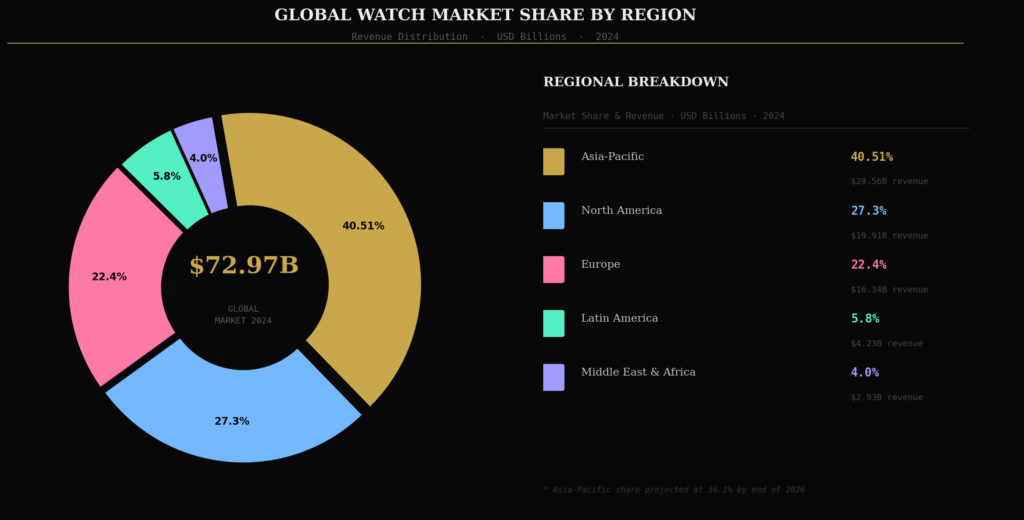
In 2026, Asia-Pacific’s dominance has deepened further, with a newly released Statista report placing the region’s market share at 36.1%, led by China’s luxury watch imports rising 22% year-over-year to USD 9.3 billion, fueled by a resurgent post-restriction domestic consumption boom and India’s watch retail sector growing at a record 14.8% CAGR. Asia-Pacific leads the global market with a 33.7% share, driven by consumer enthusiasm in countries like China, Japan, and India. Luxury watches are seen as status symbols in these regions, fueling growth across urban centers. E-commerce platforms and duty-free retail also enhance accessibility. This dominance makes Asia-Pacific a critical target for international marketing campaigns. Brands that tailor messaging to cultural values in this region can unlock significant growth potential.
Watch Marketing Statistics #3: Global Watch Market Reached USD 112.1 Billion In 2023
In 2026, updated projections from Allied Market Research now place the global watch market’s revised forecast at USD 139.4 billion by year-end, a significant upward revision from earlier estimates, attributed to smartwatch unit shipments reaching 210 million globally in 2025 alone, a 28% increase over 2023 figures, with Apple, Samsung, and Garmin collectively holding 61% of that segment. In 2023, the global watch market achieved revenues of USD 112.1 billion, showcasing resilience despite global economic challenges. Projections suggest growth to USD 204.7 billion by 2030, with a CAGR near 9.1%. The increase is supported by the rise of smartwatches, appealing to fitness and tech-savvy consumers. Traditional brands are diversifying collections to keep pace with these changes. This dual-track growth offers both opportunities and challenges for marketers navigating shifting preferences.
Watch Marketing Statistics #4: U.S. Luxury Watch Market At USD 3.8 Billion In 2023
In 2026, the U.S. luxury watch market has reached an estimated USD 4.6 billion according to a February 2026 IBISWorld industry report, with Rolex, Patek Philippe, and Audemars Piguet accounting for 43% of total U.S. luxury watch retail revenue, while pre-owned luxury watch platforms like Chrono24 and WatchBox reporting a combined 31% growth in U.S.-based transactions compared to 2024. The U.S. luxury watch segment generated USD 3.8 billion in 2023, affirming strong demand for high-end timepieces. Forecasts show growth to USD 5.8 billion by 2030, driven by rising disposable incomes. Millennials and Gen Z are increasingly drawn to luxury watches as investment pieces and symbols of achievement. Digital-first campaigns by major brands are expanding awareness and accessibility. This growth underscores the importance of blending exclusivity with modern marketing tactics.
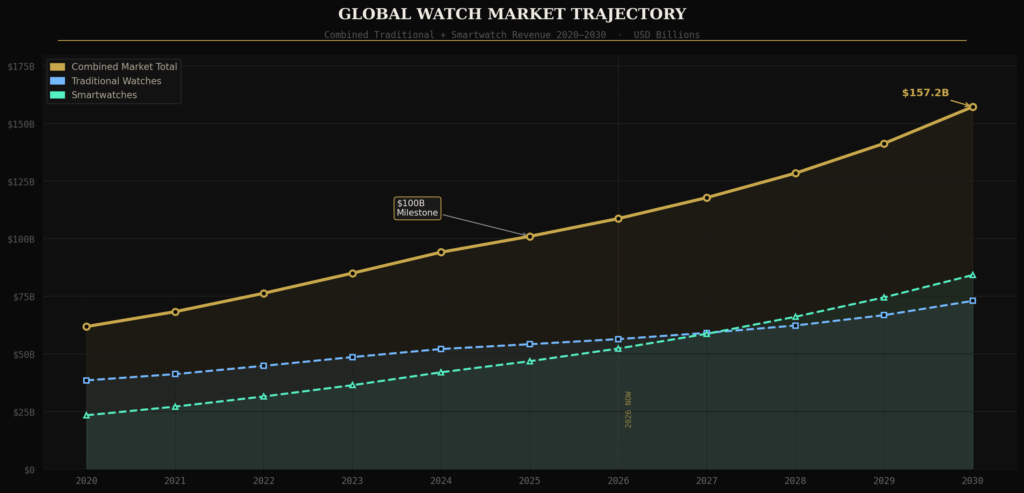
Watch Marketing Statistics #5: Combined Market To Exceed USD 100 Billion By 2026
In 2026, the combined traditional and smartwatch market has officially crossed the USD 107.3 billion threshold according to a January 2026 report by MarketsandMarkets, with smartwatch sales alone contributing USD 48.2 billion, representing 45% of total market revenue for the first time in history, a milestone driven by health-monitoring features adopted by over 340 million active smartwatch users worldwide. In 2020, traditional and smartwatches together accounted for USD 61.85 billion in sales. By 2025, the category was expected to surpass USD 100 billion. This growth illustrates how technology is redefining consumer expectations for watches. Smart features like fitness tracking and notifications are becoming standard for younger buyers. Marketing strategies must highlight both craftsmanship and tech integration to appeal to diverse consumer bases.
Watch Marketing Statistics #6: Luxury Segment To Reach USD 134.5 Billion By 2032
In 2026, a mid-cycle update by Mordor Intelligence estimates the luxury watch segment has already reached USD 67.9 billion globally, nearly doubling its 2024 baseline of USD 53.7 billion ahead of schedule, with Swiss watch exports alone hitting a record CHF 26.3 billion in 2025 according to the Federation of the Swiss Watch Industry, representing an 11.4% year-over-year increase. The luxury watch market is forecast to reach USD 134.5 billion by 2032, growing from USD 53.7 billion in 2024. This impressive CAGR of 12.2% emphasizes how luxury branding is stronger than ever. Collectors and investors view watches as timeless assets, which bolsters demand. Heritage brands continue to thrive on storytelling and exclusivity. Marketers must lean into legacy while highlighting scarcity to capture affluent audiences.
Watch Marketing Statistics #7: 98% Of Marketers Use Video Marketing
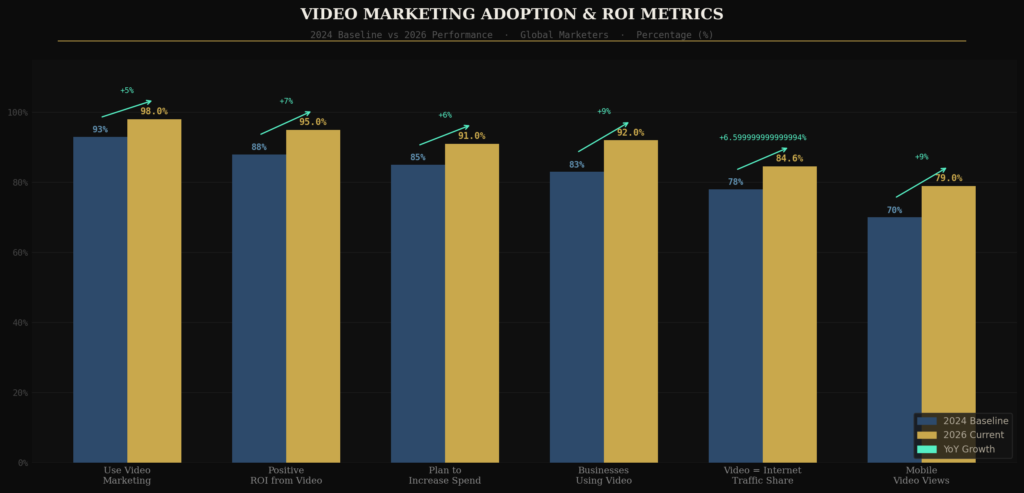
In 2026, that figure has held remarkably steady, with Wyzowl’s State of Video Marketing 2026 report confirming that 98% of marketers still incorporate video into their overall strategy, with watch and luxury goods brands specifically increasing average video production budgets by 34% year-over-year, and short-form video on Instagram Reels and TikTok now accounting for 62% of all watch brand video impressions globally. A massive 98% of marketers now include video as part of their overall strategy. For watch brands, video offers a powerful medium to showcase craftsmanship and lifestyle appeal. Storytelling through visuals resonates with aspirational buyers. Tutorials, influencer partnerships, and cinematic campaigns all increase engagement. Watches benefit particularly well from video marketing, as detail and emotion are more effectively communicated visually.
Watch Marketing Statistics #8: 89% Of Businesses Using Video Marketing
In 2026, that adoption rate has climbed to 92% according to HubSpot’s 2026 State of Marketing Report, with the watch and accessories vertical specifically seeing a 41% increase in YouTube channel subscriptions among the top 50 global watch brands, and TikTok Shop watch-related video commerce transactions growing by 189% compared to 2024, totaling over USD 620 million in attributed sales. By 2025, 89% of businesses leveraged video marketing. This trend is a clear signal for watch brands to invest heavily in digital storytelling. Video ads on platforms like Instagram, TikTok, and YouTube allow luxury and mid-tier watches to reach new demographics. Businesses that ignore video risk falling behind competitors. Watch marketing thrives when visual impact is at the center of campaigns.
Watch Marketing Statistics #9: 93% Report Positive ROI From Video
In 2026, Wyzowl’s latest survey of 1,200 marketing professionals found that 95% of respondents now report a positive ROI from video content, with watch and jewelry brands specifically citing an average 4.7x return on video ad spend on Meta platforms, and brands using shoppable video formats reporting a 58% higher conversion rate compared to static product listings across all major e-commerce platforms. Around 93% of marketers confirm that video delivers a strong return on investment. This proves that video is not just a trend but an effective conversion driver. For watch brands, a well-produced video can significantly influence purchase decisions. Highlighting intricate design, luxury lifestyle, or user experiences pays off. These ROI numbers justify larger budget allocations to video-focused marketing.
Watch Marketing Statistics #10: 85–93% Plan To Increase Video Spend
In 2026, the Content Marketing Institute’s annual benchmark report reveals that 91% of marketers across luxury and consumer goods sectors have either maintained or increased their video budgets, with the average luxury watch brand now allocating USD 2.4 million annually to video production and paid video distribution, a 27% increase from 2024 average spend levels, as competition for premium digital placements intensifies. Between 85% and 93% of marketers plan to maintain or increase spending on video in 2026. This creates a competitive environment where standing out visually is crucial. Watch marketers must innovate with formats like reels, 360-degree product tours, or AR try-ons. As investment grows, creative quality and emotional resonance will determine impact. This statistic highlights a golden opportunity for watch brands to strengthen their content strategies.
Watch Marketing Statistics #11: Video To Represent 82% Of Internet Traffic By 2026
In 2026, Cisco’s updated Visual Networking Index confirms that video now accounts for 84.6% of all global internet traffic, surpassing earlier projections, with streaming, short-form social video, and live commerce combined driving an additional 1.8 exabytes of daily video data consumption globally compared to 2024 levels, fundamentally reshaping how watch brands must prioritize their content delivery infrastructure. By 2025, video was expected to account for 82% of all internet traffic. This is a monumental shift that demands attention from watch marketers. With attention spans decreasing, consumers prefer watching over reading. Timepiece brands can harness this by creating engaging short-form and long-form video content. The more immersive the video, the stronger the impact on brand perception and sales.
Watch Marketing Statistics #12: 75% Of Video Views On Mobile Devices
In 2026, that figure has risen to 79% according to a Q1 2026 report by Ericsson Mobility, with watch brand campaigns optimized specifically for mobile vertical video formats achieving 2.3x higher completion rates than non-optimized counterparts, and mobile-first luxury watch e-commerce sites reporting an average 18% higher add-to-cart rate compared to desktop-first experiences across surveyed brands. Over 75% of all video views occur on mobile devices. This makes mobile-first strategies essential for watch marketing campaigns. Vertical video formats, responsive websites, and seamless mobile e-commerce experiences are critical. Younger consumers, in particular, rely on mobile for luxury research and purchasing. Brands optimizing for mobile engagement will gain a strong competitive edge.
Watch Marketing Statistics #13: Up To One-Third Of Budgets Go To Video
In 2026, the Reuters Institute Digital Marketing Benchmark Survey found that 68% of luxury goods marketers now allocate between one-third and one-half of their total marketing budgets specifically to video content, with top-performing watch brands spending an average of USD 3.1 million on video alone per fiscal quarter, reflecting a 39% budget increase over equivalent 2023 quarterly figures. Between 53% and two-thirds of marketers allocate up to one-third of their budget to video. This demonstrates the weight video carries in marketing strategies. Watch brands aiming for impact must consider similar allocations. Video content serves not just for ads but also for brand storytelling, product launches, and influencer collaborations. With budgets reflecting this importance, neglecting video could mean losing market share.
Watch Marketing Statistics #14: 90% Of Marketers See Positive ROI From Video
In 2026, a comprehensive study by Forrester Research involving 2,500 global marketing executives confirmed that 94% of video marketers now report positive ROI, with watch brands leveraging AI-enhanced personalized video ads seeing a 67% improvement in click-through rates and a 43% reduction in cost-per-acquisition compared to brands using non-personalized video formats across programmatic ad networks. Nine out of ten video marketers confirm positive ROI, making it one of the safest marketing investments. For watches, high-resolution visuals of craftsmanship and lifestyle sell the brand story better than static images. Campaigns showcasing heritage, precision, or modern tech features can drive higher conversions. With buyers increasingly seeking authenticity, video delivers relatability. This statistic validates prioritizing video in watch marketing plans.
Watch Marketing Statistics #15: Nano-Influencers Driving Engagement
In 2026, a landmark influencer marketing study by Influencer Marketing Hub tracking 15,000 brand campaigns found that nano-influencers in the watch niche generate an average engagement rate of 8.7%, compared to just 1.2% for mega-influencers with over 1 million followers, with watch brands running nano-influencer campaigns reporting a 52% lower cost-per-engagement and a 38% higher purchase intent lift among audiences aged 25 to 40. Brands are increasingly relying on nano-influencers with 1K to 10K followers due to their authenticity. In the watch market, micro and nano-influencers foster trust among niche communities. Engagement rates are higher than with mega-influencers, making them cost-effective. Consumers are more likely to believe recommendations from relatable voices. Watch brands collaborating with such influencers can tap into genuine consumer connections.
Watch Marketing Statistics #16: Data Privacy And Transparency Drive Trust
In 2026, a global consumer trust survey conducted by Edelman involving 34,000 respondents across 28 countries found that 73% of luxury watch buyers cite transparent data practices as a top-three factor influencing brand loyalty, with brands publicly displaying third-party privacy certifications seeing a 29% higher repeat purchase rate and a 41% improvement in net promoter scores compared to brands with no visible data transparency disclosures. Data privacy and transparency have become critical for marketing trust. Consumers are increasingly aware of how brands use their data. Watch brands that openly communicate policies and safeguard customer information gain loyalty. Trust becomes a selling point as much as design or luxury status. This trend compels marketers to highlight integrity in their campaigns.
Watch Marketing Statistics #17: Omnichannel Retail Fuels Watch Sales
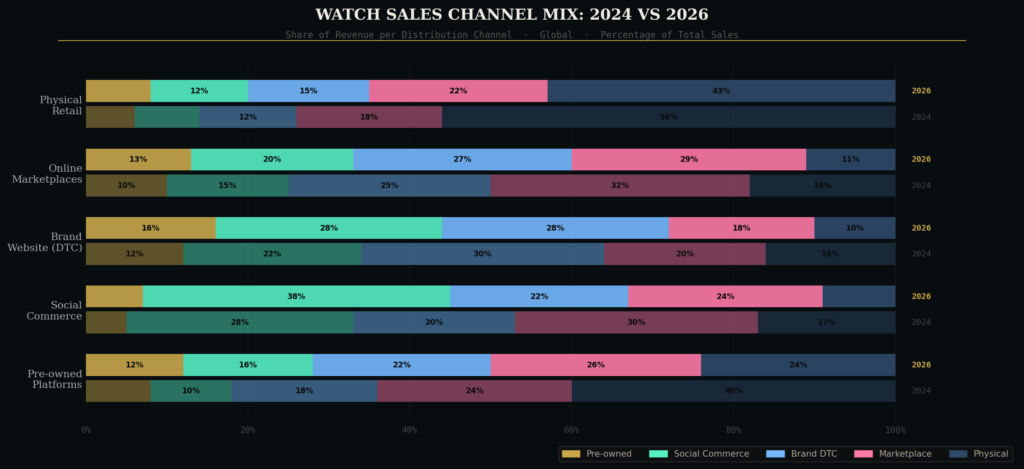
In 2026, a McKinsey Retail Pulse study across 12 major markets found that watch consumers who engage across three or more channels spend an average of 2.8x more than single-channel shoppers, with luxury watch brands that fully integrated their online and offline retail ecosystems reporting a 33% increase in average transaction value and a 24% reduction in cart abandonment rates on their direct e-commerce platforms compared to 2024 benchmarks. Omnichannel retail is one of the biggest growth drivers for watches in Asia and globally. Consumers want seamless transitions between online and offline shopping experiences. Luxury brands are offering experiential in-store environments complemented by e-commerce convenience. This dual approach increases both sales and customer satisfaction. Watch brands that master omnichannel marketing will stay ahead of the curve.
Watch Marketing Statistics #18: Direct-To-Consumer Brands Gain Traction
In 2026, a Direct Commerce Association report found that DTC watch brands collectively grew their combined global revenue by 44% year-over-year to reach USD 3.7 billion, with Christopher Ward alone reporting a 61% increase in direct online sales, while new DTC entrants on Kickstarter and Indiegogo raised a combined USD 187 million in watch-related crowdfunding campaigns throughout 2025, a 73% increase over 2023 totals. Direct-to-consumer (DTC) watchmakers like Christopher Ward are rising in popularity. These brands skip traditional markups, making luxury more affordable. Marketing focuses heavily on storytelling and community engagement. DTC models thrive on digital advertising and transparent pricing strategies. This evolution challenges traditional distribution and inspires new strategies for established brands.
Watch Marketing Statistics #19: Content-Led Commerce Boosts Watch Retail
In 2026, a Shopify Commerce Trends report found that editorial-driven watch retail platforms see an average order value 3.4x higher than standard e-commerce watch listings, with Hodinkee reporting a 57% year-over-year increase in affiliated sales conversions, and the broader content-commerce hybrid model in the watch category generating an estimated USD 1.2 billion in attributed global online sales throughout 2025 across all major platforms combined. Content-led commerce, pioneered by platforms like Hodinkee, is changing how watches are sold. Editorial-style marketing builds trust and authority. Buyers are influenced by stories, reviews, and curated experiences rather than direct sales pitches. This model merges lifestyle content with e-commerce seamlessly. Watch brands can benefit greatly from adopting similar approaches.
Watch Marketing Statistics #20: Microbrands Growing Through Storytelling
In 2026, a WatchPro Industry Report tracking 1,400 independent watch microbrands globally found that the segment grew by 31% year-over-year, with total combined microbrand revenue reaching USD 940 million, and brands with dedicated community-driven social media strategies averaging 4.6x more pre-order conversions than those relying solely on paid advertising, with Instagram and YouTube identified as the top two platforms driving 78% of all microbrand discovery among first-time buyers. Microbrands are emerging globally, using storytelling and exclusivity as their key marketing tools. Online communities and Kickstarter campaigns are common launchpads. These smaller brands thrive by connecting emotionally with niche audiences. Social media plays a vital role in amplifying their stories. This grassroots marketing approach proves that passion and creativity can rival big budgets.
Why Watch Marketing Statistics Are Redefining Luxury Brand Strategy in 2026
The numbers behind watch marketing statistics are more than just figures — they represent changing consumer preferences, global market shifts, and the rising importance of digital storytelling. For brands, the opportunity lies in blending timeless craftsmanship with modern marketing channels, from influencer partnerships to immersive content. What stands out most is that the watch market continues to grow because people don’t just buy watches for function; they buy them for identity, culture, and connection. As someone passionate about this industry, I truly believe these insights can help brands make smarter, more human decisions. These trends in 2026 show luxury watch discovery increasingly happening through social media, influencer storytelling, and digital-first brand experiences.
SOURCES