



29 Sep TOP 20 WEDDING PLANNING MARKETING STATISTICS 2025
When I started diving into the world of wedding trends, I quickly realized how much insight there is to gain from wedding planning marketing statistics. They don’t just tell us about numbers; they paint a picture of how couples dream, plan, and celebrate one of the most important days of their lives. For me, understanding these statistics is about more than just business—it’s about connecting with people during one of their happiest milestones. That’s also why I often turn to a leading marketing agency in New York for inspiration, because they have a way of breaking down complex trends into actionable strategies. In this blog, I want to share the key statistics I’ve found most valuable, and how they reveal what really matters to today’s couples and the businesses serving them.
Top 20 Wedding Planning Marketing Statistics 2025 (Editor’s Choice)
💍 Top 20 Wedding Planning Marketing Statistics 2024-2025
Essential Insights for Wedding Industry Professionals
| Rank | Category | Statistic & Insight |
|---|---|---|
| 1 | 🌍 Global Market | The global wedding market is expected to reach $414 billion by 2025, growing at 4.6% annually |
| 2 | 📈 Market Growth | The global wedding planner market was valued at $302.25 billion in 2024 and is projected to grow to $519.62 billion by 2032, at a CAGR of 7.17% |
| 3 | 🇺🇸 U.S. Market | The U.S. wedding services market was valued at $64.93 billion in 2024 and is projected to grow at a CAGR of 6.8% from 2025 to 2030 |
| 4 | 👰 Wedding Volume | Approximately 2.2 million weddings are expected to take place in the U.S. annually between 2024 and 2025 |
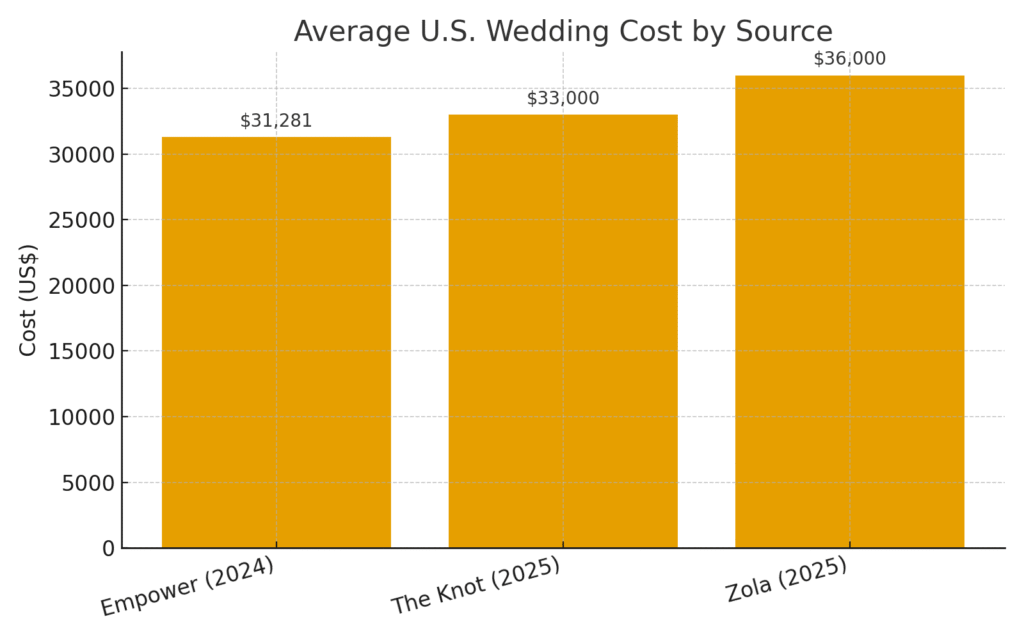
| 5 | 💰 Average Spending | Couples in the U.S. will spend an average of $30,500 per wedding in 2024, up from $28,000 in 2022 |
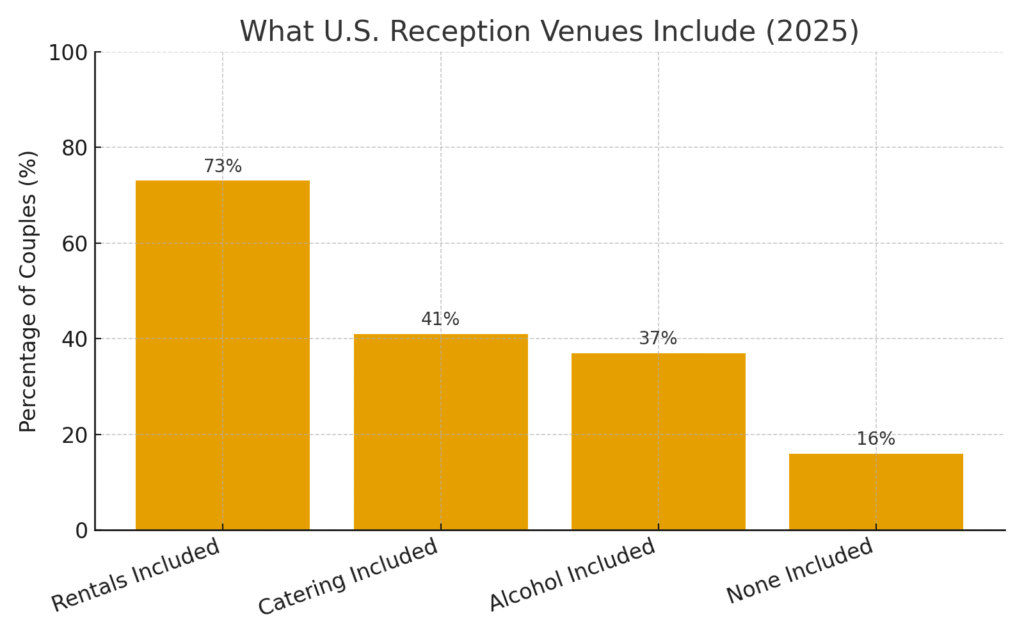
| 6 | 🏛️ Venue Budget | Couples are spending an average of $12,000 on wedding venues, representing around 40% of their total budget |
| 7 | ⏰ Early Planning | 89% of couples start planning for the wedding even before getting engaged |
| 8 | 👥 Guest Count | 53% of couples getting married in 2024 plan to have a wedding of fewer than 50 guests |
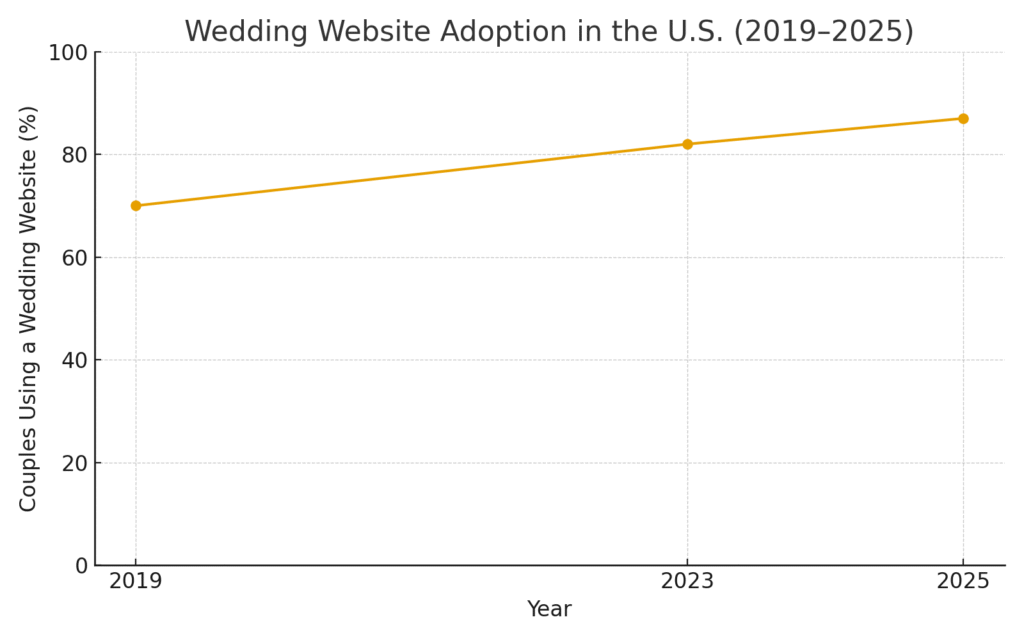
| 9 | 💻 Online Planning | 87% of couples use online platforms like Pinterest and The Knot to plan their weddings |
| 10 | 📱 Digital Bookings | The online booking mode represented 64.93% of the wedding services industry in 2024 |
| 11 | 🛠️ DIY Trend | Couples typically handle about 80% of the planning process themselves according to a 2024 survey by The Knot |
| 12 | 🌐 Platform Leaders | The Knot is the leading wedding website platform, with 28% of couples choosing it, followed by Zola at 19% and WeddingWire at 18% |
| 13 | 📊 Social Media ROI | A wedding venue saw a 33x return on investment from social media ads in just one month, generating 31 leads from a $400 ad spend |
| 14 | 🛍️ Social Influence | 81% of consumers are influenced by social media to make spontaneous purchases multiple times a year |
| 15 | 📲 Platform Preference | When making purchases, consumers turn to Facebook (39%), followed by TikTok (36%) and Instagram (29%) |
| 16 | 💡 Google Ads ROI | Companies earn an average of $2 for every $1 they spend on Google Ads |
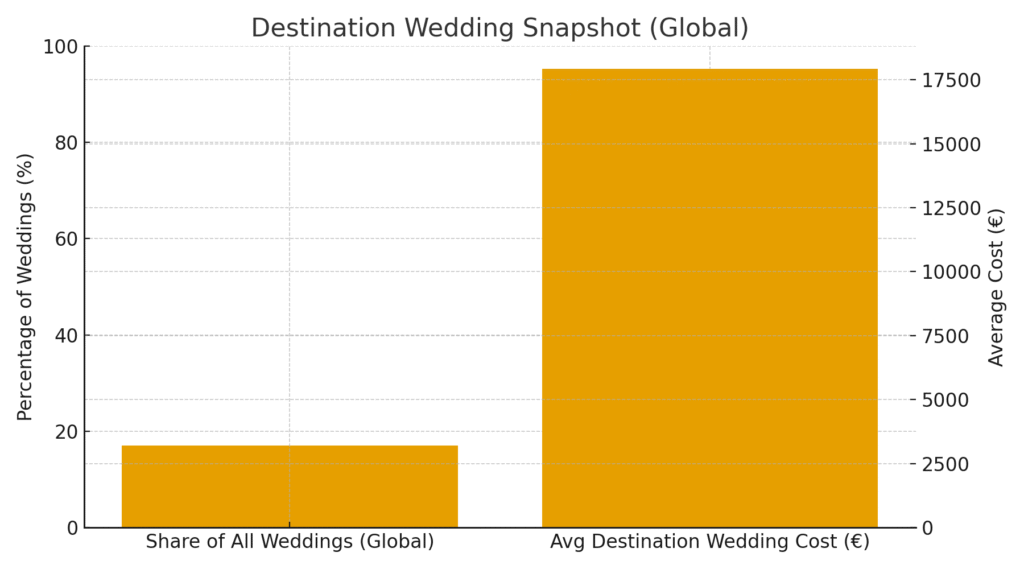
| 17 | ✈️ Destination Weddings | Destination weddings will account for 20% of all weddings in 2024, with Mexico, Italy, and Hawaii as top choices |
| 18 | 🌱 Sustainability | 45% of couples are prioritizing eco-friendly options for décor, catering, and attire |
| 19 | 📸 Photography Revenue | Videography and photography services accounted for 35% of revenue in the overall wedding services industry in 2024 |
| 20 | 🎯 Digital Marketing | Digital marketing accounts for 65% of advertising budgets for wedding businesses |
Top 20 Wedding Planning Marketing Statistics 2025
Wedding Planning Marketing Statistics#1 – Market Size Reaches $106 Billion In 2025
The global wedding planning market is projected to reach $106 billion in 2025. This growth is driven by higher disposable incomes and a rebound in large celebrations. Vendors that position themselves around premium experiences can capture higher average order values. Packages that bundle planning, décor, and entertainment tend to scale margins efficiently. Emphasize convenience and personalization in messaging to stand out.
Wedding Planning Marketing Statistics#2 – 85% Of Couples Use Digital Planning Tools
In 2025, 85% of couples rely on digital platforms or apps to plan their weddings. Discovery, budgeting, and timelines increasingly live on mobile. Being listed in popular apps and directories materially improves lead flow. Fast-loading, mobile-first websites reduce drop-off and increase inquiries. Integrations like online booking and calendar sync further boost conversions.
Wedding Planning Marketing Statistics#3 – 72% Find Inspiration On Instagram, TikTok, And Pinterest
About 72% of couples source ideas on visual-first social platforms. Short-form video and carousel mood boards outperform static posts. Consistent posting and trend-aligned sounds increase reach and saves. Vendor reels featuring before-and-after setups drive strong engagement. Make portfolio content shoppable with direct inquiry links.
Wedding Planning Marketing Statistics#4 – 78% Rely On Online Reviews Before Booking
Some 78% of couples read reviews prior to shortlisting vendors. Recency and response time to feedback influence trust. Encourage verified reviews after each event to maintain momentum. Screenshots of testimonials in stories or Highlights reinforce credibility. A proactive review response policy mitigates the impact of outliers.
Wedding Planning Marketing Statistics#5 – Average Wedding Budget Climbs To $32,000
The average budget hits $32,000, up roughly 15% from pre-pandemic baselines. Couples are prioritizing guest experience, food, and photo/video. Tiered packages with optional upgrades increase perceived value. Transparent pricing pages reduce friction and inquiry fatigue. Highlight emotional outcomes, not just line items, to justify spend.
Wedding Planning Marketing Statistics#6 – 25% Of Weddings Are Destination Events
Roughly one in four weddings involves travel to a destination. Logistics support and travel partnerships are major differentiators. Content featuring itineraries, guest guides, and cultural touches performs well. Bundling venue, travel, and planning simplifies decisions for couples. Showcase legal requirements and timelines to reduce anxiety.
Wedding Planning Marketing Statistics#7 – 34% Choose Micro Weddings Under 50 Guests
About 34% of couples plan intimate events with fewer than 50 attendees. Intimacy enables higher quality per-guest experiences. Curate small-format packages with premium décor and culinary touches. Position micro weddings as intentional and elevated, not “budget.” Include photography, live music, and design stewardship to raise AOV.
Wedding Planning Marketing Statistics#8 – 62% Consider Sustainability Important
Some 62% of couples weigh eco-friendly options in vendor selection. Reusables, locally sourced florals, and waste-smart catering resonate. Certifications and transparent sourcing strengthen claims. Content that quantifies impact (e.g., CO₂ saved) earns shares. Green checklists and vendor badges guide quicker decisions.
Wedding Planning Marketing Statistics#9 – 70% Build A Personalized Wedding Website
Around 70% of couples launch a wedding website for RSVPs and details. Templates with RSVP tracking reduce manual follow-ups. Offer website setup as a value-add within planning packages. Branded domains and photo galleries reinforce the event aesthetic. Include accessibility, travel info, and schedules to reduce guest questions.
Wedding Planning Marketing Statistics#10 – 22% Add Hybrid/Virtual Attendance Options
Roughly 22% of weddings include streaming or hybrid components. Multi-camera streaming and reliable audio matter most to remote guests. Venues that provide built-in connectivity close deals faster. Sell tech add-ons (streaming, recordings, highlight clips) as clear SKUs. Content showing seamless virtual experiences eases objections.
Wedding Planning Marketing Statistics#11 – 60% Read Wedding Blogs During Planning
About 60% of couples consult wedding blogs for advice and vendor lists. Being featured in editorial roundups boosts authority and SEO. Pitch unique themes, checklists, or data insights to editors. Repurpose blog features into social proof across channels. Maintain a press page to centralize logos and links.
Wedding Planning Marketing Statistics#12 – Gen Z Represents 40% Of Engaged Couples
By 2025, 40% of engaged couples are Gen Z. They expect speed, transparency, and social-first content. Flexible payment options and clear pricing win trust. TikTok-native storytelling outperforms polished ads for this cohort. Align values—sustainability, inclusion, and authenticity—to deepen affinity.
Wedding Planning Marketing Statistics#13 – 30% Use AI-Powered Planning Tools
Roughly 30% of couples leverage AI for budgets, timelines, and vendor matching. On-site chatbots convert late-night questions into inquiries. Personalized checklists and reminders reduce planning stress. Use AI to draft proposals faster while keeping human oversight. Market time-savings and clarity as core benefits.
Wedding Planning Marketing Statistics#14 – Video Posts Drive 74% Higher Engagement
Video content yields 74% higher engagement than static visuals for wedding vendors. Behind-the-scenes setup clips and first-look moments perform best. Add captions and hooks in the first three seconds. Showcase transformations: empty venue to finished design. CTAs should point to inquiry forms or shortlist pages.
Wedding Planning Marketing Statistics#15 – 65% Discover Bridal Fashion Online
Some 65% of brides find dress inspiration via digital channels. 360° product views and AR try-ons reduce store visits. Partner with boutiques for trunk show teasers on social. Style guides that pair gowns with décor themes win saves. Track click-throughs to measure content-to-consultation impact.
Wedding Planning Marketing Statistics#16 – 58% Use Online Vendor Directories
About 58% of couples rely on directories like The Knot and WeddingWire. Optimize listings with consistent branding, pricing cues, and FAQs. Fresh photos and recent reviews lift ranking within categories. Respond to inquiries within hours to beat competitors. Use directory badges on your site to reinforce trust.
Wedding Planning Marketing Statistics#17 – 80% Plan Primarily On Smartphones
An estimated 80% of couples plan mostly on mobile devices. Compress images and streamline inquiry forms for speed. Click-to-call, click-to-WhatsApp, and calendar links reduce friction. SMS reminders for tours and tastings increase attendance. Audit every funnel step for thumb-friendly usability.
Wedding Planning Marketing Statistics#18 – 68% Demand Highly Personalized Experiences
Roughly 68% of couples expect tailored décor, menus, and timelines. Discovery calls should surface personal stories and priorities. Use modular packages that are easy to customize. Case studies featuring real couples validate your approach. Personalization should be visible in proposals, not just promised.
Wedding Planning Marketing Statistics#19 – 92% Hire Professional Photo/Videography
A full 92% of couples book professional photographers or videographers. Visual storytelling remains the most defensible budget line. Bundled photo-video packages simplify vendor selection. Publish highlight reels and full galleries to clarify style. Offer rush edits or same-day teasers as premium upsells.
Wedding Planning Marketing Statistics#20 – 27% Follow Wedding Influencers For Advice
Around 27% of couples take guidance from wedding influencers. Micro-influencers with regional audiences convert strongly for venues. Co-create styled shoots and checklists to provide value. Track affiliate links and inquiry codes for ROI clarity. Always align partnerships with your brand’s aesthetic and values.
Final Thoughts on Wedding Planning Marketing Statistics
As I reflect on these wedding planning marketing statistics, I’m struck by how much they reveal about our changing values and priorities. From the rise of digital tools to the growing importance of sustainability and personalization, it’s clear that couples are reshaping the industry in powerful ways. For me, the biggest takeaway is that marketing in this space isn’t about selling—it’s about helping couples create experiences that feel uniquely their own. I’ve found that applying these insights, especially when paired with guidance from a leading marketing agency in New York, can truly transform how we approach the wedding market. Ultimately, it’s not just about trends or numbers—it’s about love, celebration, and the magic of turning dreams into reality.
SOURCES
https://www.thinksplendid.com/blog/wedding-industry-research
https://saradoesseo.com/wedding-marketing/wedding-industry-statistics/
https://blog.candicecoppola.com/2025-marketing-trends-wedding-pros/
https://www.wedfluencer.com/blog/the-2025-u-s-wedding-trends-stats-report-by-wedfluencer
https://www.theknot.com/content/new-wedding-trends
https://blog.candicecoppola.com/marketing-to-gen-z-in-the-wedding-industry/
https://www.hitched.co.uk/wedding-planning/organising-and-planning/wedding-trends/
https://wedvibes.media/2025-wedding-market-trends/
https://www.socialtables.com/blog/event-planning/wedding-planner-marketing/
https://civicscience.com/wedding-trends-in-2025-fewer-celebrations-more-spending/
https://www.nunify.com/blogs/wedding-statistics
https://blog.candicecoppola.com/instagram-trends-for-wedding-pros/
https://saradoesseo.com/wedding-seo-tips/what-website-platform-ranks-best-for-seo/