



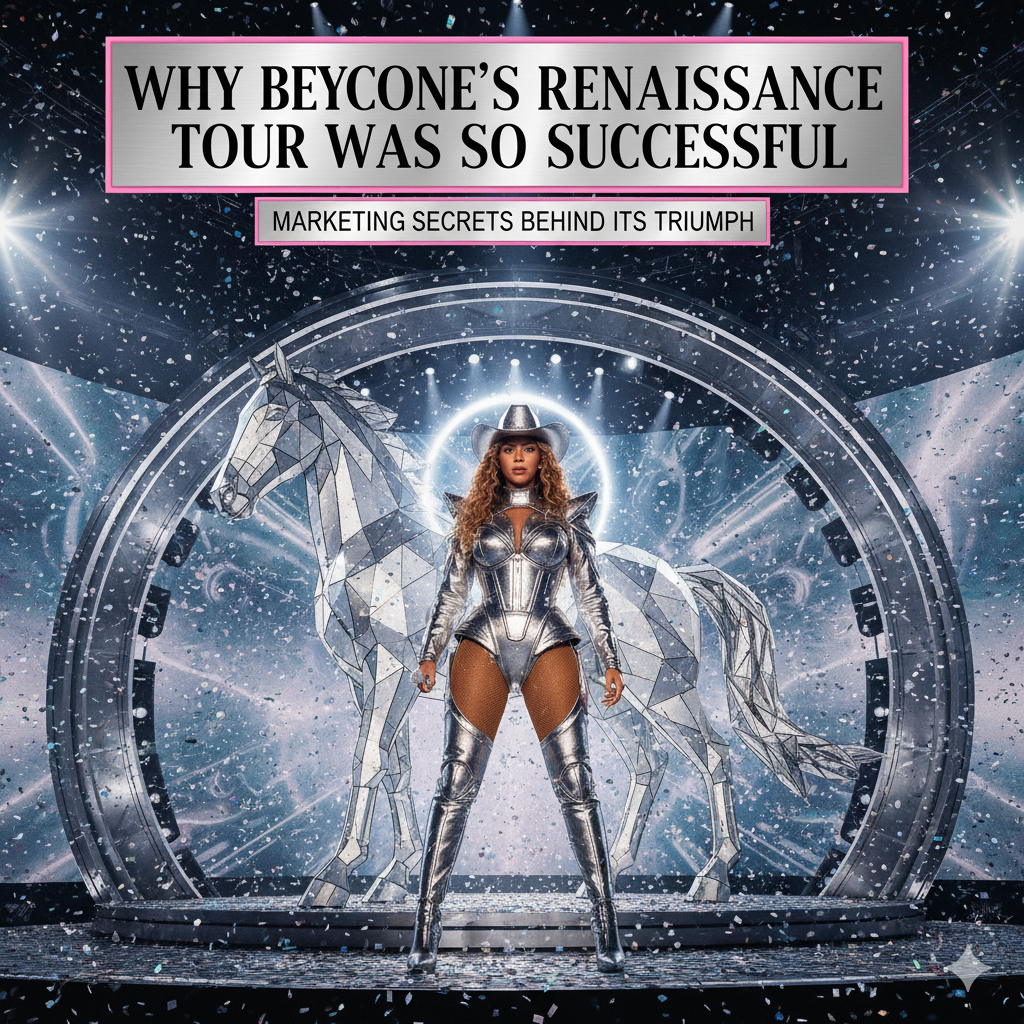
14 Dec Why Beyoncé’s Renaissance Tour Was So Successful: 15 Marketing Secrets That Made It Legendary
Beyoncé doesn’t just perform—she architects cultural earthquakes. With the Renaissance World Tour, she swapped stages for spaceships, transforming arenas into chrome-coated cosplay playgrounds and fan moments into global headlines. This wasn’t just a concert—it was a masterclass in modern marketing, powered by spectacle, community, and the kind of brand alignment that makes even a leading marketing agency in New York take notes. Imagine if Leandra Medine decided to trade in her Man Repeller manifesto for a marketing deck—that’s the tone we’re channeling here: deeply stylish, slightly irreverent, and wholly obsessed with the strategies that made Renaissance not just a tour, but a movement.
Why Beyoncé’s Renaissance Tour Was So Successful: 15 Marketing Secrets That Made It Legendary (Editor’s Choice)
Why Beyoncé’s Renaissance Tour Was So Successful
15 marketing secrets that turned a world tour into a cultural, cinematic, and commercial phenomenon.
| # | Strategy | How It Made the Tour Legendary |
|---|---|---|
| 01 |
Scarcity & Exclusivity
Limited dates and select cities created urgency and FOMO before tickets even went on sale.
|
Demand Engine
Fans rushed to buy early, driving instant sell-outs and a “blink and you missed it” energy that made every show feel like a rare, once-in-a-lifetime event.
|
| 02 |
Visual Branding Consistency
Chrome, metallics, and futuristic glam anchored the Renaissance aesthetic across every touchpoint.
|
Iconic Look
From posters to tour screens, the visuals were instantly recognizable, strengthening recall and making every asset feel like part of a larger cinematic universe.
|
| 03 |
Cultural Relevance
The show honored Black queer culture, house music, and ballroom, not as an accessory but as its core DNA.
|
Community First
By centering the communities that shaped the sound, the tour became a love letter, inspiring fierce loyalty, advocacy, and word-of-mouth that money can’t buy.
|
| 04 |
Surprise Drops & Teasers
Cryptic posts, unexpected visuals, and sudden announcements kept fans permanently on high alert.
|
Hype Loops
Every surprise sparked speculation threads, reaction videos, and fan theories, turning the lead-up into an ongoing interactive campaign.
|
| 05 |
High-Production Value Content
Every photo and clip felt editorial—sharp lighting, intentional framing, and cinematic edits.
|
Share-Worthy
Fans and media treated official content like campaign assets, reposting relentlessly and amplifying the sense that this was more than “just” a tour.
|
| 06 |
Fashion as Marketing
Custom looks from Mugler, Loewe, Tiffany & Co. and more turned the stage into a moving editorial.
|
Runway Effect
Each outfit drop became its own mini-campaign, spawning trend reports, moodboards, and endless social coverage that extended beyond music media.
|
| 07 |
Celebrity & Influencer Amplification
A-listers, creators, and tastemakers showed up in full look and posted every moment.
|
Social Proof
Seeing high-profile guests in the crowd reframed the tour as the place to be, elevating its status as a cultural event instead of a standard concert.
|
| 08 |
Fan-Created Content
TikToks, fancams, outfit reels, and live reactions flooded timelines after every show.
|
UGC Flywheel
Beyoncé let fan footage be the promo, transforming audiences into a distributed marketing team that extended the tour’s reach to non-ticket-holders.
|
| 09 |
Limited Edition Merchandise
City-specific pieces, capsules, and high-fashion collabs made the merch feel collectible.
|
Built-In Souvenirs
Fans queued hours just for merch, turning product drops into their own events and seeding wearable promotion in the wild long after the show ended.
|
| 10 |
Interactive Fan Experiences
The chrome and futuristic dress code invited fans to co-create the visual story of each night.
|
Participation
The audience became part of the show’s aesthetic, making arenas feel like live-action lookbooks and giving every attendee a reason to post.
|
| 11 |
Strategic Concert Film Release
“Renaissance: A Film by Beyoncé” extended the life of the tour beyond the final show.
|
Second Wave
The theatrical release re-activated press, ticket sales, and merch buys, turning one tour cycle into multiple monetizable moments.
|
| 12 |
Augmented Reality & Futuristic Tech
Screens, lighting, and stage mechanics were designed with a sci-fi, hyper-digital sensibility.
|
Immersion
The tour felt like stepping into a different dimension, giving fans a sensory experience that’s hard to replicate—and therefore easy to rave about.
|
| 13 |
Capitalizing on Memorable Moments
Blue Ivy’s appearances, the metallic horse, and fan-favorite transitions became “must-see” moments.
|
Meme Fuel
These recurring highlights acted like episodic content, giving social media something to latch onto and fans specific things to anticipate and share.
|
| 14 |
Premium Ticketing Models
VIP tiers, exclusive sections, and curated experiences elevated the perceived value of attendance.
|
Revenue & Status
Fans could literally buy their way closer to the experience, boosting revenue while reinforcing the idea that Renaissance was a luxury event.
|
| 15 |
Mystique over Media
Beyoncé skipped the traditional promo circuit and let the work speak.
|
Controlled Narrative
With fewer interviews and soundbites, every visual, speech, and performance choice felt intentional—and infinitely more dissectable for fans and media alike.
|
Why Beyoncé’s Renaissance Tour Was So Successful: 15 Marketing Secrets That Made It Legendary
Why Beyoncé’s Renaissance Tour Was So Successful: Marketing Secrets That Made It Legendary #3 — Cultural Relevance
This tour didn’t merely borrow from culture — it celebrated, elevated and centred communities often marginalised in mainstream pop: Black queer culture, house music, ballroom. By honouring these roots, Beyoncé aligned her brand with authenticity and social resonance, which is a powerful marketing lever. Fans didn’t just buy tickets — they felt seen, included and part of something bigger than themselves. The community felt acknowledged; and when they feel it, they become your evangelists. For any campaign: find cultural alignment, build trust, and let the audience feel the story includes them.
Why Beyoncé’s Renaissance Tour Was So Successful: Marketing Secrets That Made It Legendary #4 — Surprise Drops & Teasers
Teasing the unexpected is a marketer’s secret weapon — Beyoncé knew this. Whether it was cryptic Instagram posts, sudden costume reveals, or surprise setlist changes, the tour created moments of “Wait. What? Tell me more.” That kind of suspense builds engagement, commentary, and anticipation. Fans forward posts, speculate in threads, and create their own hype — essentially doing your marketing for you. So if you build a campaign with built-in surprise and reveal, you’re turning passive viewers into active participants.
Why Beyoncé’s Renaissance Tour Was So Successful: Marketing Secrets That Made It Legendary #5 — High-Production Value Content
Every image, every video, every tour-teaser looked like it came from a fashion-editorial or a high-end brand shoot — not just a concert promo. That investment in production quality elevates perception: your audience thinks “This is special. This is premium.” When you treat your content like a brand experience rather than just information, you signal value. In today’s feed-saturated world, high-quality content cuts through the noise and stops thumbs. If you want a campaign to feel legendary, make it look legendary.
Why Beyoncé’s Renaissance Tour Was So Successful: Marketing Secrets That Made It Legendary #6 — Fashion as Marketing
The tour’s costumes weren’t just wardrobe — they were campaign assets. Custom looks from Mugler, Loewe, Tiffany & Co., and more became as much a part of the narrative as the songs themselves. Press covered the outfits, fans generated memes, and fashion editors treated the tour like a runway show. That’s marketing multitasking: style becomes shareable content, brand becomes story, and fans become media. In your marketing world: collaborate with strong design, make visuals a headline, and let fashion (or style) become part of the narrative.
Why Beyoncé’s Renaissance Tour Was So Successful: Marketing Secrets That Made It Legendary #7 — Celebrity & Influencer Amplification
Celebrities and influencers don’t just attend shows; they post them. When high-profile guests show up and share their experience, they validate the event for broader audiences. Beyoncé’s tour had that luxury, which amplified reach beyond core fans. This kind of amplification builds trust, extends visibility, and makes the tour feel like the place to be. For brands: inviting (or collaborating with) influential voices can turn your campaign from niche to network-wide.
Why Beyoncé’s Renaissance Tour Was So Successful: Marketing Secrets That Made It Legendary #8 — Fan-Created Content
When your audience becomes your content-creator, you’ve unlocked exponential reach. From TikToks of choreography to Instagram posts of fans in metallic outfits, the tour let fans pick up the mic. That user-generated content not only spreads organically but also adds authenticity that brand-driven content rarely achieves. It turns attendees into storytellers. In marketing, design campaigns that let the audience be part of the story — then share it.
Why Beyoncé’s Renaissance Tour Was So Successful: Marketing Secrets That Made It Legendary #9 — Limited Edition Merchandise
Merchandise wasn’t an afterthought—it was a collectible event. Special capsules, city-exclusive pieces, high fashion collabs all turned merch into status markers. That scarcity + style combo made fans queue, buy, and wear their experience — and post about it. When you turn physical goods into extensions of the event, you build brand beyond the stage. Marketing done right: merchandise becomes a wearable badge of participation.
Why Beyoncé’s Renaissance Tour Was So Successful: Marketing Secrets That Made It Legendary #10 — Interactive Fan Experiences
Beyoncé didn’t simply perform to her audience — she performed with them. The chrome-dress code, the immersive stage design, the “Club Renaissance” feeling made each show participatory. When fans feel part of the design, they become co-creators of the moment. That translates into higher emotional investment and more social sharing. The marketing move? Build your campaign as an experience, not a presentation.
@much Wholesome #Beyoncé ♬ original sound - MuchMusic
Why Beyoncé’s Renaissance Tour Was So Successful: Marketing Secrets That Made It Legendary #11 — Strategic Release of the Concert Film
After the tour ended on stage, the story continued on the big screen with Renaissance: A Film by Beyoncé. This transition kept momentum alive, extended the lifetime of the campaign, and opened new revenue streams. It’s smart marketing: you stage-gate excitement, then release the next chapter. A well-timed film turns “tour ended” into “experience lives on”. For marketers: consider how to stage-layer your campaign into multiple phases.
Why Beyoncé’s Renaissance Tour Was So Successful: Marketing Secrets That Made It Legendary #12 — Use of Augmented Reality & Futuristic Tech
The production wasn’t just lights and screens—it was immersive tech, robotic arms, UV lighting and elevated staging that made the show feel futuristic. That kind of tech investment creates “wow” that gets talked about, shared, and remembered. It signals innovation, which is a marketing magnet. When your campaign uses or feels “next-gen”, audiences assume your brand is too. The takeaway: don’t just tell a new story—stage a new paradigm.
Why Beyoncé’s Renaissance Tour Was So Successful: Marketing Secrets That Made It Legendary #13 — Capitalizing on Memorable Moments
Moments like Beyoncé flying on a metallic horse or acknowledging a fan’s sign became instant meme-material and they anchored the cultural conversation. These moments didn’t happen by accident—they were planned for shareability, for “did you see that?!” impact. That’s smart marketing: you design content not just for attendance, but for post-attendance amplification. The more people talk about what they saw, the more your brand spreads. Create signature moments, then encourage the world to talk about them.
Why Beyoncé’s Renaissance Tour Was So Successful: Marketing Secrets That Made It Legendary #14 — Premium Ticketing Models
Beyond a standard ticket, the tour offered VIP tiers, curated lounge experiences, and premium access — converting mere attendance into elevated status. This tiering strategy increased revenue and gave fans a sense of elevated participation. When you design both standard and luxury versions of an experience, you cater to both mass and aspiration segments. From a marketing lens: premium models signal higher value while leaving room for broader access. Two birds, one strategy.
Why Beyoncé’s Renaissance Tour Was So Successful: Marketing Secrets That Made It Legendary #15 — Mystique Over Media
Unlike traditional heavy-promo tours, Beyoncé opted for controlled silence, letting the art speak rather than giving away the process. This cultivated a sense of mystique and anticipation — which is a marketer’s secret weapon when done right. Fewer interviews means more curiosity; fewer reveals means bigger surprises. When your campaign doesn’t reveal everything, people lean in, speculate, and engage. Sometimes the unknown is the marketing.