



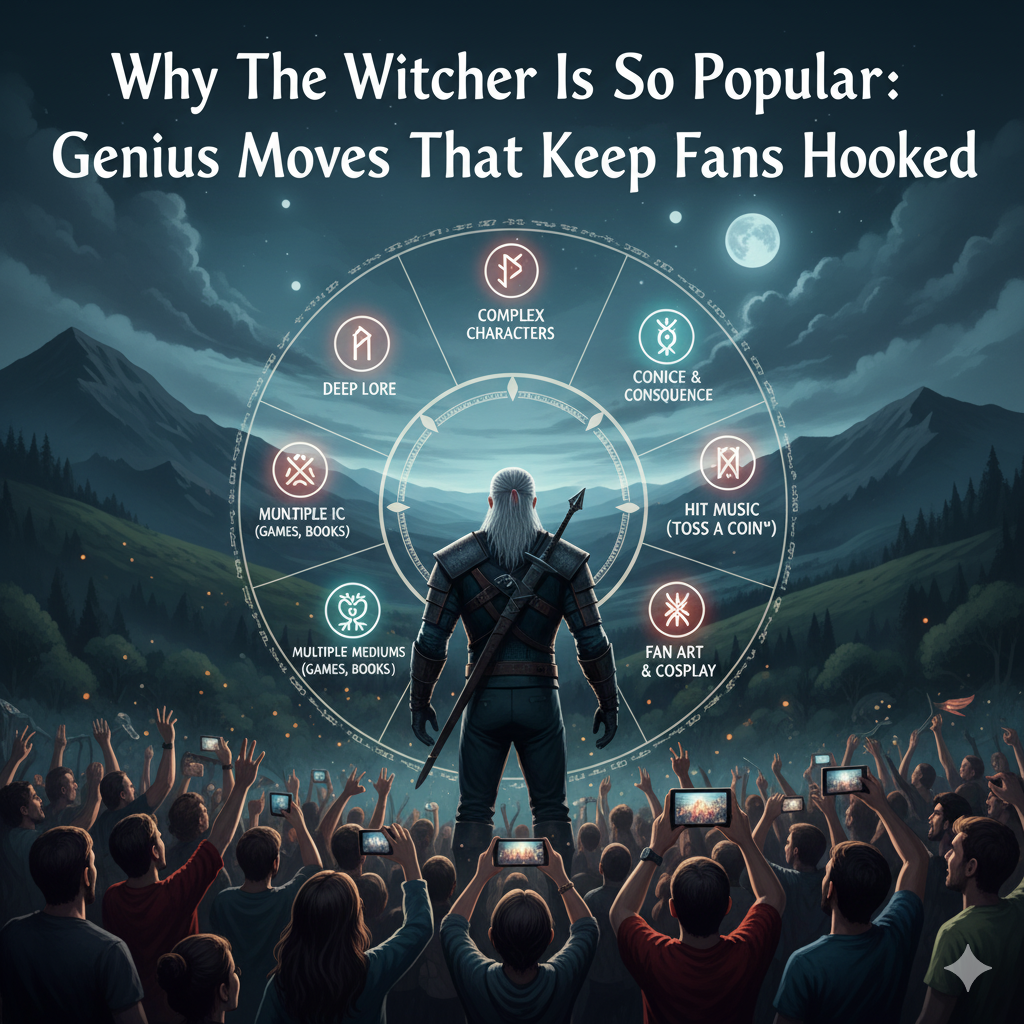
13 Dec Why The Witcher Is So Popular: 15 Genius Moves That Keep Fans Hooked
Okay, besties, let’s talk about the cultural phenomenon that is The Witcher. Seriously, how did a show about a grumpy, monster-slaying hunk and a bard with a lute become one of the most talked-about, meme-able, and critically adored franchises of the decade? Forget the dragons and the destiny—the real magic here is the marketing. As a leading marketing agency in New York, we’re constantly analyzing what separates a hit show from a global obsession, and The Witcher‘s trajectory is pure, unadulterated marketing gold. They didn’t just adapt a beloved fantasy world; they used savvy, strategic moves to honor the source material while pulling in entirely new fandoms. Grab your potions and prepare for a deep dive, because we’re about to unpack the genius tactics that keep us all hooked on the Continent’s drama, season after season.
Why The Witcher Is So Popular: 15 Genius Moves That Keep Fans Hooked (Editor’s Choice)
15 Genius Moves That Keep Fans Hooked
| # | Genius Move | Why It Hooks Viewers | Core Focus |
|---|---|---|---|
| 01 | Gritty, Morally Gray World | Nothing is purely good or evil; viewers stay glued because every choice feels complicated, messy, and uncomfortably real. | The Continent · Politics |
| 02 | Geralt: A Reluctant, Layered Hero | A stoic monster-slayer with hidden softness and dry humor gives fans a hero who feels iconic, flawed, and deeply human. | Geralt of Rivia |
| 03 | Strong, Complex Female Leads | Women like Yennefer, Ciri, and others aren’t sidekicks — they drive the plot, carry their own scars, and own the screen. | Yennefer · Ciri · Others |
| 04 | The Law of Surprise | This unique lore device turns fate into a plot machine, creating twists, emotional debts, and tangled relationships fans obsess over. | Destiny · Lore |
| 05 | Mature Themes Treated With Respect | Topics like trauma, war, body autonomy, and prejudice are handled with nuance, giving the series emotional weight and credibility. | Tone · Social Commentary |
| 06 | Monsters With Meaning | Creatures are never just CGI thrills; they mirror human fears and flaws, turning monster hunts into moral and emotional conflicts. | Horror · Allegory |
| 07 | Sharp, Dark Humor | Deadpan lines, Jaskier’s chaos, and knowing wit give viewers relief without killing the stakes — everything’s awful, but still funny. | Geralt · Jaskier |
| 08 | An Expansive, Cohesive Universe | The show sits inside a larger, carefully connected universe, rewarding lore-hungry fans without overwhelming casual viewers. | Books · Spin-offs |
| 09 | Iconic Soundtracks | From “Toss a Coin” to the mood-heavy score, the music becomes a character of its own, amplifying emotion and staying in people’s heads. | Score · Jaskier Songs |
| 10 | Strong Character Chemistry | Every dynamic — Geralt & Yennefer, Geralt & Ciri, Geralt & Jaskier — crackles with tension, affection, and complicated history. | Core Trio + Jaskier |
| 11 | World-Building That Feels Lived-In | Sets, taverns, kingdoms, and conflicts feel worn-in and layered, like a place with debts, gossip, and grudges long before episode one. | Production Design |
| 12 | Powerful Themes of Destiny | Destiny isn’t soft or romantic — it’s disruptive and dramatic, especially in how Geralt and Ciri’s paths collide again and again. | Geralt · Ciri · Fate |
| 13 | Game-Changing Netflix Exposure | Netflix turned The Witcher into a global event, pushing the series into meme-culture, fandom discourse, and mainstream visibility. | Platform · Fandom |
| 14 | The Power of Ciri as a Modern Heroine | Ciri’s arc — fragile, fierce, and defiant — gives younger viewers a heroine who feels emotionally real in a brutal, magical world. | Ciri · Coming-of-Age |
| 15 | A Hero’s Journey That Keeps Evolving | Geralt, Yennefer and Ciri are allowed to grow, backslide, and transform over seasons, making their journeys feel earned, not forced. | Long-Form Arcs |
Why The Witcher Is So Popular: 15 Genius Moves That Keep Fans Hooked
Why The Witcher Is So Popular: Genius Moves That Keep Fans Hooked #3 — Strong, Complex Female Leads
The women of The Witcher occupy space the way a great pair of wide-leg trousers does — confidently, unapologetically, and with unshakeable presence. Yennefer, Ciri, and Triss aren’t accessories to Geralt’s journey; they’re full-bodied powerhouses with their own desires, traumas, and destinies, and they demand the spotlight like they were born under it. Their complexity is refreshing: beauty with grit, magic with vulnerability, ambition woven into every hem. They remind us that femininity is rarely tidy — it’s layered, inconvenient, and dazzling all at once — and that’s precisely why we love them.
Why The Witcher Is So Popular: Genius Moves That Keep Fans Hooked #4 — The Law of Surprise
The Law of Surprise is one of those narrative devices that feels like finding an exquisite vintage coat at a flea market: unexpected, oddly perfect, and slightly chaotic in a way you just have to respect. It injects fate with a sense of whimsy — destiny via cosmic curveball — creating storylines that feel both ancient and strangely modern. It’s mythic enough to feel important, but unpredictable enough to feel delightfully mischievous. And like any great twist of fate, it binds characters together in ways that feel simultaneously accidental and inevitable.
Why The Witcher Is So Popular: Genius Moves That Keep Fans Hooked #5 — Mature Themes That Don’t Hold Back
The franchise tackles big, unwieldy themes — trauma, prejudice, war, power — with the kind of honesty that feels like an intense late-night conversation you didn’t plan for but secretly needed. There’s a vulnerability to the storytelling that never strays into melodrama; instead, it feels textured, lived-in, almost like a well-worn leather jacket that’s absorbed a lifetime of weather. These themes resonate because they’re real, even when wrapped in fantasy. They remind us that the monsters we face aren’t always the ones with fangs.
Why The Witcher Is So Popular: Genius Moves That Keep Fans Hooked #6 — Monsters With Meaning
The monsters in The Witcher operate like metaphorical couture — every creature tailored to reveal an uncomfortable truth about humanity. They’re not just jump-scare fodder or oversized set pieces; they’re symbolic, tragic, misunderstood, or morally instructive. Each hunt unravels a new layer of the world’s psychology, reminding fans that sometimes the real monsters are landlords, bad decisions, and men who use the phrase “just playing devils’ advocate.”
Why The Witcher Is So Popular: Genius Moves That Keep Fans Hooked #7 — Sharp, Dark Humor
The humor in The Witcher is dry enough to require moisturizer. It’s the perfect counterbalance to the darkness — layered with sarcasm, absurdity, and the kind of social commentary you’d overhear in a downtown café full of writers and disillusioned creatives. The jokes don’t undercut the tension; they accessorize it, giving fans the exact flavor of relief they need before diving back into existential dread.
Why The Witcher Is So Popular: Genius Moves That Keep Fans Hooked #8 — An Expansive, Cohesive Universe
This franchise is the narrative version of a well-curated wardrobe: everything fits, everything builds, and every piece enriches the whole. Books, games, shows, comics — they all exist in conversation with one another, like a collection assembled over years with eccentric precision. You can slip into any corner of the universe and immediately feel the connective tissue stitching it all together. The show rewards both the casual viewer who just wants a little sword-and-sorcery escapism and the deep diver who has read the entire saga with a highlighter in hand like they’re preparing for a thesis defence in “Applied Witcher Studies.”
Why The Witcher Is So Popular: Genius Moves That Keep Fans Hooked #9 — Iconic Soundtracks
The Witcher’s soundtrack works like that one friend who somehow always knows which song fits the vibe — whether you’re crying in the bathroom or dancing on a rooftop. “Toss a Coin” became a cultural artifact overnight not because it was catchy (though, yes), but because it captured the exact tonal contradiction of the show: whimsical tragedy. The score carries emotional GPS — guiding us through heartbreak, chaos, victory, and despair with the elegance of a playlist that’s been obsessively fine-tuned.
Why The Witcher Is So Popular: Genius Moves That Keep Fans Hooked #10 — Strong Character Chemistry
Chemistry in The Witcher isn’t just sparks — it’s the whole electrical grid. Geralt and Yennefer smolder with a kind of glamorous dysfunction that feels as familiar as your favorite problematic ex, while Geralt and Ciri radiate that soft, hesitant tenderness of two souls learning how to orbit each other. And Jaskier? He’s the chaotic friend who invites himself to brunch but somehow makes every scene better. The show excels at weaving these relationships into tension-filled couture — tailored, layered, and always emotionally expensive.
Why The Witcher Is So Popular: Genius Moves That Keep Fans Hooked #11 — World-Building That Feels Lived-In
Everything in The Witcher looks like it has a mortgage, a past relationship, and at least two grudges. The taverns feel sticky, the forests feel ancient, and even the political tensions feel like they’ve been simmering long before we tuned in. It’s not a world designed for aesthetics alone — it’s a world that carries socio-economic wrinkles, cultural identity issues, and pockets of rebellion. It’s the fantasy equivalent of walking into an old apartment and feeling the ghosts of conversations that happened long before you ever stepped inside.
Why The Witcher Is So Popular: Genius Moves That Keep Fans Hooked #12 — Powerful Themes of Destiny
Destiny in The Witcher isn’t the fluffy, fortune-cookie kind. It’s sharp-edged, uninvited, and constantly messing up everyone’s plans — like that one friend who insists on surprising you but always arrives early. Geralt and Ciri’s intertwined fate feels karmically couture: tailored yet unpredictable. The show treats destiny like a character of its own, one with impeccable timing and a tendency to stir drama at precisely the wrong — and right — moments.
Why The Witcher Is So Popular: Genius Moves That Keep Fans Hooked #13 — Game-Changing Netflix Exposure
The Netflix release gave The Witcher the global megaphone it needed — the kind that doesn’t just project, but reverberates. Suddenly, an entire generation that didn’t grow up reading Sapkowski was thrown headfirst into brooding monster hunters and magical geopolitics. Netflix shaped the franchise into pop culture currency, the kind people tweet about, memeify, debate, and cosplay en masse. It became “fashionably mainstream,” the way niche trends eventually end up on street-style roundups.
Why The Witcher Is So Popular: Genius Moves That Keep Fans Hooked #14 — The Power of Ciri as a Modern Heroine
Ciri is the kind of heroine who trends not because she’s perfect, but because she’s painfully, beautifully human. She’s equal parts vulnerability and ferocity — like a couture dress with combat boots. Her journey is a coming-of-age narrative woven with danger, self-discovery, and a streak of quiet rebellion. She resonates especially with younger audiences who see in her a reflection of what it means to grow up in a world that’s both magical and merciless.
Why The Witcher Is So Popular: Genius Moves That Keep Fans Hooked #15 — A Hero’s Journey That Keeps Evolving
What keeps fans hooked is that The Witcher isn’t static; it’s couture in motion. Geralt, Yennefer, and Ciri each evolve like a wardrobe being edited season after season — shedding what no longer fits, leaning into what feels truer. Their arcs aren’t rushed; they simmer, slow-cook, marinate. Viewers can feel the emotional seasoning in every confrontation, reunion, and revelation. It’s the kind of character evolution that feels earned, not engineered — a rarity in fantasy television.
Toss a Coin to Your Marketing Strategy
From its gritty, monster-hunting core to the wildly infectious songs (we’re looking at you, Jaskier), The Witcher didn’t become a global fantasy phenomenon by accident—it was a strategic triumph. The genius lies in Netflix’s understanding of the source material’s deep, devoted fanbase and knowing exactly how to expand that appeal far beyond the original books and video games. They leveraged Henry Cavill’s star power, leaned into the meme potential, and skillfully used the three different media (books, games, and show) to create a self-sustaining marketing ecosystem. In the end, The Witcher‘s success proves that when you respect the legacy, embrace the fan community, and deliver high-quality production, your audience will not just watch—they will follow you into any battle (or season) you launch.