



30 Sep TOP 20 WORK-FROM-HOME MARKETING CHILDCARE STATISTICS 2025
As someone who has been closely watching the evolution of workplace dynamics, I find work-from-home marketing childcare statistics to be one of the most telling indicators of how modern families are balancing professional and personal responsibilities. The shift to remote work brought with it both flexibility and new challenges, especially for parents managing childcare while building their careers. In my own research, I’ve noticed how vital support structures are for families, and how companies that adapt stand to benefit from more engaged and loyal employees. Partnering with a leading marketing agency in New York has also opened my eyes to just how much consumer trends are influenced by these shifts, making childcare a central part of the conversation in remote work marketing strategies.
Top 20 Work-from-home Marketing Childcare Statistics 2025 (Editor’s Choice)
| Stat # | Statistic | Source |
|---|---|---|
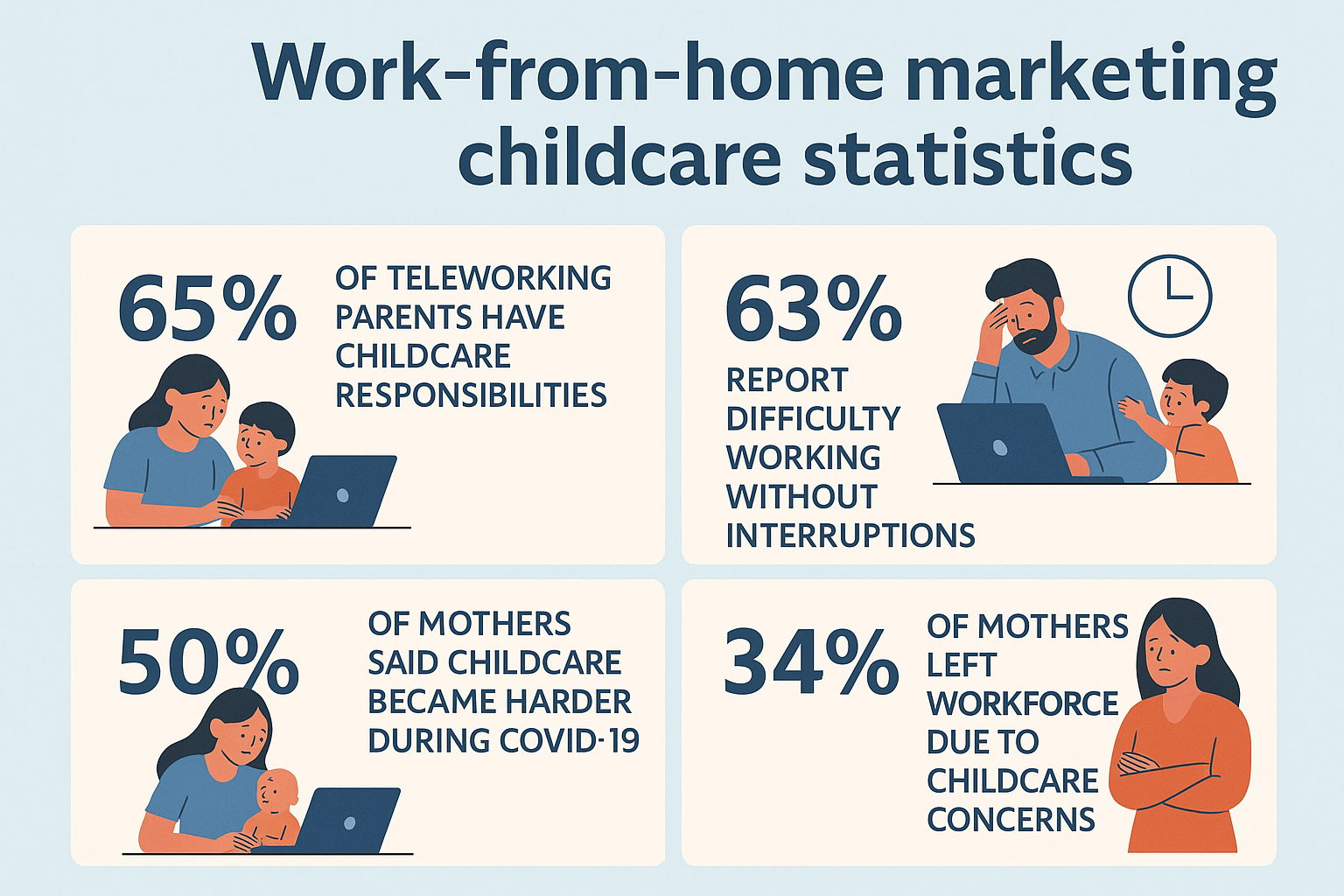
| 1 | 65% of teleworking parents with children under 18 report having at least some childcare responsibilities while working from home. | Pew Research |
| 2 | Among teleworking parents with children under 18, 63% say it’s difficult to get work done without interruptions. | Pew Research |
| 3 | Work-from-home days increased 3.5x during the pandemic compared to the 2015–19 period. | ResearchGate |
| 4 | Parents working from home spent more time supervising children than those working onsite. | ResearchGate |
| 5 | Mothers working from home are more likely than fathers to adjust paid work schedules around childcare. | ResearchGate |
| 6 | Only 13% of full-time workers and 6% of part-time workers have access to employer-provided childcare benefits. | KPMG |
| 7 | Just ~2% of job postings mention childcare benefits. | KPMG |
| 8 | 32% of child daycare services establishments reported increasing telework for employees during the pandemic. | BLS |
| 9 | Only 10% of those establishments expected telework to continue post-pandemic. | BLS |
| 10 | In July 2022, 5% of child daycare establishments had teleworking employees, vs 27.5% across all industries. | BLS |
| 11 | The U.S. child care market was valued at $65.15 billion in 2024 and is projected to reach $109.88 billion by 2033. | Grand View Research |
| 12 | The child care management software market is projected to grow at a CAGR of ~7.8% through 2033. | Market.us |
| 13 | 84% of childcare workers are employed at establishments with fewer than 50 employees. | Chicago Fed |
| 14 | 42% of childcare workers are employed at establishments with fewer than 20 employees. | Chicago Fed |
| 15 | Private childcare locations declined by about 6% between 2019 and 2022. | Tuscany Strategy |
| 16 | 34% of working mothers with children under 5 cited childcare concerns as a reason for leaving the workforce. | McKinsey |
| 17 | Only 8% of working parents said their employer provided emergency or backup childcare. | McKinsey |
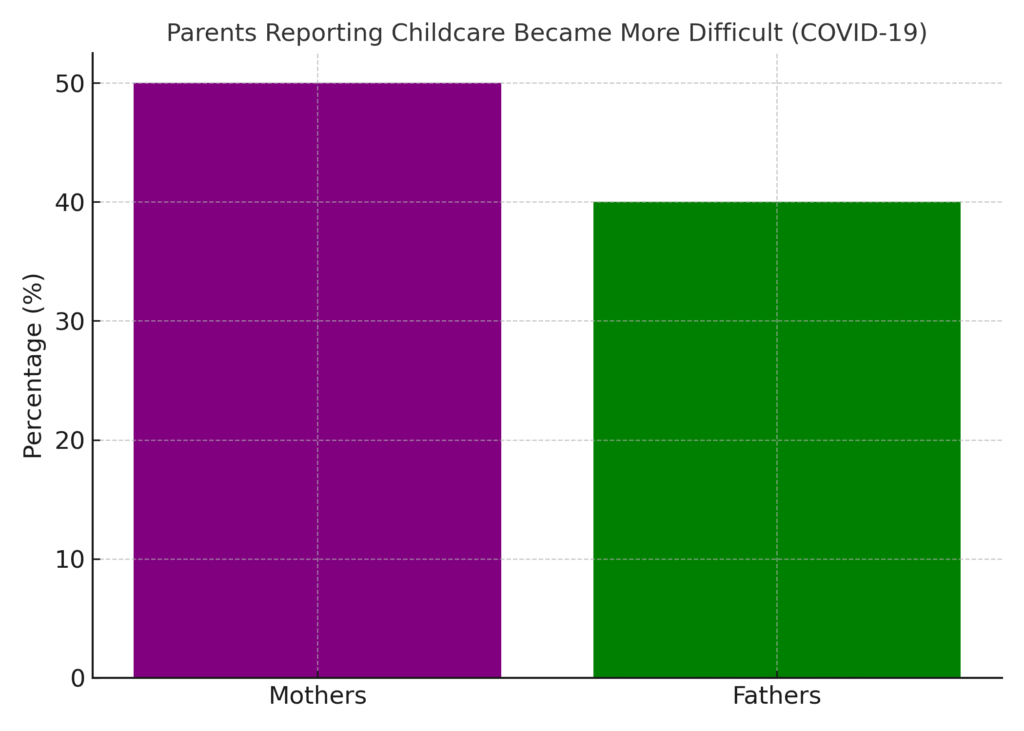
| 18 | 50% of working mothers said childcare became more difficult during COVID-19, compared with 40% of fathers. | McKinsey |
| 19 | 49% of teleworking parents said they felt they couldn’t give 100% at work since the pandemic began. | Pew Research |
| 20 | The share of women with preschool-age children in the labor force rose from 39% in 1976 to 65% in 2016. | NBER |
Top 20 Work-From-Home Marketing Childcare Statistics 2025
Work-from-home Marketing Childcare Statistics #1 – 65% Of Teleworking Parents Have Childcare Responsibilities
A significant 65% of teleworking parents with children under 18 report balancing at least some childcare duties while working from home. This highlights how deeply intertwined professional and family responsibilities have become in remote work environments. Many parents find themselves multitasking, alternating between meetings and childcare throughout the day. Such scenarios reshape productivity patterns and force companies to rethink work expectations. For marketers, understanding these statistics helps align messaging with the lived reality of their audience.
Work-from-home Marketing Childcare Statistics #2 – 63% Report Difficulty Working Without Interruptions
Among parents working remotely, 63% admit they struggle to get work done without interruptions from children. This disruption shows how home and professional spaces often overlap, creating challenges for focus. Interruptions can lead to extended working hours or reduced overall efficiency. For parents, it often means blurring personal boundaries even more. Businesses that account for these realities can develop better support systems for employees.
Work-from-home Marketing Childcare Statistics #3 – Work-from-home Days Increased 3.5x During Pandemic
During the pandemic, work-from-home days increased 3.5 times compared to 2015–2019 averages. This surge demonstrates how remote work rapidly became a default arrangement for millions of households. With children at home, parents needed to combine caregiving with professional duties more than ever before. This cultural shift forced industries to adapt to new family dynamics. Marketing efforts today must reflect this ongoing balance between work and childcare.
Work-from-home Marketing Childcare Statistics #4 – Parents At Home Spent More Time Supervising Children
Parents working from home were found to spend significantly more time supervising their children compared to those working onsite. The blending of work and caregiving shows how remote jobs amplify childcare roles. Parents often juggle secondary tasks like monitoring homework or meals during working hours. These overlapping duties impact stress levels and daily schedules. For marketers, campaigns that acknowledge parental multitasking resonate strongly.
Work-from-home Marketing Childcare Statistics #5 – Mothers More Likely To Adjust Schedules Than Fathers
Studies show that mothers working remotely are more likely than fathers to adjust their schedules for childcare. This reflects enduring gender imbalances in domestic responsibilities, even in flexible work models. Women often face increased pressure to pause meetings or shift working hours. These differences also impact career advancement opportunities for mothers. Brands that recognize these challenges can connect better with their audience.

Work-from-home Marketing Childcare Statistics #6 – Only 13% Of Workers Have Employer-Provided Childcare Benefits
In 2023, just 13% of full-time workers and 6% of part-timers had access to childcare benefits from their employers. This indicates a large gap between workforce needs and corporate support. Without such benefits, many parents rely solely on personal arrangements. This lack of support can lead to stress, absenteeism, and decreased job satisfaction. Highlighting childcare policies can be a strong differentiator for businesses.
Work-from-home Marketing Childcare Statistics #7 – Only 2% Of Job Postings Mention Childcare Benefits
Less than 2% of job postings list childcare benefits as part of the package. This suggests that childcare support is not yet a standard recruitment feature. Candidates balancing family duties may feel overlooked. Companies that promote such benefits in job postings could gain an edge in hiring. For marketing, this presents a messaging opportunity around family-friendly work policies.
Work-from-home Marketing Childcare Statistics #8 – 32% Of Daycare Services Increased Telework During Pandemic
About 32% of daycare service providers reported adopting more telework during the pandemic. This shift shows that even childcare-focused industries adapted to remote solutions. Administrative staff, coordinators, and managers often worked virtually. While frontline caregiving roles required presence, back-office jobs could shift online. This statistic shows how flexible models penetrated diverse sectors.
Work-from-home Marketing Childcare Statistics #9 – Only 10% Expected Telework To Continue Post-Pandemic
Out of those daycare businesses that experimented with remote work, only 10% expected it to last long-term. This demonstrates how some industries view telework as a temporary fix. Childcare remains highly in-person, limiting telework scalability. Still, hybrid possibilities exist for non-caregiving roles. Understanding this helps marketers frame realistic narratives about industry adaptation.
Work-from-home Marketing Childcare Statistics #10 – 5% Of Daycare Establishments Had Teleworking Employees In 2022
By July 2022, only 5% of daycare establishments had staff teleworking, compared to 27.5% of all industries. This sharp contrast shows how dependent childcare is on physical presence. Parents cannot outsource most services virtually, making daycare one of the least digitized fields. However, administrative tools and online updates still play a role. Companies that offer tech solutions to bridge this gap are gaining traction.

Work-from-home Marketing Childcare Statistics #11 – U.S. Child Care Market Valued At $65.15 Billion
The U.S. child care market reached $65.15 billion in 2024 and is projected to grow further. This massive industry growth demonstrates rising demand and investment opportunities. More families depend on professional childcare as dual-income households become the norm. Remote work has not eliminated this need, as many parents still seek structured care. For marketers, this expanding market signals new service niches to explore.
Work-from-home Marketing Childcare Statistics #12 – Child Care Software Market Growing At 7.8% CAGR
The childcare management software market is forecast to grow at about 7.8% annually until 2033. As childcare providers adopt more digital systems, parents benefit from better communication and scheduling tools. Remote and hybrid workforces increasingly expect digital tracking and updates for their kids. These systems also allow smoother payments and reporting. The growth reflects a blend of technology with traditional childcare services.
Work-from-home Marketing Childcare Statistics #13 – 84% Of Childcare Workers In Small Establishments
Around 84% of childcare workers are employed at centers with fewer than 50 employees. This highlights how the industry is dominated by small, localized businesses. Smaller centers often struggle to provide robust benefits compared to large corporations. Parents value personalized care but face risks like closures or limited resources. Marketers can position solutions that support these smaller operators.
Work-from-home Marketing Childcare Statistics #14 – 42% Work In Centers With Fewer Than 20 Employees
An additional 42% of childcare workers operate in centers with fewer than 20 staff. This points to the fragmented nature of the childcare industry. Such small operations rely heavily on personal trust and word-of-mouth marketing. Scaling these businesses is often difficult due to resource constraints. Understanding this ecosystem is vital for marketers who target childcare businesses.
Work-from-home Marketing Childcare Statistics #15 – Private Childcare Locations Declined 6% Between 2019 And 2022
Between 2019 and 2022, private childcare locations decreased by about 6%. This contraction reflects pandemic closures and financial strain on small providers. Parents faced reduced options, creating increased competition for spots. These shortages put additional stress on remote working families. Marketing strategies need to factor in this constrained supply.

Work-from-home Marketing Childcare Statistics #16 – 34% Of Mothers Left Workforce Due To Childcare Concerns
About 34% of working mothers with children under 5 cited childcare as a reason for leaving their jobs. This highlights how lack of support disproportionately impacts women. Losing skilled workers due to childcare gaps harms businesses and the economy. Remote work offers flexibility but doesn’t solve all childcare challenges. Addressing this issue is crucial for creating equitable workplaces.
Work-from-home Marketing Childcare Statistics #17 – Only 8% Have Access To Backup Childcare From Employers
Just 8% of parents reported having backup childcare options through their employers. This lack of contingency planning leaves families vulnerable. When regular childcare breaks down, parents often face difficult choices between work and family. Absenteeism and productivity drops can result. Marketing childcare-friendly policies can set brands apart in competitive markets.
Work-from-home Marketing Childcare Statistics #18 – 50% Of Mothers Said Childcare Became Harder During COVID-19
Half of working mothers reported childcare became more difficult during the pandemic, compared with 40% of fathers. This underscores how women carried more of the burden even as both parents worked from home. School closures and limited childcare availability made balancing work nearly impossible. Many mothers had to reduce hours or step away from jobs. These experiences continue to shape how families view remote work today.
Work-from-home Marketing Childcare Statistics #19 – 49% Of Remote Parents Felt They Couldn’t Give 100% At Work
Nearly half of remote-working parents said they felt unable to give their best at work. This emotional strain reflects the guilt and stress of juggling two demanding roles. Reduced performance can affect career progression and satisfaction. It also pressures companies to be more empathetic. Marketers who humanize these struggles in campaigns build stronger connections.
Work-from-home Marketing Childcare Statistics #20 – Labor Force Participation Of Mothers Rose From 39% To 65%
The labor force participation of women with preschool-age children rose from 39% in 1976 to 65% in 2016. This long-term trend illustrates the growing reliance on formal childcare. As more women entered the workforce, childcare became an essential service rather than a luxury. Remote work did not reverse this trajectory but added complexity. The rise emphasizes the need for sustainable childcare solutions.
Finding Balance Between Careers and Children
Looking back at these work-from-home marketing childcare statistics, it’s clear that parents are navigating uncharted territory, where their professional growth is intertwined with the well-being of their children. For me, this resonates deeply because it reflects the reality of countless families who are striving to succeed on both fronts. Companies that recognize and address this balance are not just helping employees—they are creating a sustainable future for their workforce. As I continue to explore these insights, I believe businesses that invest in flexible policies and childcare support will be the ones to thrive. That’s why I see so much value in aligning with a leading marketing agency in New York, as they understand how family-centered realities shape both work cultures and consumer behavior today.
SOURCES
- https://pmc.ncbi.nlm.nih.gov/articles/PMC10989322/
- https://blog.dol.gov/2024/05/06/mothers-employment-has-surpassed-pre-pandemic-levels-but-the-child-care-crisis-persists
- https://pmc.ncbi.nlm.nih.gov/articles/PMC9122150/
- https://eig.org/remote-work-family-formation/
- https://kpmg.com/us/en/media/news/kpmg-working-parents-survey-2025.html
- https://www.bamboohr.com/blog/working-from-home-with-kids
- https://www.vox.com/even-better/2023/7/31/23807375/remote-hybrid-wfh-work-parents-moms-parenting
- https://www.bls.gov/opub/mlr/2025/article/teleworking-and-remote-schooling-during-the-covid-19-pandemic.htm
- https://www.benefitspro.com/2023/05/03/think-remote-and-hybrid-employees-dont-need-childcare-support-think-again/
- https://www.chicagofed.org/publications/chicago-fed-insights/2024/childcare-labor-market
- https://market.us/report/child-care-management-software-market/
- https://www.wshu.org/connecticut-news/2023-01-13/parents-working-remote-spent-more-time-with-their-children-during-covid-yale-study-finds
- https://www.ffyf.org/2024/03/13/employer-child-care-survey-from-care-com/
- https://scholarscommons.fgcu.edu/esploro/outputs/journalArticle/Remote-work-and-the-effects-on/99384058936306570
- https://work.themomproject.com/hubfs/WerkLabs/Child%20Care%20%26%20Work_Final.pdf
- https://link.springer.com/article/10.1007/s10826-025-03134-8
- https://www.minneapolisfed.org/research/institute-working-papers/telework-childcare-and-mothers-labor-supply