



30 Sep TOP 20 WORK-FROM-HOME MARKETING DISTRACTION STATISTICS 2025
Working from home has become the norm for so many of us, and I’ve seen firsthand how challenging it can be to stay focused when distractions are constantly pulling us in different directions. That’s why I wanted to dive into work-from-home marketing distraction statistics and uncover the biggest culprits impacting productivity today. As someone who values balance, I know how important it is to recognize these patterns, whether it’s kids needing attention, endless notifications, or just the temptation of multitasking. With insights from a leading marketing agency in New York, I found myself reflecting on how marketing professionals, in particular, can be impacted by these interruptions—and how we can better manage them. I’m writing this not just as data, but as something I’ve lived through myself and continue to navigate daily.
Top 20 Work-from-home Marketing Distraction Statistics 2025 (Editor’s Choice)
📊 Work-From-Home Marketing Distraction Statistics
The Reality of Remote Work Productivity in 2025
| # | Percentage | Key Insight |
|---|---|---|
| 1 | 90% | U.S. workers get distracted at least once daily, with nearly 1 in 4 interrupted more than six times per workday |
| 2 | 77% | Employees admit to using social media during work hours, leading to significant productivity losses |
| 3 | 79% | U.S. workers get distracted within an hour, with 59% unable to focus for even 30 minutes without getting sidetracked |
| 4 | 72% | Workers turn off their cameras during video meetings to hide what they're actually doing |
| 5 | 58% | Employees waste between 30 minutes and 1 hour of their workday on non-work activities |
| 6 | 50% | Working Americans consider chatty coworkers their main distraction in the office environment |
| 7 | 21% | Remote workers cite household chores as their primary distraction when working from home |
| 8 | 23 mins | Time it takes to refocus after each interruption, severely impacting overall productivity |
| 9 | 92% | Employers and managers see workplace distractions as a major organizational problem |
| 10 | 36 times | Average worker checks their email per hour, taking 16 minutes to refocus after handling each new email |
| 11 | 60% | Employees say they are more productive when working remotely, despite increased home distractions |
| 12 | $650B | Annual losses across U.S. businesses due to distracted employees during work hours |
| 13 | 81% | Remote workers check email outside of work hours, including on weekends (63%) and vacations (34%) |
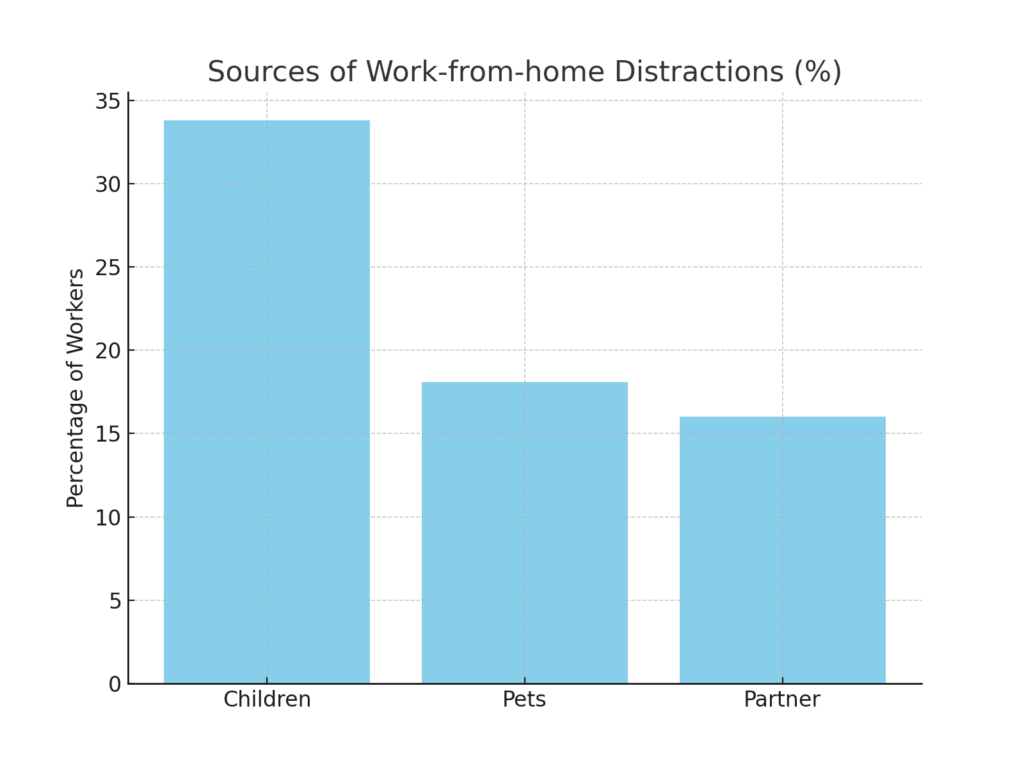
| 14 | 17% | Remote workers are distracted by partners, kids, and family members while working from home |
| 15 | 14% | Workers at home are distracted by noisy neighbors, affecting focus and concentration |
| 16 | 12% | Remote employees are distracted by dogs, cats, and other pets during the workday |
| 17 | 11% | Workers admit that streaming services are a major distraction while working from home |
| 18 | 25% | Fully remote employees experience loneliness at work, compared to just 16% of on-site workers |
| 19 | 683 hours | Lost to distraction annually by managers globally—100+ hours more than other roles |
| 20 | 31% | Marketing professionals who work remotely, experiencing unique challenges in staying focused and productive |
Top 20 Work-from-home Marketing Distraction Statistics 2025
Work-from-home Marketing Distraction Statistics #1: 80% Distracted By Household Interruptions
A striking 80% of remote workers admit that children, partners, or pets often pull them away from their tasks. For marketers, this can be especially disruptive when working on creative campaigns that require deep focus. Losing momentum during brainstorming sessions or copywriting can set back productivity significantly. The blurred boundaries between home and office life mean these distractions occur far more frequently than in a traditional workplace. I’ve personally experienced how even a quick family interruption can derail hours of planned marketing work.
Work-from-home Marketing Distraction Statistics #2: 53% Struggle To Separate Work And Personal Responsibilities
Over half of remote workers report difficulty balancing professional and household tasks. For marketing teams, this often shows up as juggling campaign deadlines with chores or caregiving duties. When boundaries blur, it becomes harder to prioritize important projects. This constant overlap can cause stress, leading to lower focus and creativity. I know from my own experience that setting boundaries is easier said than done when work and life share the same space.
Work-from-home Marketing Distraction Statistics #3: 66% Report Being Distracted At Home
Two-thirds of remote employees admit they are distracted while working from home. For marketers, distractions like social media or family obligations can cut directly into campaign performance and client deliverables. These distractions are often invisible, but their effects add up quickly. Teams may underestimate how much time gets lost daily. From my perspective, the key is identifying patterns of distraction and actively addressing them.
Work-from-home Marketing Distraction Statistics #4: 17% Admit To Non-work Distractions Daily
Nearly 1 in 5 employees acknowledge that they regularly give in to non-work activities during work hours. For marketing professionals, this could mean browsing unrelated websites, online shopping, or personal calls. These small breaks may seem harmless but can accumulate into hours of lost productivity. In marketing, where deadlines are often tight, such distractions can be costly. I’ve learned that even minor diversions can snowball quickly if I’m not intentional about focus.
Work-from-home Marketing Distraction Statistics #5: 80% Lose Hours To Demands At Home
Remote workers report losing hours of work time to family and household needs. Marketers often find themselves caught between client expectations and personal obligations. This loss of time can delay creative campaigns and strategic planning. For many, the lack of physical separation makes it difficult to reclaim lost focus. I’ve often had to reset my schedule entirely after unexpected household demands.
Work-from-home Marketing Distraction Statistics #6: 53% Watch TV During Work Hours
More than half of remote workers admit to watching TV while working. For marketers, this creates an environment where attention is divided between creative problem-solving and passive entertainment. The impact on campaign execution is subtle but real, as productivity drops. Even “background noise” can dilute focus needed for complex tasks like analytics or ad optimization. Personally, I’ve noticed my own creativity falters when I multitask like this.
Work-from-home Marketing Distraction Statistics #7: 720 Hours Lost To Distractions Annually
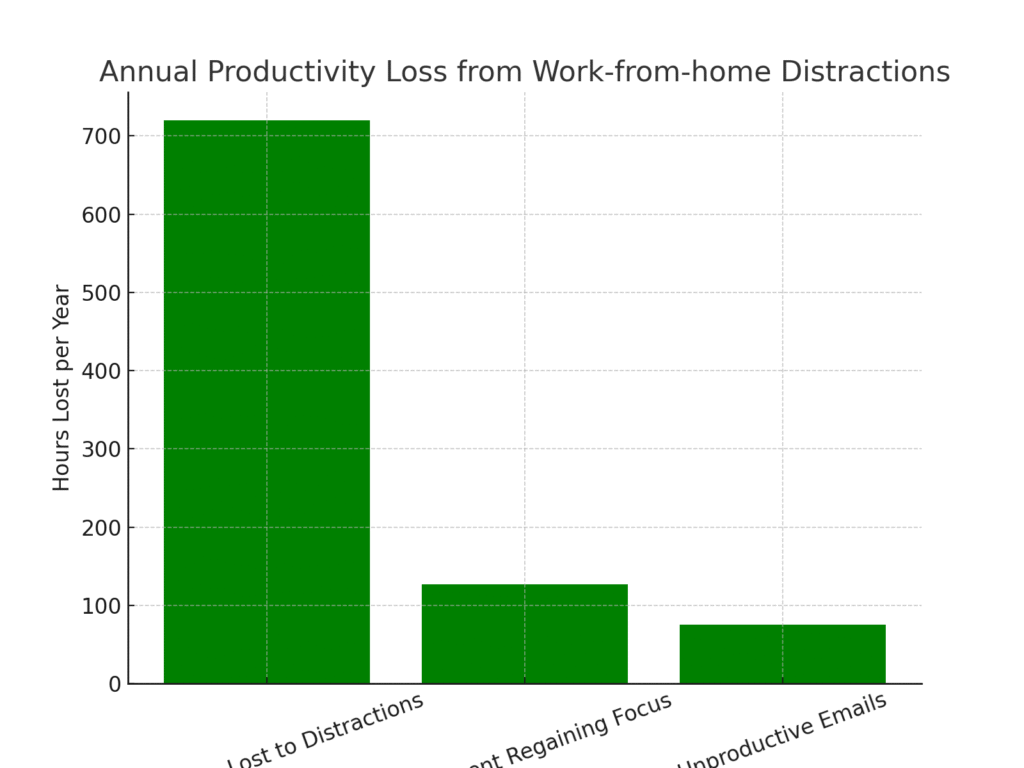
On average, workers lose about 720 hours every year to distractions. For marketers, that translates into hundreds of missed opportunities for campaign refinement and brainstorming. This is nearly a month of lost time, which could otherwise fuel innovation. The cumulative effect is staggering on long-term performance. I often reflect on how crucial it is to defend this time to achieve meaningful results.
Work-from-home Marketing Distraction Statistics #8: 127 Hours Spent Regaining Focus
Employees spend over 127 hours annually simply trying to refocus after interruptions. For marketing teams, this can make meetings and creative sessions less effective. Each time focus is broken, it takes longer to return to deep, innovative thinking. The creative nature of marketing makes these losses even more painful. Personally, I’ve found structured routines help me minimize this recovery time.
Work-from-home Marketing Distraction Statistics #9: 75 Hours Lost On Unproductive Emails
Unnecessary or excessive emails cost employees 75 hours of productivity per year. For marketers, this often involves irrelevant internal updates or misaligned client communications. Sorting through these emails creates mental clutter that disrupts campaign priorities. Time wasted here could be invested in strategy or client engagement. I’ve learned to filter aggressively to guard against this drain.
Work-from-home Marketing Distraction Statistics #10: 50% Distracted By Smartphones
Half of workers admit their phones distract them regularly. For marketers, constant notifications—from social platforms, campaign alerts, or personal apps—can fracture attention. Smartphones are both essential tools and significant sources of disruption. Learning to silence non-critical alerts has been vital in my own workflow. I can confirm firsthand that fewer interruptions dramatically increase creative output.
Work-from-home Marketing Distraction Statistics #11: 98% Interrupted Multiple Times Daily
Nearly all employees are interrupted at least three to four times daily. For marketers, interruptions may include team messages, client calls, or platform updates. Each disruption chips away at focus, slowing down productivity. The marketing environment, already fast-paced, makes this even more challenging. I’ve found calendar blocking helps create more interruption-free zones.
Work-from-home Marketing Distraction Statistics #12: 90% Distracted At Least Once A Day
Almost 9 in 10 workers admit to daily distractions, with a quarter facing six or more interruptions. For marketing professionals, these constant breaks hinder both strategy and creativity. Daily disruptions also impact team collaboration and deadlines. This makes consistency in output harder to maintain. Personally, I know how much a single unexpected distraction can derail an entire day’s momentum.
Work-from-home Marketing Distraction Statistics #13: 76% Distracted On Video Calls
Employees report more distractions during video calls than in-person meetings. Marketers often juggle multiple tabs or side conversations while on virtual meetings. This multitasking diminishes the effectiveness of collaboration. It also reduces creativity in brainstorming sessions. I’ve noticed myself tempted to multitask in long video calls, but staying present always yields better results.
Work-from-home Marketing Distraction Statistics #14: Remote Workers Spend 59% Of Time Focused
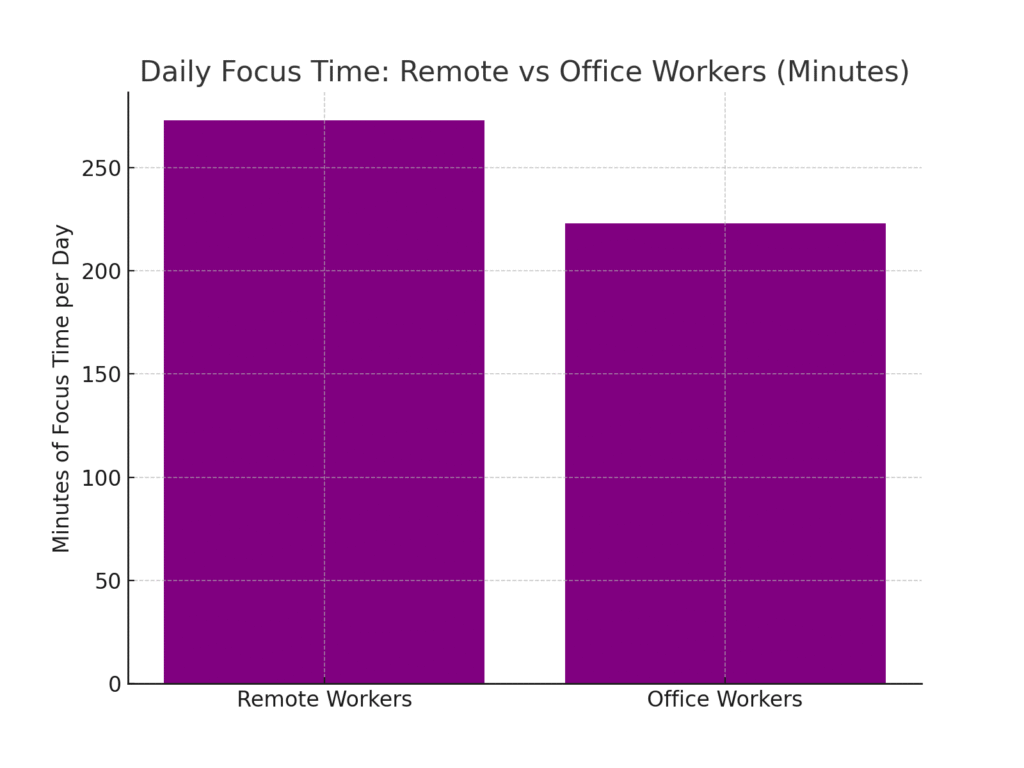
Remote workers report nearly 60% of their week is spent in focus time versus 48% for in-office peers. For marketers, this suggests remote work may allow deeper thinking despite distractions. Still, the challenge is maintaining that focus amidst interruptions. Marketing projects benefit greatly from this deep work when protected. Personally, I’ve leveraged this to get more creative campaigns done at home.
Work-from-home Marketing Distraction Statistics #15: 273 Minutes Of Daily Focus At Home
Remote workers average 273 minutes of uninterrupted focus daily. For marketers, that’s valuable time to dedicate to campaign design or analytics. Compared to office environments, this provides a clear productivity advantage. The key is reducing external distractions to maximize this window. I’ve used tools like focus timers to ensure these minutes are meaningful.
Work-from-home Marketing Distraction Statistics #16: 6.5 Hours Lost Weekly To Recovery
Office workers lose 6.5 hours weekly regaining focus after interruptions, while remote workers lose less. For marketing teams, this means remote environments may support productivity when managed well. However, distractions at home can still creep in. The cost of recovery remains significant either way. I’ve learned to plan breaks intentionally rather than let distractions dictate them.
Work-from-home Marketing Distraction Statistics #17: 79% Distracted Within An Hour Of Work
Almost 8 in 10 workers get distracted within the first hour of starting their day. For marketers, this can derail momentum before projects even get underway. Morning distractions can affect productivity for the rest of the day. Setting rituals to start with focus is critical. I’ve noticed that a distraction-free first hour sets the tone for everything else.
Work-from-home Marketing Distraction Statistics #18: 77% Use Social Media During Work Hours
A majority of employees admit to using social media during work. For marketers, this can blur the line between professional research and personal scrolling. It’s easy to justify being on platforms since they’re part of the job. But without discipline, personal browsing can consume hours. I’ve had to be intentional in distinguishing between research and distraction.
Work-from-home Marketing Distraction Statistics #19: 23 Minutes To Refocus After Social Media
After being distracted by social media, it takes nearly 23 minutes to refocus. For marketers, who often rely on these platforms professionally, this presents a paradox. Each break lowers overall efficiency. These moments add up across a workweek, costing significant creative energy. I’ve seen how stepping away from social feeds during deep work has boosted my productivity.
Work-from-home Marketing Distraction Statistics #20: 75% Report Fewer Distractions At Home
Interestingly, three-quarters of workers feel they’re less distracted at home than in the office. For marketers, this suggests remote work can create a net benefit if managed correctly. Distractions may shift but are not necessarily worse than in-office interruptions. With strong boundaries, the home environment can support productivity. I’ve personally thrived with fewer in-person interruptions when working from home.
Finding Balance Amid Work-from-home Distractions
Looking at these work-from-home marketing distraction statistics, I realize how much of our productivity depends on how we manage our environments. While the numbers highlight the many ways we get sidetracked, they also show opportunities for creating deeper focus and intentional routines. For me, it’s been about embracing flexibility while setting strong boundaries that protect creative time. Distractions will never disappear entirely, but being aware of them helps us take back control of our workday. And honestly, knowing I’m not alone in this makes the journey feel a little easier.
SOURCES