



30 Sep TOP 20 WORK-FROM-HOME MARKETING WORK-LIFE BALANCE STATISTICS 2025
As someone who has navigated the evolving world of remote work, I’ve seen firsthand how work-from-home marketing work-life balance statistics reveal more than just numbers—they tell real stories about how professionals are managing their time, energy, and well-being in this new era. Balancing creative demands, client deadlines, and personal responsibilities isn’t easy, but the data shows many of us are finding ways to thrive outside traditional office spaces. In my journey, I’ve often looked at insights like these to understand not only how the industry is changing but also how individuals are shaping healthier routines. Partnering with a leading marketing agency in New York has given me even more perspective on how marketers are rewriting the rules of productivity and balance in a digital-first world.
Top 20 Work-From-Home Marketing Work-Life Balance Statistics 2025 (Editor’s Choice)
| # | Statistic | Source |
|---|---|---|
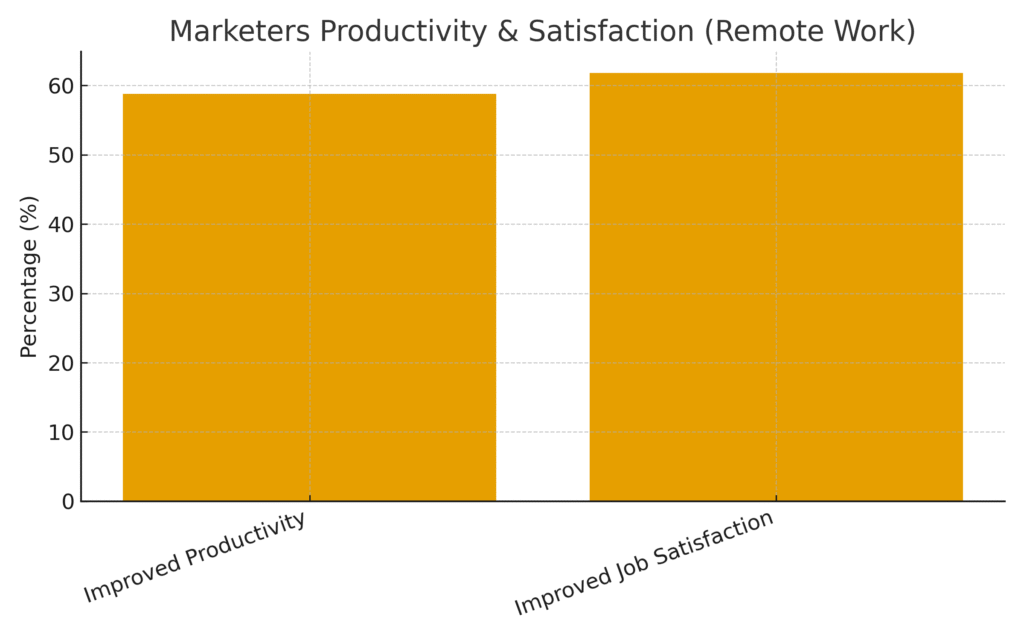
| 1 | 58.8% of marketers reported improved productivity while working from home | brafton.com |
| 2 | 61.8% of marketers said job satisfaction improved due to remote work | brafton.com |
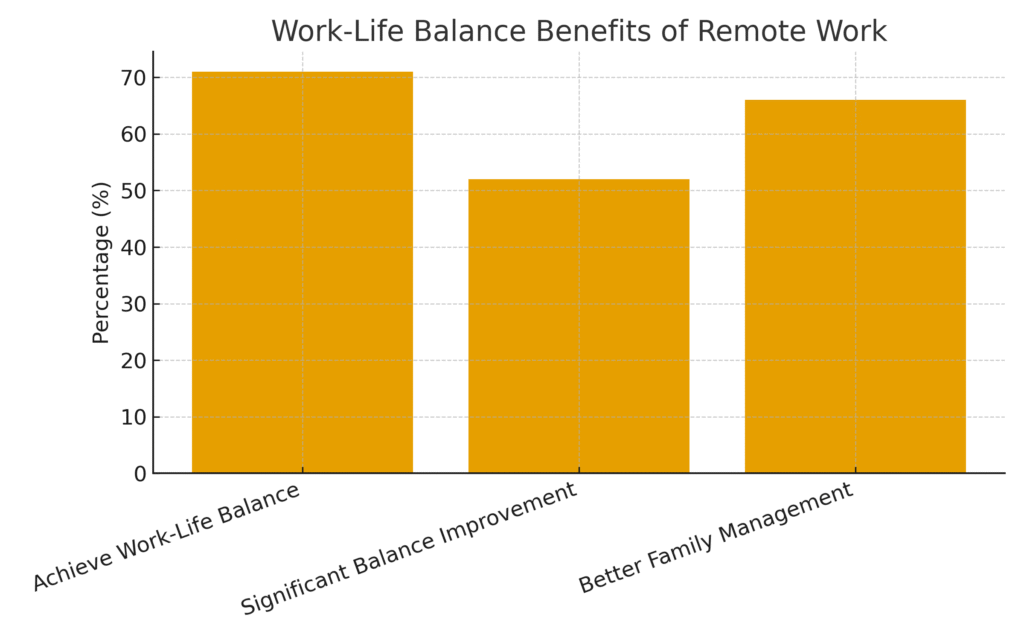
| 3 | 71% of teleworkers say remote work helps them achieve work-life balance | flair.hr |
| 4 | 52% of remote workers say it helps significantly with work-life balance | flair.hr |
| 5 | 66% say remote work allows better management of family commitments | flair.hr |
| 6 | 62% reported morale improvement with remote work | flair.hr |
| 7 | 96% of respondents linked happiness at work to good work-life balance | flair.hr |
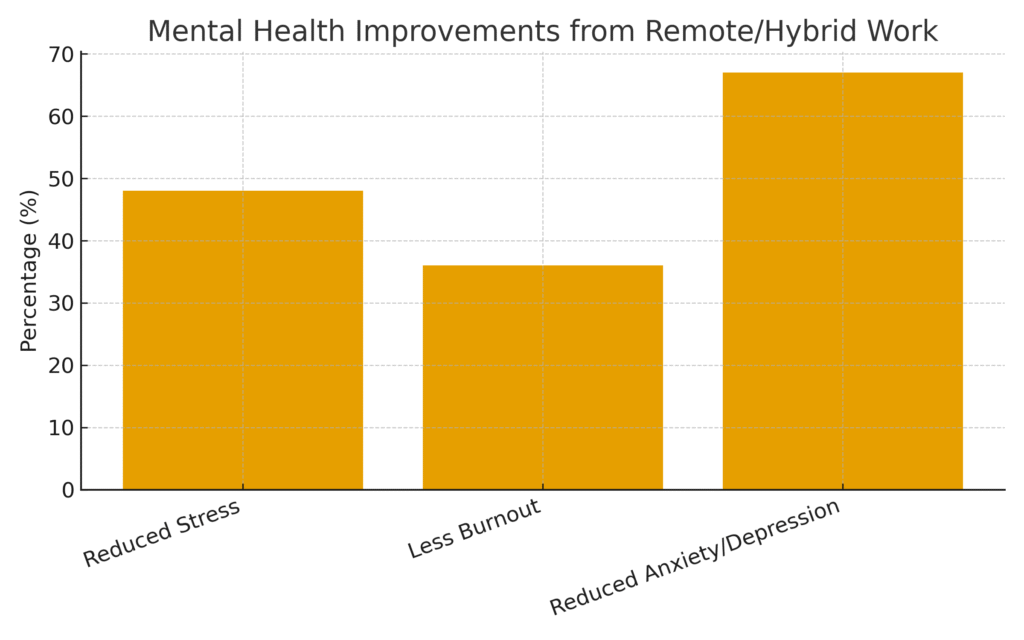
| 8 | 48% of workers report being less stressed when working remotely | officernd.com |
| 9 | 36% experience less burnout under remote/hybrid models | officernd.com |
| 10 | 67% report reduced anxiety/depression with remote options | officernd.com |
| 11 | 76% of remote employees work late or check messages outside hours weekly | gwi.com |
| 12 | 26% of remote workers report longer hours than before | gwi.com |
| 13 | Hybrid workers (2 days home) are equally productive; turnover drops 33% | stanford.edu |
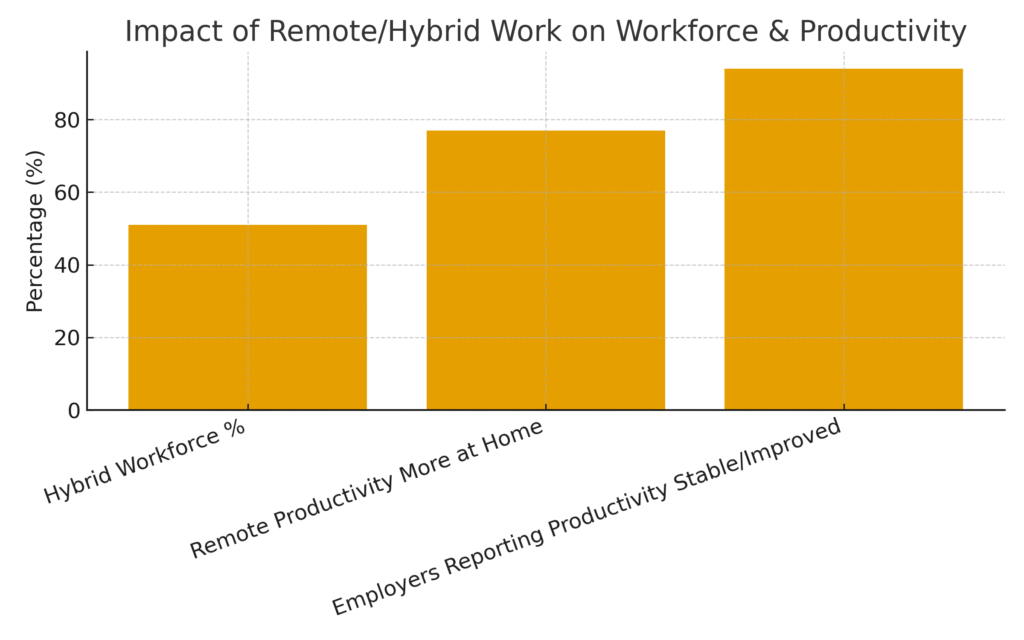
| 14 | 51% of the workforce now follows hybrid arrangements | gwi.com |
| 15 | Working from home one day a month makes employees 24% happier & more productive | 4dayweek.io |
| 16 | US remote-capable employees: 20% on-site, 28% remote, 52% hybrid | gallup.com |
| 17 | 94% of employers say productivity stayed the same or improved remotely | flowlu.com |
| 18 | 77% of remote workers feel more productive at home than office | flowlu.com |
| 19 | 48% say improved work-life balance is the top benefit of hybrid work | officernd.com |
| 20 | 75% of UK hybrid workers feel less burnout; 86% cite commuting reduction | theguardian.com |
Top 20 Work-From-Home Marketing Work-Life Balance Statistics 2025
Work-From-Home Marketing Work-Life Balance Statistics #1: 58.8% Of Marketers Report Improved Productivity While Working From Home
Remote work has empowered marketers to better organize their time, resulting in a significant 58.8% reporting improved productivity. Many attribute this to fewer office distractions and the ability to design their ideal work environment. With marketing often requiring focus and creativity, the quiet of home offices can boost efficiency. However, productivity also relies on strong digital tools and collaboration platforms to maintain momentum. Overall, this stat highlights how work-from-home setups can positively transform output.
Work-From-Home Marketing Work-Life Balance Statistics #2: 61.8% Of Marketers Said Job Satisfaction Improved Due To Remote Work
A majority of marketers—61.8%—believe their satisfaction has risen since working remotely. This stems from greater autonomy, flexible hours, and the chance to balance personal and professional responsibilities. Higher satisfaction directly influences retention, as happy employees are less likely to seek new roles. Still, managers must ensure consistent recognition and communication so employees don’t feel isolated. This statistic underscores the profound effect of flexibility on morale.
Work-From-Home Marketing Work-Life Balance Statistics #3: 71% Of Teleworkers Say Remote Work Helps Them Achieve Work-Life Balance
With 71% affirming its benefits, remote work clearly strengthens the ability to juggle career and personal life. Marketers can manage deadlines while also taking care of family, health, or hobbies. This flexibility reduces stress and supports overall wellness. Companies benefit too, since employees with balance often show greater loyalty. This data demonstrates why hybrid and remote models are now key to employee satisfaction.
Work-From-Home Marketing Work-Life Balance Statistics #4: 52% Of Remote Workers Say It Helps Significantly With Work-Life Balance
More than half—52%—say remote work isn’t just helpful, but significantly improves their balance. Having the option to step away for family needs or breaks enhances personal well-being. For marketers, this can fuel more creativity and energy during working hours. Yet, significant balance also requires boundaries to avoid overworking at home. This stat reflects how remote work can meaningfully reshape lifestyles.
Work-From-Home Marketing Work-Life Balance Statistics #5: 66% Say Remote Work Allows Better Management Of Family Commitments
Remote work is particularly valued by parents and caregivers, with 66% reporting improved family management. Eliminating long commutes gives back hours of quality time. Marketers with flexible schedules can attend important family events without sacrificing productivity. This integration strengthens both family life and job performance. It demonstrates how remote work supports the whole person, not just the employee.
Work-From-Home Marketing Work-Life Balance Statistics #6: 62% Reported Morale Improvement With Remote Work
A boost in morale was reported by 62% of remote workers. Higher morale often comes from feeling trusted to deliver without constant supervision. For marketers, this empowerment encourages innovation and initiative. Strong morale also improves collaboration across virtual teams, fostering positivity despite physical distance. This stat shows that workplace happiness doesn’t always require office walls.
Work-From-Home Marketing Work-Life Balance Statistics #7: 96% Of Respondents Linked Happiness At Work To Good Work-Life Balance
Nearly all respondents—96%—see happiness as directly tied to balance. This reinforces the idea that professional satisfaction is inseparable from personal well-being. For marketers under pressure to perform creatively, balance fuels long-term sustainability. Companies that prioritize employee well-being are more likely to retain their best talent. This figure is a powerful reminder of the universal need for equilibrium.
Work-From-Home Marketing Work-Life Balance Statistics #8: 48% Of Workers Report Being Less Stressed When Working Remotely
Almost half of employees—48%—say their stress levels drop with remote work. For marketing teams, fewer office interruptions and flexible settings help ease pressure. Reduced stress allows for sharper focus and better campaign outcomes. However, some workers may face new stressors from home distractions. Still, this stat shows remote work’s potential to calm workplace anxiety.
Work-From-Home Marketing Work-Life Balance Statistics #9: 36% Experience Less Burnout Under Remote/Hybrid Models
Burnout remains a common workplace issue, but 36% feel less of it when working remotely. This relief comes from improved control over work hours and fewer exhausting commutes. Marketers in creative roles particularly benefit from the chance to recharge more effectively. While not eliminating burnout entirely, hybrid schedules offer healthier rhythms. This statistic highlights how flexibility can be a remedy for fatigue.
Work-From-Home Marketing Work-Life Balance Statistics #10: 67% Report Reduced Anxiety/Depression With Remote Options
Mental health improves for 67% of workers in remote or hybrid arrangements. By shaping their environments, marketers can reduce anxiety triggers. The ability to take breaks without judgment fosters resilience and calm. Stronger mental health directly enhances creativity and engagement at work. This figure illustrates how remote work supports holistic wellness.
Work-From-Home Marketing Work-Life Balance Statistics #11: 76% Of Remote Employees Work Late Or Check Messages Outside Hours Weekly
While remote work offers freedom, 76% admit to overextending into personal time. Marketers may feel pressure to always be online, blurring boundaries. This constant availability can cause fatigue if not managed. Clear communication policies are vital to preserve personal hours. This stat highlights the hidden downside of flexibility: the temptation to overwork.
Work-From-Home Marketing Work-Life Balance Statistics #12: 26% Of Remote Workers Report Longer Hours Than Before
One in four remote workers—26%—say their workdays are now longer. Without commute boundaries, home life and work can blend excessively. For marketers, longer hours can mean more output but also higher stress. Managers should watch for signs of exhaustion to maintain healthy teams. This statistic underscores the importance of balance strategies.
Work-From-Home Marketing Work-Life Balance Statistics #13: Hybrid Workers (2 Days Home) Are Equally Productive; Turnover Drops 33%
Research shows hybrid schedules maintain productivity while reducing turnover by 33%. Employees benefit from a mix of office collaboration and home flexibility. For marketing teams, this balance keeps creativity alive while reducing attrition. Employers save costs by keeping experienced staff engaged. This stat proves hybrid setups can be a win-win solution.
Work-From-Home Marketing Work-Life Balance Statistics #14: 51% Of The Workforce Now Follows Hybrid Arrangements
Half the workforce—51%—now uses hybrid models. This reflects a permanent shift in workplace culture. Marketers in hybrid setups can enjoy collaboration days and focus days at home. The rise of hybrid work signals that flexibility is no longer optional. This statistic highlights the mainstream adoption of flexible work styles.
Work-From-Home Marketing Work-Life Balance Statistics #15: Working From Home One Day A Month Makes Employees 24% Happier And More Productive
Even a small dose of remote work—one day per month—boosts happiness and productivity by 24%. For marketers, occasional home days can rejuvenate creativity. This small change illustrates the psychological benefits of flexibility. Companies gain by supporting even limited remote arrangements. This stat proves that balance doesn’t require drastic changes to make an impact.
Work-From-Home Marketing Work-Life Balance Statistics #16: US Remote-Capable Employees: 20% On-Site, 28% Remote, 52% Hybrid
In the US, 52% of remote-capable employees now prefer hybrid setups. This leaves only 20% on-site and 28% fully remote. Marketers thrive in this mix, as hybrid allows both connection and independence. The balance shows a majority favor flexible routines over rigid office mandates. This stat highlights a nationwide cultural shift in work preferences.
Work-From-Home Marketing Work-Life Balance Statistics #17: 94% Of Employers Say Productivity Stayed The Same Or Improved Remotely
Employers are noticing the benefits too, with 94% affirming no loss in productivity. This challenges old assumptions that remote workers slack off. Marketing leaders see that results can match or surpass office performance. Trust becomes central to sustaining these outcomes. This data strengthens the case for embracing remote-first policies.
Work-From-Home Marketing Work-Life Balance Statistics #18: 77% Of Remote Workers Feel More Productive At Home Than Office
Most remote employees—77%—say they outperform their office selves at home. Marketers find that home setups enable deeper focus on creative tasks. This contrasts with the noise and interruptions often found in offices. While not universal, the perception of greater productivity is widespread. This stat showcases how employees value control over their environment.
Work-From-Home Marketing Work-Life Balance Statistics #19: 48% Say Improved Work-Life Balance Is The Top Benefit Of Hybrid Work
For nearly half of workers—48%—balance tops the list of hybrid work benefits. Employees cherish the ability to align personal and professional goals. Marketers balancing deadlines with life outside work particularly prize this freedom. This emphasis signals that balance is as important as pay or promotions. The stat affirms that modern workers want holistic support, not just jobs.
Work-From-Home Marketing Work-Life Balance Statistics #20: 75% Of UK Hybrid Workers Feel Less Burnout; 86% Cite Commuting Reduction
UK data shows 75% of hybrid workers feel less burnout, and 86% say commuting less improved balance. Avoiding long, draining travel frees energy for work and family. For marketers, this means more focus on projects without fatigue. Reduced commuting also supports sustainability and cost savings. This stat captures the wide-ranging perks of hybrid schedules.
Finding Balance in the Remote Era
Looking at these work-from-home marketing work-life balance statistics, it’s clear that working remotely isn’t just a temporary trend—it’s a lasting shift in how we connect our careers with our personal lives. For me, the biggest takeaway is how flexibility has become the new cornerstone of success, allowing us to craft workdays that fit real human needs rather than rigid office schedules. While challenges like blurred boundaries and longer hours remain, the overall impact leans heavily toward improved satisfaction, mental health, and career sustainability. I truly believe that embracing this balance is the key to unlocking not just better work, but better living. And as I reflect on my own path, I’m inspired by how marketers everywhere are proving that productivity and well-being can go hand in hand.
SOURCES
- https://blog.radancy.com/2025/02/06/the-rise-of-hybrid-work-redesigning-work-life-balance/
- https://www.bls.gov/opub/btn/volume-13/remote-work-productivity.htm
- https://www.flowlu.com/blog/productivity/remote-work-statistics/
- https://www.gwi.com/blog/working-from-home-vs-office
- https://pmc.ncbi.nlm.nih.gov/articles/PMC10702569/
- https://fbj.springeropen.com/articles/10.1186/s43093-024-00345-1
- https://flair.hr/en/blog/remote-work-statistics/
- https://www.activtrak.com/blog/remote-work-productivity-statistics/
- https://www.forbes.com/sites/bryanrobinson/2025/01/13/new-research-suggests-remote-jobs-are-best-for-companys-bottom-line/
- https://velocityglobal.com/resources/blog/work-life-balance-in-remote-work/
- https://www.gallup.com/workplace/648500/employee-wellbeing-hinges-management-not-work-mode.aspx
- https://blog.getaura.ai/remote-hybrid-work
- https://www.matsh.co/en/statistics-on-remote-work-preferences/
- https://www.travelperk.com/blog/remote-work-burnout-statistics/
- https://pesto.tech/resources/the-impact-of-remote-work-on-work-life-balance-in-2024
- https://www.sciencedirect.com/science/article/pii/S2444569X24001343