



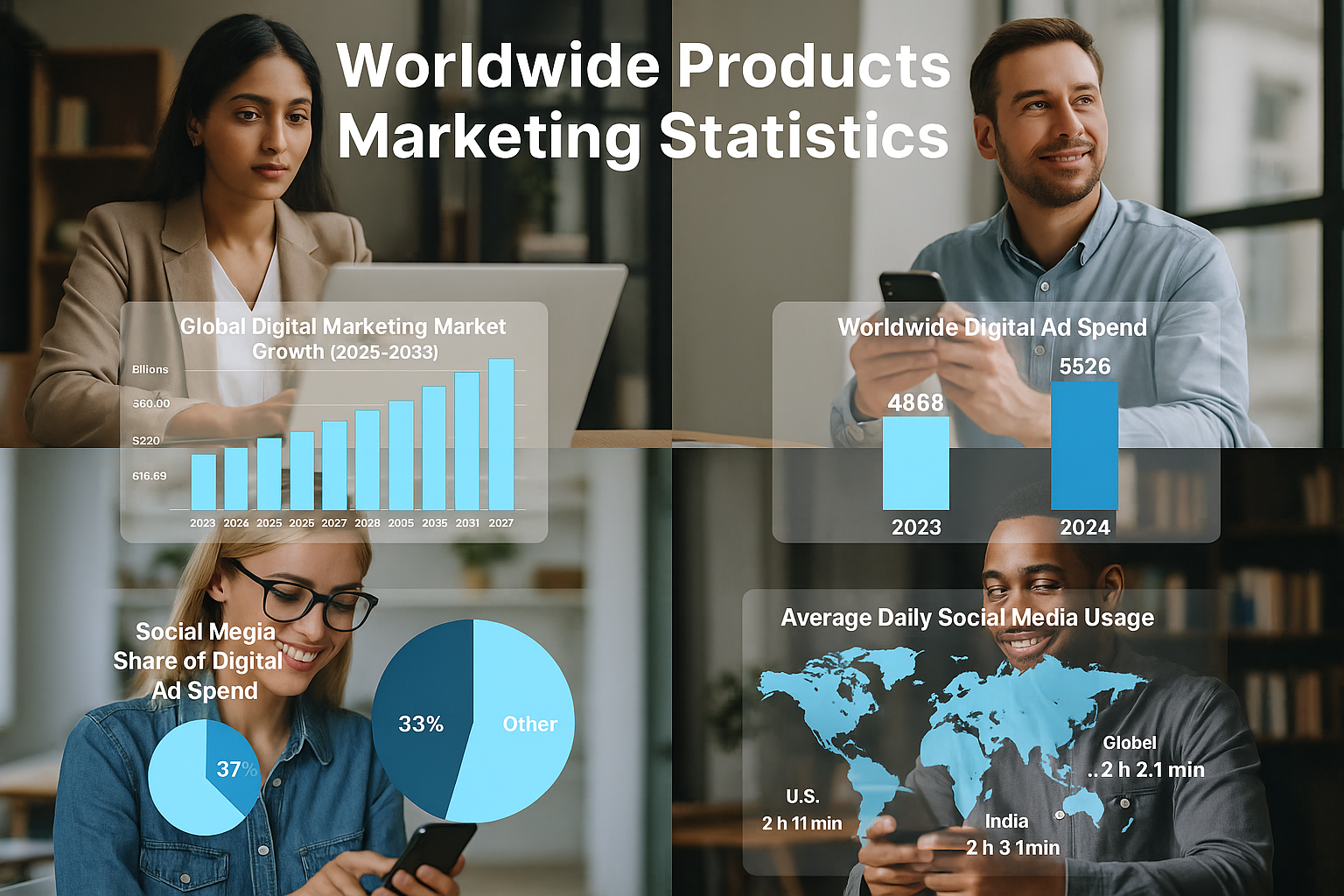
19 Sep TOP 20 WORLDWIDE PRODUCTS MARKETING STATISTICS 2025
In today’s fast-paced digital world, businesses are constantly seeking insights that will give them an edge, and that’s where worldwide products marketing statistics come into play. These numbers don’t just represent trends; they reveal the story of how consumers interact with brands, products, and technology across the globe. Whether it’s the rise of short-form video or the growing dominance of mobile shopping, every stat offers valuable direction for future strategies. I’ve put this collection together not just to share data but to provide actionable takeaways that feel relevant to businesses big and small. As someone who has been inspired by the incredible creativity of a marketing agency in New York, I wanted this roundup to reflect both global insights and the human element behind every marketing decision.
Top 20 Worldwide Products Marketing Statistics 2025 (Editor’s Choice)
| # | Statistic | Value / Insight |
|---|---|---|
| 1 | Global digital marketing market size | US$363.05B (2023), projected US$1,099.33B by 2032 |
| 2 | Worldwide digital ad spend | US$485B in 2023 → US$526B by end-2024 |
| 3 | Digital advertising & marketing market projection | US$786.2B by 2026 |
| 4 | Largest segment – Search advertising | US$202.4B projected volume |
| 5 | Social media share of ad spend | ≈33% of global digital ad spend |
| 6 | B2B eCommerce market value | US$32.11T in 2025, growing 14.5% by 2026 |
| 7 | Social media users worldwide | 5.2B+ users (64% of population) |
| 8 | Average daily social media usage | ≈2 hours 24 minutes per user |
| 9 | Top ROI-driving channels | Email marketing, paid social, content marketing |
| 10 | E-commerce conversion rates | Average <2% (2.7% health & beauty, 0.4% luxury) |
| 11 | Mobile shopping preference | 63% of consumers use mobile for brand research |
| 12 | Content marketing investment trend | 50% of marketers increased spend in 2024 |
| 13 | Optimal marketing video length | Under 2 minutes preferred by 73% of users |
| 14 | Podcast & audio investment | 91% of marketers maintain/increase in 2025 |
| 15 | Impact of infographics | 30× more likely to be read, 12% traffic boost |
| 16 | Platform ROI ranking | Facebook (28%), Instagram (22%) lead returns |
| 17 | Most popular content formats | Short-form video (29%), images (29%), blogs (19.5%) |
| 18 | Community importance | 50%+ marketers build active communities |
| 19 | Key performance indicators | Revenue & qualified leads > brand awareness |
| 20 | Biggest marketer challenge | Choosing platforms & budget allocation |
Top 20 Worldwide Products Marketing Statistics 2025
Worldwide Products Marketing Statistics #1: Global Digital Marketing Market Size
The global digital marketing market reached a massive value of US$363.05 billion in 2023. Projections show this figure climbing to over US$1,099 billion by 2032, making it one of the fastest-growing industries worldwide. This growth reflects the increasing dependence of businesses on digital tools to reach and engage customers. For companies, it’s a reminder that digital-first strategies are no longer optional but essential. The market’s expansion underlines the need for innovative campaigns that connect with global audiences.
Worldwide Products Marketing Statistics #2: Worldwide Digital Ad Spend
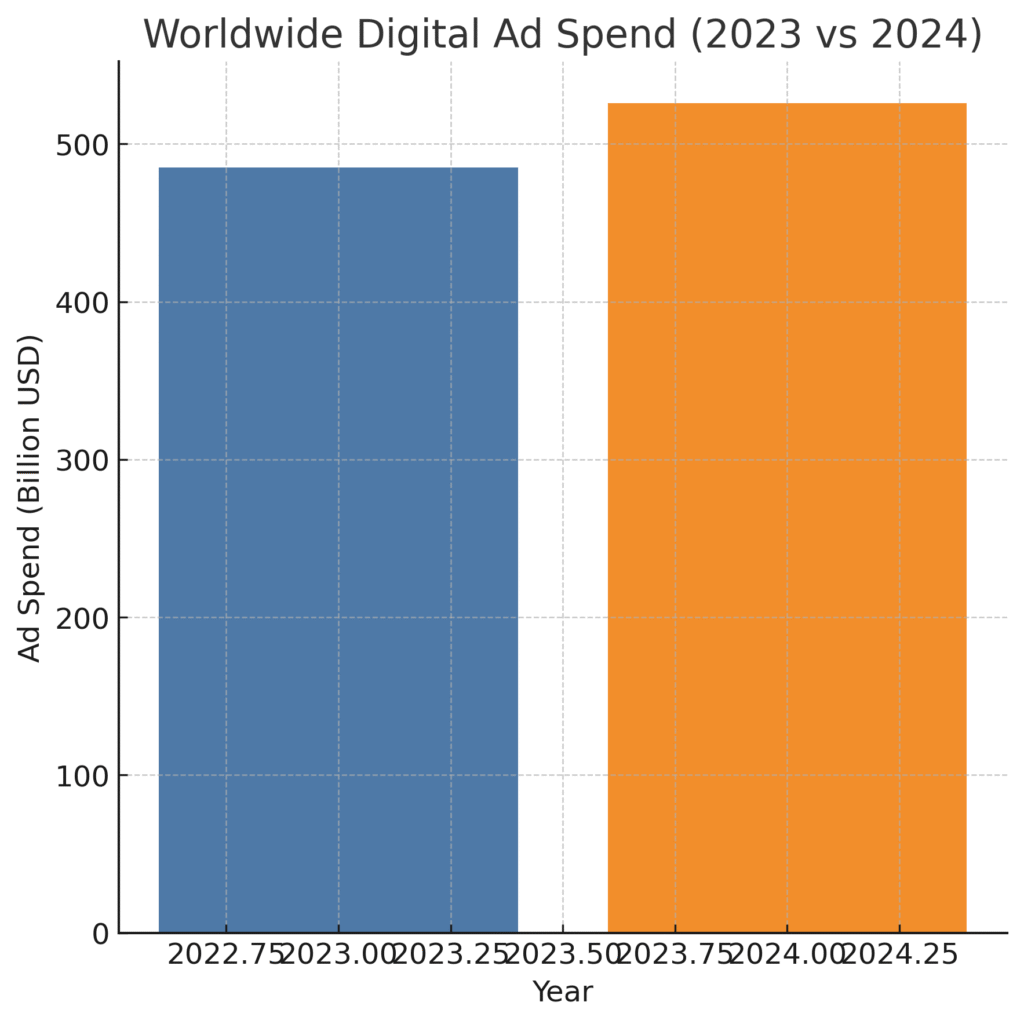
In 2023, global digital ad spending was around US$485 billion, and it’s expected to hit US$526 billion by the end of 2024. This steady rise shows how businesses prioritize digital over traditional media. Brands are clearly recognizing that online ads generate stronger engagement and measurable returns. As digital platforms evolve, the share of spend will continue to lean towards them. For marketers, this means keeping up with ad formats and audience targeting trends is crucial.
Worldwide Products Marketing Statistics #3: Digital Advertising & Marketing Market Projection
The digital advertising and marketing industry is projected to reach US$786.2 billion by 2026. This highlights the incredible momentum of digital-driven strategies. Businesses are not just spending more, but also diversifying across multiple digital channels. It reflects a marketplace where flexibility and adaptability determine success. With such growth, brands have both greater opportunities and fiercer competition ahead.
Worldwide Products Marketing Statistics #4: Largest Segment – Search Advertising
Search advertising remains the largest segment with a projected value of US$202.4 billion. This confirms that consumers heavily rely on search engines when making purchasing decisions. Brands that invest in search ads have a direct path to visibility at critical decision-making moments. It also emphasizes the importance of SEO alongside paid search strategies. Staying competitive here requires both budget allocation and optimization expertise.
Worldwide Products Marketing Statistics #5: Social Media Share of Ad Spend
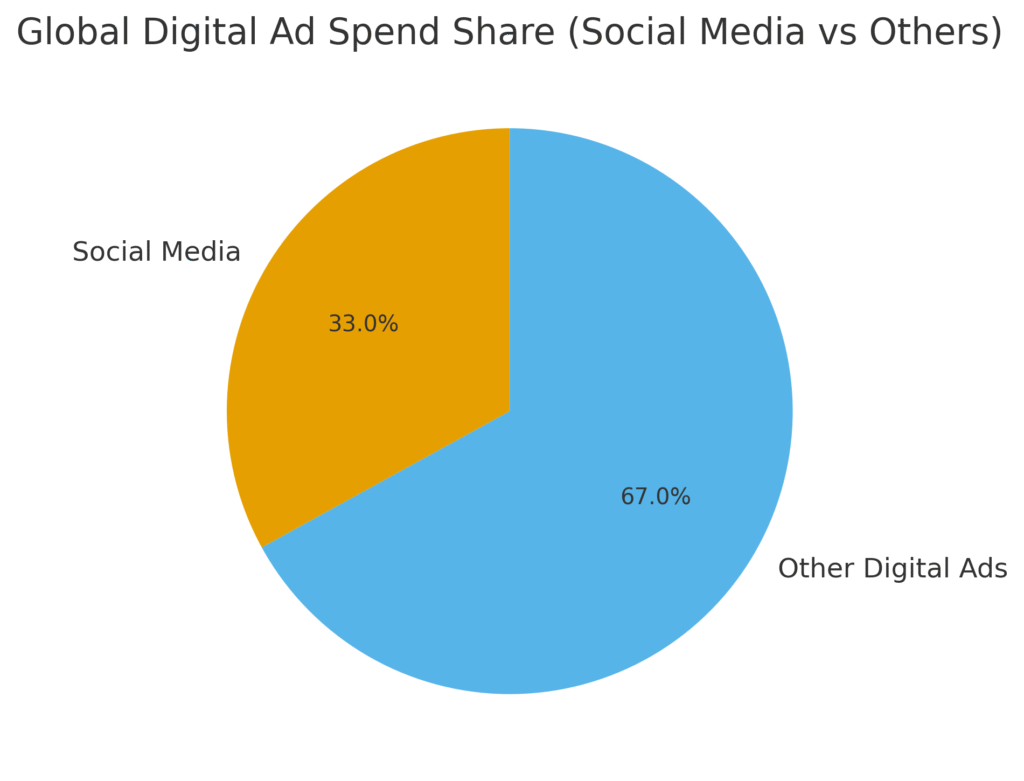
Social media accounts for about 33% of global digital ad spend. This demonstrates the dominance of platforms like Facebook, Instagram, and TikTok in shaping consumer behavior. With billions of users scrolling daily, social media has become an indispensable touchpoint for product marketing. Businesses that overlook social advertising risk missing out on massive engagement opportunities. It also reinforces the value of creative, authentic campaigns to win attention.

Worldwide Products Marketing Statistics #6: B2B eCommerce Market Value
The B2B eCommerce market reached US$32.11 trillion in 2025, with growth expected to continue. This surge shows how digital transformation has also reshaped the business-to-business world. From wholesale to industrial sectors, online transactions are becoming the norm. Companies are embracing streamlined platforms for efficiency and scale. It’s clear that digital commerce is no longer just consumer-focused but a B2B powerhouse as well.
Worldwide Products Marketing Statistics #7: Social Media Users Worldwide
With over 5.2 billion users worldwide, social media now covers about 64% of the global population. This scale illustrates why social platforms are central to marketing strategies. Brands can reach diverse demographics with highly targeted content. It also demonstrates the power of social proof and online communities in driving product adoption. For marketers, it means there’s no ignoring the global stage that social platforms create.
Worldwide Products Marketing Statistics #8: Average Daily Social Media Usage
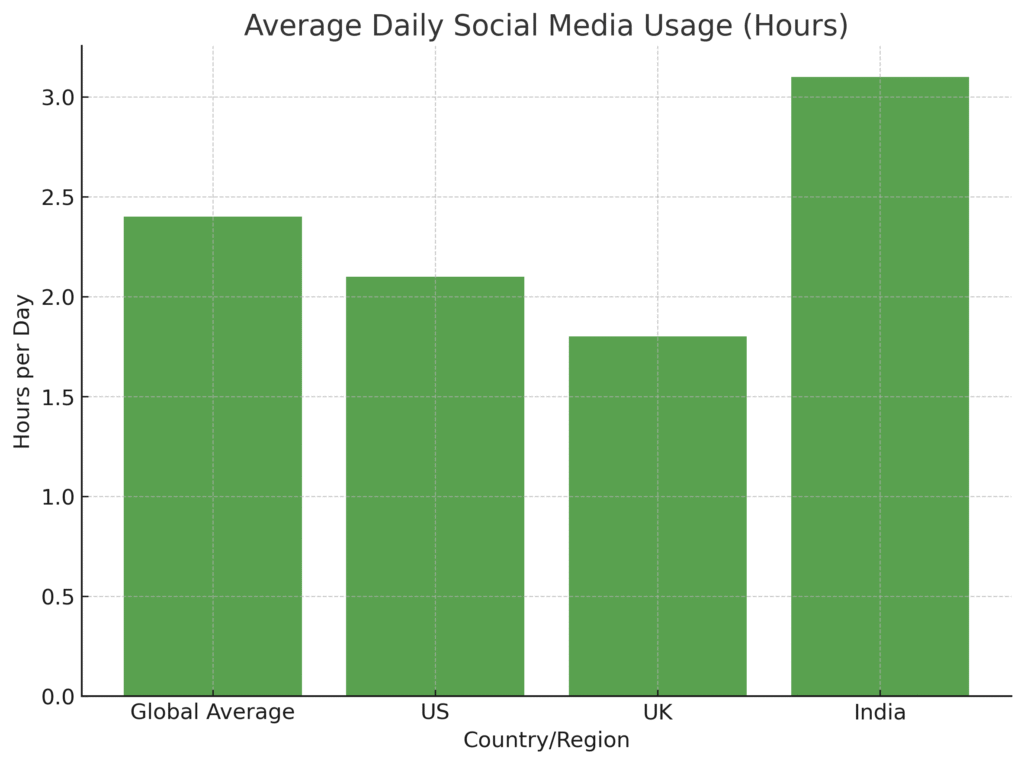
The average user spends around 2 hours and 24 minutes on social media daily. This level of engagement opens up multiple windows for marketers to connect. It also means competition for attention is fierce, as users are bombarded with content. Brands that succeed focus on delivering value in every interaction. Short, meaningful, and visually appealing content has the best chance of breaking through.
Worldwide Products Marketing Statistics #9: Top ROI-Driving Channels
Email marketing, paid social, and content marketing rank among the highest ROI-driving channels. This combination reflects both personalized and broad-reach strategies. Email remains a powerful tool for direct engagement, while social offers scale and virality. Content marketing supports trust and long-term brand positioning. Together, these channels form the backbone of effective modern marketing campaigns.
Worldwide Products Marketing Statistics #10: E-Commerce Conversion Rates
E-commerce conversion rates average below 2%, with variation by sector. Health and beauty sees around 2.7%, while luxury handbags lag at just 0.4%. These figures show how product type and pricing strongly influence customer behavior. For businesses, optimizing product pages, checkout processes, and trust signals is vital. Incremental improvements here can lead to massive revenue gains.
Worldwide Products Marketing Statistics #11: Mobile Shopping Preference
Around 63% of consumers prefer using mobile devices for brand and product research. This reflects the global shift towards mobile-first lifestyles. Companies that prioritize mobile optimization deliver smoother, faster experiences for customers. A poor mobile presence can lead to lost sales and weaker brand perception. Mobile responsiveness is no longer optional but a necessity for product marketers.
Worldwide Products Marketing Statistics #12: Content Marketing Investment Trend
Nearly half of marketers increased their content marketing investment in 2024. This shows that content remains central to connecting with audiences. Blogs, videos, podcasts, and visuals all serve to educate and engage customers. Investment growth also reflects the rising demand for high-quality storytelling. Marketers who master content consistency will maintain long-term competitive advantages.
Worldwide Products Marketing Statistics #13: Optimal Marketing Video Length
About 73% of people say the ideal length for a marketing video is under 2 minutes. This reinforces the trend toward short, digestible content. With attention spans shrinking, concise videos grab attention better. Brands that adapt can deliver quick yet impactful messages. This stat underlines the power of brevity in digital marketing.
Worldwide Products Marketing Statistics #14: Podcast & Audio Investment
91% of marketers plan to maintain or increase their investment in podcasts and audio. This highlights audio’s growing role in content strategies. Podcasts offer deeper storytelling opportunities, often reaching niche communities. Audio is also convenient for multitasking consumers, making it a versatile format. For brands, embracing audio is a chance to diversify content delivery.
Worldwide Products Marketing Statistics #15: Impact of Infographics
Infographics are 30 times more likely to be read than plain text and can increase traffic by 12%. This reflects how visuals enhance comprehension and retention. Complex data becomes accessible through smart design. For marketers, infographics are both engaging and shareable. They are a simple yet powerful way to boost visibility and impact.
Worldwide Products Marketing Statistics #16: Platform ROI Ranking
Facebook delivers the highest ROI for 28% of marketers, with Instagram at 22%. This shows the ongoing dominance of established platforms in digital marketing. Despite competition from newer apps, these networks maintain strong relevance. Their sophisticated ad tools and global reach contribute to their success. Brands benefit by aligning strategies with where audiences are most active.
Worldwide Products Marketing Statistics #17: Most Popular Content Formats
Short-form videos and images dominate content preferences, with blogging ranking fourth. This shift highlights the value of visual and quick-consumption formats. Audiences today want content that entertains or informs in seconds. Blogs remain important but often serve as deeper reference points. The takeaway is to balance speed with substance in content strategies.
Worldwide Products Marketing Statistics #18: Community Importance
Over half of marketers emphasize building active online communities. This approach goes beyond just selling products—it fosters loyalty. Communities provide a platform for feedback, engagement, and advocacy. They also generate user-generated content, which boosts credibility. For brands, community-driven marketing can create long-term brand ambassadors.
Worldwide Products Marketing Statistics #19: Key Performance Indicators
Marketers are increasingly prioritizing KPIs like revenue and qualified leads over awareness. This reflects a shift towards performance-driven campaigns. It also means accountability is higher, as results must tie to tangible business outcomes. Awareness still matters, but it’s no longer the sole focus. Brands need to balance top-of-funnel and bottom-of-funnel objectives effectively.
Worldwide Products Marketing Statistics #20: Biggest Marketer Challenge
The biggest challenge marketers face is deciding where to allocate budgets. With so many platforms available, it’s easy to spread resources too thin. Successful strategies come from analyzing where audiences truly engage. Data-driven decisions help maximize ROI while minimizing waste. The challenge is ongoing, but with careful analysis, brands can thrive.
Wrapping It All Up
Looking through these statistics, it’s clear that marketing isn’t just about numbers—it’s about people, their behaviors, and the way they connect with products in everyday life. For me, compiling this list was more than an exercise in research; it was about connecting the dots between global trends and real-world opportunities. If you’re a brand owner or even someone just curious about where the industry is heading, I hope these insights spark ideas you can actually use. The marketing landscape will continue to evolve, but what always remains is the human drive to tell stories that resonate. And honestly, that’s the part that excites me the most.
SOURCES
- https://www.hubspot.com/marketing-statistics
- https://www.digitalmarketinginstitute.com/blog/digital-marketing-trends-2025
- https://www.mediavalet.com/blog/digital-marketing-statistics
- https://www.seo.com/blog/digital-marketing-statistics
- https://www.marketingdive.com/news/digital-marketing-statistics-2025-h1-by-the-numbers/751401
- https://www.wordstream.com/blog/ws/2022/04/19/digital-marketing-statistics
- https://www.stackadapt.com/resources/blog/future-digital-marketing
- https://www.typeface.ai/blog/content-marketing-statistics
- https://seoprofy.com/blog/digital-marketing-statistics
- https://www.optimizely.com/insights/blog/marketing-statistics
- https://recurpost.com/blog/digital-marketing-statistics
- https://bloggingwizard.com/content-marketing-statistics-trends
- https://www.sprinklr.com/blog/social-media-marketing-statistics
- https://www.demandsage.com/digital-marketing-statistics
- https://firework.com/blog/marketing-roi-statistics
- https://shapo.io/blog/digital-marketing-statistics
- https://www.deloitte.com/us/en/insights/industry/technology/digital-media-trends-consumption-habits-survey/2025.html
- https://www.demandsage.com/business-blogging-statistics