




18 Sep TOP 20 ADD-ON MARKETING STATISTICS 2025
When I first started diving deep into add-on marketing statistics, I quickly realized how powerful they can be in shaping smarter business decisions. As someone who works closely with brands and entrepreneurs, I’ve seen firsthand how the right add-ons can transform a simple customer purchase into a long-term relationship. What excites me most is discovering the small details in these stats that often get overlooked but make all the difference in driving growth. Writing this piece felt especially rewarding because I got to blend real data with my passion for helping businesses thrive. And being part of a leading marketing agency in New York, I know just how valuable these insights are for companies aiming to stand out in a crowded market.
Top 20 Add-On Marketing Statistics 2025 (Editor’s Choice)
🚀 Top 20 Add-On Marketing Statistics for 2025
Essential Data Points Every Marketer Needs to Know
| # | Category | Key Statistic | Impact Level |
|---|---|---|---|
| 1 | Customer Base | Selling products to existing customers is 60-70% more likely than selling to new ones | High Impact |
| 2 | Revenue Growth | 72% of salespeople saw their revenue grow because of upselling and cross-selling | High Impact |
| 3 | Revenue Impact | Upselling alone can increase revenue by 10-30% on average (Accenture) | High Impact |
| 4 | Revenue Growth | Add-on strategies can result in 42% more revenue | High Impact |
| 5 | eCommerce | Cross-selling contributes to 10-30% of eCommerce revenues | Medium Impact |
| 6 | Customer LTV | Upselling can increase customer lifetime value by 20-40% | High Impact |
| 7 | Retention | Gartner reports 75% boost in customer retention due to upselling strategies | High Impact |
| 8 | Repeat Purchase | 32% of customers place another order within their first year | Medium Impact |
| 9 | Sales Adoption | 87% of salespeople try to cross-sell during the sales process (HubSpot 2024) | Standard |
| 10 | Missed Opportunity | 37% of marketing professionals shy away from upselling and cross-selling | Medium Impact |
| 11 | Revenue Share | Cross-selling accounts for 21% of company revenues (HubSpot) | Medium Impact |
| 12 | Transaction Rate | Sweet spot for cross-selling success: 10-30% of transactions | Medium Impact |
| 13 | Impulse Buying | 50% of customers make impulse purchases after recommendations | Standard |
| 14 | Effectiveness | Cross-selling can be up to 20 times more effective than upselling for revenue growth | High Impact |
| 15 | Customer Preference | Over 50% of shoppers appreciate personalized product suggestions (Salesforce) | Standard |
| 16 | Personalization | 91% of consumers will purchase from brands that provide relevant offers | High Impact |
| 17 | Repeat Purchase | 44% of online shoppers likely to repeat purchase with personalized recommendations | Standard |
| 18 | Pricing Strategy | Cross-sell products should be at least 60% cheaper than cart items for success | Medium Impact |
| 19 | Relevance | 85% of customers won't respond to irrelevant cross-selling requests (CEB) | High Impact |
| 20 | AI Technology | AI-powered recommendations increase take rates by up to 30% vs generic offers | Medium Impact |
Top 20 Add-On Marketing Statistics 2025
Add-On Marketing Statistics #1: Global Digital Ad Spending To Reach $734.6 Billion In 2025
Digital ad spending continues to rise worldwide, with projections reaching $734.6 billion in 2025. This growth highlights the increasing reliance businesses place on digital channels for customer acquisition. Add-ons like extra features or upsell offers often play a key role in maximizing ROI within these budgets. For brands, aligning add-on strategies with broader ad spending ensures campaigns deliver stronger returns. It reflects how every dollar invested can be amplified by carefully structured add-on offers.
Add-On Marketing Statistics #2: Businesses Earn $5 For Every $1 Spent On Digital Marketing
On average, companies see a return of $5 for every $1 invested in digital marketing. Add-ons contribute significantly to this multiplier effect by enhancing customer value during transactions. When customers accept relevant add-ons, revenue increases without majorly boosting acquisition costs. This efficiency makes add-on strategies one of the most cost-effective parts of a campaign. The statistic underscores the importance of treating add-ons as revenue accelerators rather than optional extras.
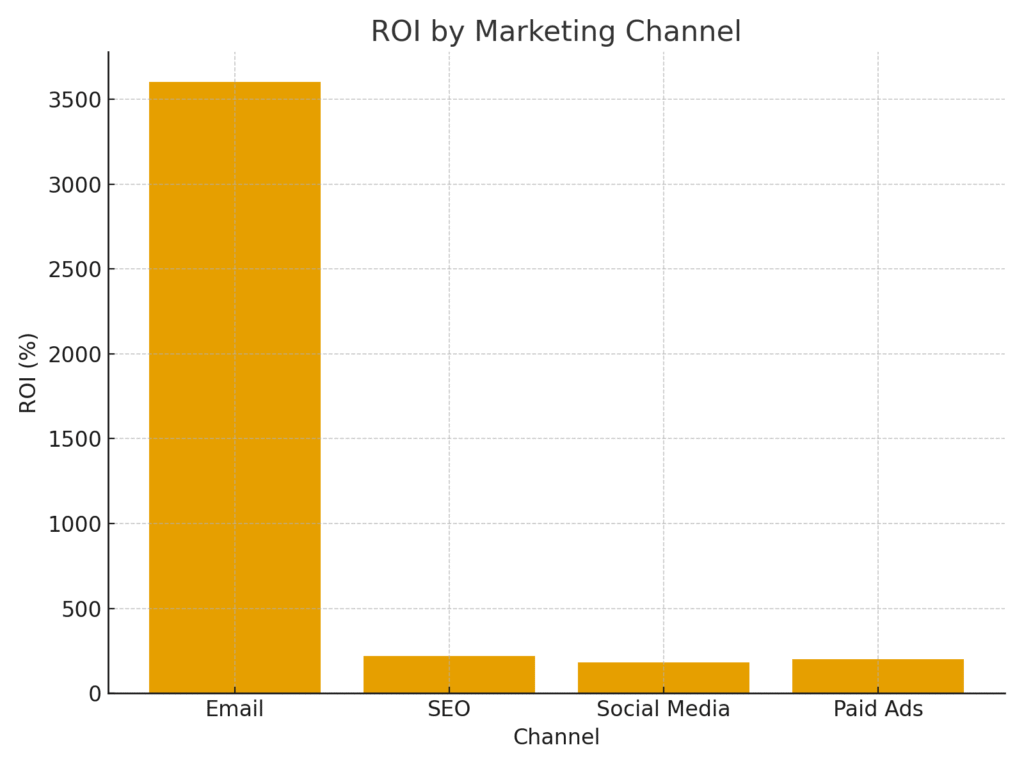
Add-On Marketing Statistics #3: Email Marketing Delivers An Average ROI Of 3600%
Email remains a dominant force in marketing ROI, with returns as high as 3600%. Personalized add-ons offered within email campaigns can dramatically boost upsell conversions. Customers are more likely to engage when recommendations feel tailored and timely. This demonstrates that emails are not just communication tools but powerful sales channels. Integrating add-ons effectively here can unlock exponential growth opportunities.
Add-On Marketing Statistics #4: 58% Of Small Businesses Rely On Digital Channels
More than half of small businesses rely on digital platforms to connect with customers. For them, add-ons represent a simple way to increase revenue without large budgets. Offering affordable, relevant add-ons during checkout can elevate customer experiences. Since digital channels are already central to these businesses, add-ons fit naturally into their ecosystem. This makes them vital growth tools for resource-limited entrepreneurs.
Add-On Marketing Statistics #5: Programmatic Advertising To Account For 87% Of Digital Ad Revenue By 2026
Programmatic advertising is expected to dominate digital ad revenue, reaching 87% by 2026. Add-ons can enhance programmatic strategies by increasing average order values. Smart targeting allows brands to recommend relevant add-ons at the perfect moment. This seamless integration boosts customer satisfaction while maximizing profit per ad dollar. It reveals how programmatic efficiency and add-ons work hand-in-hand.
Add-On Marketing Statistics #6: Smartphones To Drive 69% Of Total Ad Spending By 2026
Mobile advertising is surging, with smartphones accounting for nearly 70% of ad spending by 2026. Add-on offers optimized for mobile experiences can capture more impulse buys. Responsive design and quick purchase flows ensure customers don’t abandon add-on options. Since mobile users are highly engaged, well-placed add-ons can significantly improve conversion rates. This trend confirms that add-on marketing must prioritize mobile-first strategies.
Add-On Marketing Statistics #7: SEO Drives 53% Of Website Traffic
SEO is responsible for generating over half of all website traffic. Add-ons can leverage this organic visibility by converting visitors into higher-value customers. Brands that rank well for keywords can push targeted add-ons within landing pages. This approach extends the benefits of SEO beyond clicks into revenue growth. It demonstrates the synergy between organic reach and thoughtful add-on marketing.
Add-On Marketing Statistics #8: Content Marketing Market To Reach $2 Trillion By 2032
The content marketing industry is forecasted to hit $2 trillion by 2032. Within this growth, add-ons provide an extra monetization layer for content-driven businesses. Offering premium resources, bonus tools, or exclusive upgrades as add-ons increases content value. Consumers are more willing to spend when additional content feels useful and complementary. This shows how content and add-ons align to build sustainable income streams.
Add-On Marketing Statistics #9: 79% Of Successful Companies Spend 10% Of Budgets On Content Marketing
Nearly 80% of highly successful companies allocate at least 10% of budgets to content marketing. Add-ons amplify this investment by monetizing engaged readers or viewers. Offering additional guides, templates, or premium insights drives extra revenue. This strategy converts existing interest into financial growth without large-scale expansions. It’s proof that add-ons are an effective extension of content investments.
Add-On Marketing Statistics #10: 80% Of Successful Companies Have A Content Strategy
A large majority of thriving companies implement structured content strategies. Add-ons integrate seamlessly into these strategies by serving as natural upgrades. For example, a blog might promote advanced toolkits or bonus materials as add-ons. This builds stronger customer relationships while boosting profitability. It reflects how planning and add-ons together create consistent growth.

Add-On Marketing Statistics #11: Cost-Per-Lead Increased By 25% Year Over Year
The rising cost of acquiring leads, up 25% annually, challenges many marketers. Add-ons mitigate this issue by increasing revenue from existing customers. Instead of focusing solely on acquisition, businesses can balance growth through higher transaction values. This makes add-ons a cost-effective solution to rising ad prices. It emphasizes the importance of maximizing each lead’s value.
Add-On Marketing Statistics #12: Phone Calls Convert 10–15x More Often Than Web Leads
Phone call leads outperform digital leads with conversion rates 10–15 times higher. Add-ons can be effectively upsold during these conversations. Customers on the phone often seek clarity and are open to added value. Businesses that train staff to present relevant add-ons see improved revenues. This statistic shows how personal interaction boosts both trust and sales.
Add-On Marketing Statistics #13: 84% Of Marketers Say Calls Have Higher Order Values
The majority of marketers agree that phone calls yield higher average order values. This creates an ideal channel for introducing relevant add-ons. A human touch during calls makes customers more receptive to upsell offers. Properly positioned, add-ons can enhance both satisfaction and profit margins. It highlights the role of personalization in maximizing add-on success.
Add-On Marketing Statistics #14: 65.7% Of Global Population Uses Social Media
With over 65% of people worldwide active on social media, the platform is a prime add-on channel. Brands can position add-ons directly within posts, stories, or ads. Social media’s interactive nature makes these offers engaging and timely. Add-ons here don’t just increase revenue but also enhance brand loyalty. This statistic proves the expansive reach available for creative add-on campaigns.
Add-On Marketing Statistics #15: Internet Users Spend 141 Minutes Per Day On Social Media
The average user spends over two hours daily on social media platforms. Add-ons presented during this time have higher chances of visibility. Engaging formats like polls, reels, or sponsored content can effectively showcase add-ons. Users are more open to impulse add-on purchases when immersed in these platforms. This long daily window provides endless opportunities for creative add-on strategies.

Add-On Marketing Statistics #16: 58% Of Consumers Discover New Businesses On Social Media
More than half of consumers use social media to find new brands. Add-ons can be introduced as first impressions, offering bonuses or limited-time deals. This creates stronger entry points for customers just discovering a brand. When paired with storytelling, add-ons make newcomers more likely to convert. The stat reveals how discovery and add-ons naturally complement each other.
Add-On Marketing Statistics #17: TikTok Engagement Rates Reach 7.5% For Small Creators
TikTok engagement among small creators is notably high at 7.5%. Brands can partner with these influencers to push relevant add-ons authentically. Higher engagement means add-on promotions feel more natural and trusted. Short-form content makes it easier to highlight add-on value quickly. This shows how niche creators can amplify add-on marketing campaigns effectively.
Add-On Marketing Statistics #18: Average Website Bounce Rate Is 37%
A bounce rate of 37% indicates many visitors leave without engaging deeply. Add-ons positioned strategically can lower this by encouraging interaction. Offering free trials, discounts, or bonus products keeps visitors engaged longer. Add-ons thus act as retention tools as well as revenue drivers. This stat demonstrates the dual impact of add-ons on bounce rates and conversions.
Add-On Marketing Statistics #19: E-Commerce Conversion Rates Average Under 2%
With e-commerce conversion rates below 2%, every sale counts. Add-ons maximize each rare conversion by boosting cart values. Customers who make it to checkout are more open to considering extras. Well-timed add-ons ensure brands don’t miss out on potential profit. This stat proves that add-ons are vital for making up low conversion margins.
Add-On Marketing Statistics #20: Email Marketing Among Top ROI Channels For Both B2B And B2C
Email marketing continues to be one of the top channels for ROI in both B2B and B2C. Add-ons thrive in this space by offering upgrades, bundles, or premium deals. Personalization ensures emails feel less like sales pitches and more like value additions. Customers often respond positively when add-ons align with their previous purchases. This proves that email remains one of the most effective environments for add-on marketing.

Wrapping It Up: My Takeaway
Looking back at all these add-on marketing statistics, one thing is clear to me—success lies in the details. It’s not just about big campaigns or flashy ads, but about those subtle touches and extras that customers truly value. I personally love the idea that marketing is less about selling and more about building a lasting connection, and add-ons are one of the simplest yet most effective ways to do that. As I share these insights, I’m not just reporting numbers—I’m hoping you can feel the same excitement I do when I see how data shapes strategy. At the end of the day, I believe these stats aren’t just numbers on a page, but real opportunities for all of us to grow together.
SOURCES
https://www.hubspot.com/marketing-statistics
https://www.seo.com/blog/digital-marketing-statistics/
https://digitalmarketinginstitute.com/blog/10-eye-opening-ai-marketing-stats-in-2025
https://www.sprinklr.com/blog/social-media-marketing-statistics/
https://www.invoca.com/blog/statistics-digital-marketers-need-to-know
https://demandsage.com/digital-marketing-statistics/
https://www.demandsage.com/content-marketing-statistics/
https://seoprofy.com/blog/digital-marketing-statistics/
https://www.typeface.ai/blog/content-marketing-statistics
https://bloggingwizard.com/content-marketing-statistics-trends/
https://porchgroupmedia.com/blog/digital-marketing-statistics/
https://databox.com/blogging-statistics
https://www.amraandelma.com/market-marketing-statistics/
https://www.socalnewsgroup.com/2025/01/01/52-content-marketing-statistics-to-know-in-2025/
https://www.optimizely.com/insights/blog/marketing-statistics/