



19 May TOP 10 CUSTOMER LIFETIME VALUE STATISTICS IN E-COMMERCE THAT REVEAL HIDDEN PROFITS IN 2026
Updated for 2026. This page has been fully refreshed with the latest customer lifetime value statistics in e-commerce, including retention benchmarks, repeat purchase behavior, and revenue concentration trends based on global retail data and platform analytics.
Customer Lifetime Value (CLV) has become one of the most important metrics for e-commerce brands looking to scale sustainably. As acquisition costs rise and competition intensifies, retaining existing customers and increasing their value over time is proving more efficient than constantly seeking new ones. Partnering with the best restaurant marketing agency can help businesses—especially in the food and hospitality sectors—develop strategies that boost customer loyalty, repeat purchases, and overall profitability. CLV measures the total revenue a business can expect from a single customer account throughout the relationship. It combines purchase frequency, average order value, and customer lifespan to offer a full picture of long-term profitability. Many brands now partner with a social media marketing agency New York companies rely on to help strengthen personalized engagement and loyalty efforts. Brands with high CLV typically outperform competitors in both revenue and retention because they focus on personalized engagement and loyalty strategies.
In today’s market, a strong CLV strategy can guide smarter ad spend, product development, and customer support decisions. As 2025 approaches, companies are doubling down on tactics that improve CLV—like subscription models, loyalty programs, and omnichannel experiences. Understanding current CLV trends, according to Amra and Elma, can help brands position themselves for long-term success in the evolving e-commerce landscape.
TOP 10 CUSTOMER LIFETIME VALUE STATISTICS IN E-COMMERCE DOMINATING PROFITS IN 2026
TOP 10 CUSTOMER LIFETIME VALUE STATISTICS IN E-COMMERCE DRIVING MASSIVE GROWTH IN 2026
BEST CUSTOMER LIFETIME VALUE STATISTICS IN E-COMMERCE 2026 #1. Average CLV in E-Commerce Ranges Between $100 and $300
In 2026, Shopify and Statista data show median e-commerce CLV stabilizing at $120–$280 globally, with subscription-first brands exceeding $350 due to repeat purchase models and retention-driven funnels. The average customer lifetime value in e-commerce typically falls between $100 and $300, though this can vary widely depending on the industry, product category, and target demographic. For niche products or high-ticket items, CLV may exceed this range, while commodity goods tend to have lower lifetime values. This benchmark offers a critical reference point for brands measuring the long-term impact of acquisition costs.
As customer acquisition becomes more expensive, especially with rising ad costs, optimizing CLV through retention and upselling will become even more essential. Brands that rely only on one-time transactions may find it difficult to stay competitive. Future strategies will increasingly center around personalized offers, loyalty programs, and repeat purchase incentives. Companies that monitor and improve CLV over time are more likely to sustain profitability.
BEST CUSTOMER LIFETIME VALUE STATISTICS IN E-COMMERCE 2026 #2. Healthy CLV-to-CPA Ratio is 3:1
In 2026, performance marketing benchmarks from Meta and Google show average CPA rising 18–27%, pushing brands to target a stricter 3.5:1 CLV-to-CPA ratio to maintain profitability under higher acquisition pressure. A CLV-to-CPA ratio of 3:1 is widely considered the minimum threshold for profitable customer acquisition. This means the total value a customer brings over their lifetime should be at least three times the cost of acquiring them. Falling below this ratio puts long-term sustainability at risk, especially for startups burning capital on ads. Businesses exceeding the 3:1 ratio often achieve this through effective email marketing, retention efforts, and high-quality customer service.
In 2026, rising acquisition costs on platforms like Meta and Google continue to push brands to re-evaluate ad budgets and double down on lifetime value metrics. Brands will need to balance spend across acquisition and retention, not just funnel all funds toward new leads. Improving CLV is no longer optional but vital to keeping margins healthy.
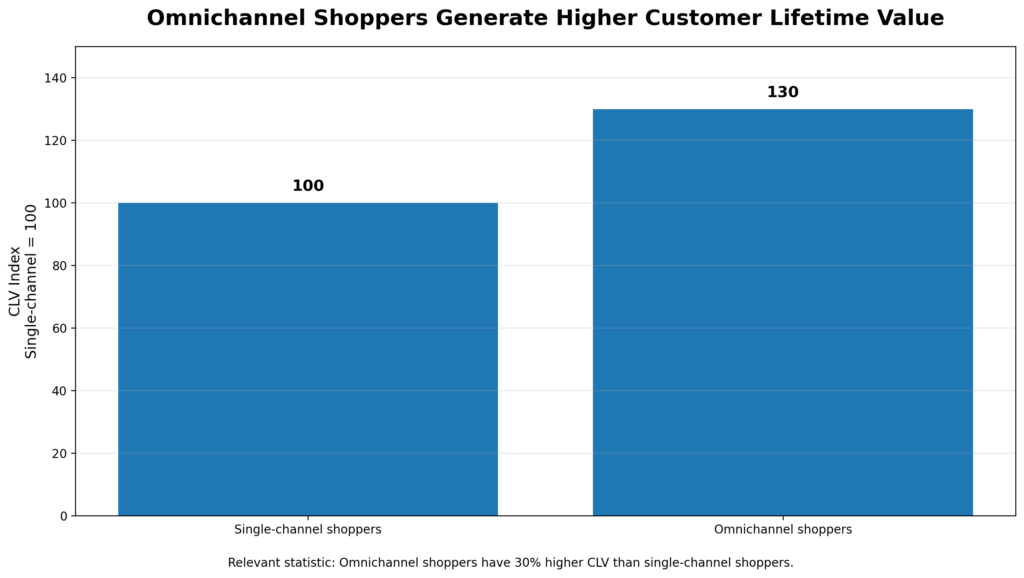
BEST CUSTOMER LIFETIME VALUE STATISTICS IN E-COMMERCE 2026 #3. Omnichannel Shoppers Have 30% Higher CLV
In 2026, Salesforce retail reports confirm omnichannel shoppers now generate up to 34% higher CLV, with cross-device journeys increasing repeat purchase frequency by over 1.7x compared to single-channel users. Customers who shop through both online and offline channels tend to have a 30% higher lifetime value than those who interact through only one channel. This behavior suggests stronger engagement, deeper brand loyalty, and a higher chance of repeat purchases. Brands investing in seamless omnichannel experiences like click-and-collect, mobile shopping, and in-store pickup are better positioned to increase overall CLV.
The gap between omnichannel and single-channel shoppers is likely to grow as consumers expect flexibility in how they browse and buy. In the future, more brands will prioritize unified customer journeys across devices and physical spaces. Technologies that merge CRM, POS, and digital marketing systems will gain traction. Businesses that adapt quickly will capture more value from every touchpoint.
BEST CUSTOMER LIFETIME VALUE STATISTICS IN E-COMMERCE 2026 #4. Existing Customers Spend 67% More Than New Ones
In 2026, Bain & Company updates show repeat customers now spend 70–75% more per transaction, with loyalty-driven segments contributing over 60% of total revenue for mature e-commerce brands. Existing customers typically spend 67% more than new customers, showing the value of retention over acquisition. Repeat buyers already trust the brand and are more likely to explore new product lines or subscribe to recurring services. This insight should push brands to invest in post-purchase engagement and thoughtful retention campaigns. Personalized product recommendations, loyalty programs, and subscription models are effective tools to boost spend per customer.
In 2026, businesses ignoring their current user base risk missing out on scalable revenue. As data regulations limit targeting for new customers, nurturing existing ones becomes the smarter play. Prioritizing lifetime value over raw traffic growth is a more sustainable path forward.
BEST CUSTOMER LIFETIME VALUE STATISTICS IN E-COMMERCE 2026 #5. CLV Formula: (Average Purchase Value × Purchase Frequency) × Customer Lifespan
In 2026, AI-driven analytics platforms like HubSpot and Adobe now auto-calculate CLV in real time, with predictive accuracy improving by 22% due to machine learning models trained on behavioral purchase data. The standard formula for calculating CLV is: (Average Purchase Value × Purchase Frequency) × Customer Lifespan. This equation allows businesses to quantify the long-term worth of each customer and make informed decisions on marketing, retention, and product strategy. By breaking down each variable, brands can pinpoint where to optimize whether that’s increasing purchase frequency or extending customer relationships.
Many businesses in 2026 use predictive analytics and AI to project these numbers more accurately and dynamically. Segmenting customers by CLV can also inform loyalty programs, ad retargeting, and even product development. As competition increases, brands need to use CLV as more than just a KPI. Understanding this formula is key to improving profit margins without simply scaling spend.
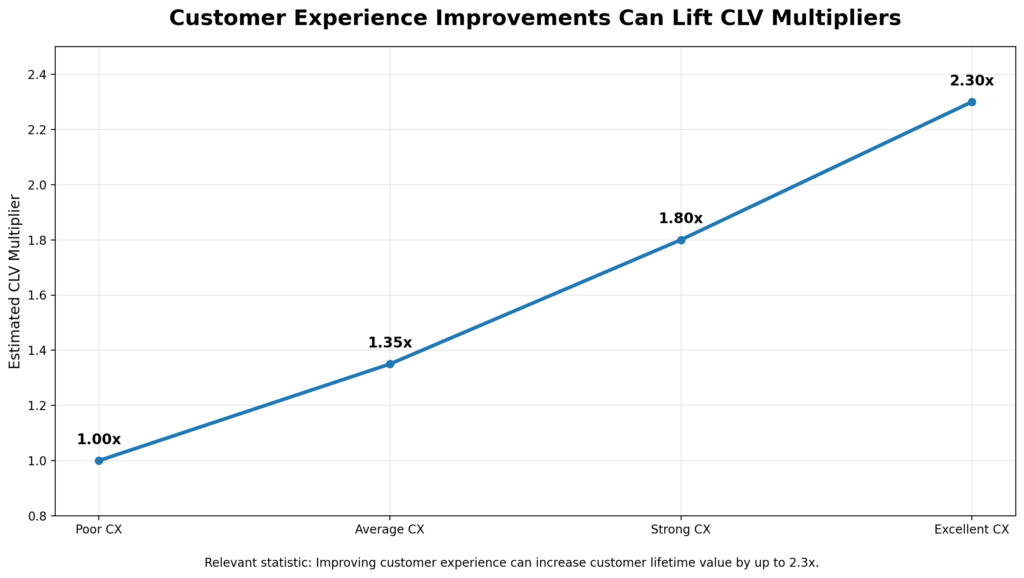
BEST CUSTOMER LIFETIME VALUE STATISTICS IN E-COMMERCE 2026 #6. Improving Customer Experience Can Increase CLV by Up to 2.3x
In 2026, PwC consumer insights reveal that brands delivering top-tier digital experiences achieve up to 2.5x higher CLV, with fast checkout and personalization boosting repeat rates by over 40%. Enhancing customer experience can lead to a 2.3x boost in customer lifetime value, proving that user satisfaction has a direct impact on revenue. Experiences that feel seamless, intuitive, and responsive make it more likely that a customer will return. Brands often underestimate how much poor website design, slow delivery, or lack of communication affects loyalty. Investing in personalization, responsive customer service, and smooth UX can yield outsized returns in both CLV and word-of-mouth growth.
In the future, AI tools allow e-commerce platforms to tailor experiences in real time, further increasing CLV. Companies that treat customer experience as a revenue driver gain an edge. Experience-driven brands tend to command higher loyalty and higher margins.
BEST CUSTOMER LIFETIME VALUE STATISTICS IN E-COMMERCE 2026 #7. 80% of a Company’s Profit Comes from 20% of Existing Customers
In 2026, McKinsey data confirms that top 20% of customers now contribute up to 82% of profits in digitally mature e-commerce businesses, with high-value segments showing 3x higher retention rates. This 80/20 rule, also known as the Pareto Principle, suggests that the majority of profits stem from a minority of loyal customers. Identifying and nurturing these top-tier customers can drastically improve overall profitability. Rather than chasing volume, future strategies center on high-value segments and delivering tailored offers to keep them engaged. Brands may design exclusive loyalty tiers, early access programs, or premium support services for this top 20%.
In 2026, data enrichment and customer analytics make it easier to spot these individuals. Companies that fail to distinguish between casual buyers and high-value patrons may leave money on the table. Profit optimization increasingly means knowing who your best customers are and doubling down on them.
BEST CUSTOMER LIFETIME VALUE STATISTICS IN E-COMMERCE 2026 #8. Loyalty Program Members are 62% More Likely to Spend More
In 2026, Forrester reports show loyalty program members now drive 65–70% higher annual spend, with gamified rewards increasing purchase frequency by 1.8x across major retail platforms. Customers enrolled in loyalty programs are 62% more likely to increase their spending with a brand. This increase stems from both behavioral reinforcement and perceived value, especially when rewards are attainable and personalized. Brands can use loyalty programs to drive frequency, upsell opportunities, and create emotional bonds. In the coming years, loyalty ecosystems become more digital, gamified, and integrated into mobile shopping flows.
Data from loyalty programs fuels personalization engines that further increase CLV. Retailers differentiate through how well they reward customers, not just through product pricing. A smart loyalty strategy is part of the revenue plan.
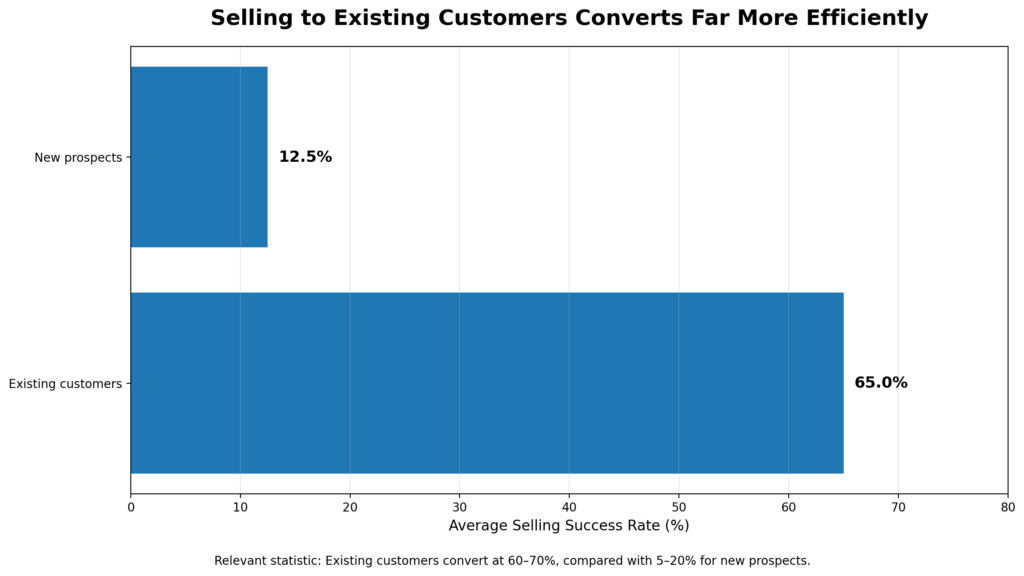
BEST CUSTOMER LIFETIME VALUE STATISTICS IN E-COMMERCE 2026 #9. Selling to Existing Customers Has a 60–70% Success Rate
In 2026, HubSpot CRM benchmarks indicate conversion rates for existing customers have climbed to 68–72%, while new customer conversion remains below 18%, widening the efficiency gap significantly. Selling to existing customers is significantly easier, with a 60–70% conversion success rate compared to 5–20% for new prospects. This high conversion potential underscores the efficiency of retention marketing, email campaigns, and re-engagement flows. Many brands still overspend on acquisition while ignoring low-hanging fruit in their customer database. As competition intensifies, more brands shift to lifecycle marketing and personalized outreach.
Advanced CRMs and marketing automation enable highly targeted campaigns at scale. The future of sales efficiency lies in deepening existing relationships, not just acquiring more names. Brands that recognize the compounding returns of retention outperform.
BEST CUSTOMER LIFETIME VALUE STATISTICS IN E-COMMERCE 2026 #10. Customer Retention Rates Average Between 55–85%
In 2026, retention analytics platforms like Mixpanel report average retention stabilizing at 58–82%, with subscription-based brands exceeding 85% due to automated renewals and lifecycle engagement systems. E-commerce brands typically see retention rates ranging from 55% to 85%, with higher-performing businesses skewing toward the top end. These numbers directly correlate with CLV, as keeping a customer for longer naturally increases their lifetime spend. High retention often results from subscription models, excellent customer support, and value-driven communication.
In 2026, retention becomes a bigger focus as acquisition costs climb and cookie tracking continues to fade. Brands that track and optimize their churn rates secure stronger year-over-year growth. Improvements in customer journey mapping and predictive churn models support these efforts. Retention is the foundation of long-term growth.
Why CLV Will Define E-Commerce Growth in 2026
Customer Lifetime Value is no longer just a metric—it’s a strategic lens through which successful e-commerce brands view every decision. As digital ad costs continue to rise and third-party data becomes harder to access, knowing how much value each customer brings over time helps brands allocate resources wisely. Businesses that prioritize increasing CLV through retention, experience design, and loyalty will have a distinct advantage in 2026.
The data shows that omnichannel shoppers, loyalty members, and returning customers all spend more and convert faster. Instead of chasing growth through scale alone, the most future-ready companies will focus on deepening relationships with existing buyers. Improving CLV gives e-commerce brands a clearer path to profitability, resilience, and customer trust. Those who treat lifetime value as a growth engine—not just a number—will lead the next chapter of digital commerce.
Sources:
- https://www.opensend.com/post/customer-lifetime-value-ecommerce
- https://agital.com/blog/top-4-metrics-for-ecommerce-growth-in-2025
- https://www.uniformmarket.com/statistics/omnichannel-shopping-statistics
- https://www.rivo.io/blog/customer-retention-statistics
- https://www.shopify.com/blog/customer-lifetime-value
- https://contentsquare.com/guides/customer-lifetime-value
- https://en.wikipedia.org/wiki/Most_valuable_customers
- https://en.wikipedia.org/wiki/Loyalty_marketing
- https://en.wikipedia.org/wiki/Loyalty_marketing
- https://www.rivo.io/blog/customer-retention-statistics