




25 Sep TOP 20 DEVELOPER MARKETING STATISTICS 2025
As someone who has worked closely with technical teams, I know how different it is to market to developers compared to traditional audiences. Developers value authenticity, clarity, and utility above all else, which is why understanding the latest developer marketing statistics is so important. In this blog, I’ve gathered some of the most relevant insights to help you see what truly resonates with this unique audience. I’m drawing inspiration from the expertise of a leading marketing agency in New York that has worked with some of the biggest brands in tech. My goal is to share these numbers in a way that feels practical, actionable, and personal—so you can apply them to your own strategies with confidence.
Top 20 Developer Marketing Statistics 2025 (Editor’s Choice)
🚀 Top 20 Developer Marketing Statistics 2025
Essential data-driven insights for marketing to developers
| # | Category | Key Statistic | Insight |
|---|---|---|---|
| 1 | Audience | 76% struggle with attribution | Developer-focused companies can't track conversions effectively because developers use technical blogs, GitHub, Stack Overflow, and conferences |
| 2 | Audience | 43% have inaccurate CAC | Developer tool companies report their customer acquisition cost calculations are largely inaccurate |
| 3 | Audience | 44% are 15+ year veterans | Professional developers have over 15 years of programming experience, indicating a highly experienced audience |
| 4 | Audience | 65.7% prefer StackOverflow | Developers' top platforms are StackOverflow (65.7%), LinkedIn (51.4%), and Twitter (45.7%) |
| 5 | Audience | 62.9% learn via social media | Developers use social platforms to learn new skills and improve existing ones, while 57.1% use it to connect with peers |
| 6 | Audience | 28.6% spend 1-2 hours daily | Developers spend 1-2 hours on social media daily, with 20% spending up to 7 hours per day |
| 7 | Conversion | PQLs convert 3-5x better | Product Qualified Leads have 3-5x higher conversion rates than Marketing Qualified Leads for developer products |
| 8 | Conversion | 15-25% trial-to-paid rate | Developer tools achieve 15-25% trial-to-paid conversion, significantly higher than traditional SaaS products |
| 9 | Conversion | 20-40% activation rate | Well-designed onboarding experiences achieve 20-40% developer activation rates |
| 10 | Conversion | <15 min time to value | Target under 15 minutes for freemium products and under 30 minutes for trials to reach first value |
| 11 | Approach | 53% are enterprise devs | Corporate or Enterprise Developers make up 53%, while 44% create applications for individual/workgroup use |
| 12 | Approach | Jargon-free communication wins | Developers are averse to marketing jargon and appreciate straightforward talk from experts who understand their challenges |
| 13 | Approach | 54.3% follow trends online | Developers use social media for trends and product updates (54.3%), while 34.3% build their personal brand |
| 14 | Approach | 185,000+ dev panel size | Evans Data Corporation maintains 185,000+ developers in 80+ countries for unbiased market research |
| 15 | ROI | 83% prioritize ROI proof | Marketing leaders now consider demonstrating ROI their top priority, up from 68% five years ago |
| 16 | ROI | Only 36% measure accurately | Just 36% of marketers can accurately measure ROI, and 47% struggle with multi-channel measurement |
| 17 | ROI | 71% investing $10M+ in AI | Marketers plan to invest at least $10 million in AI over three years, up from 57% in 2024 |
| 18 | ROI | $843B digital ad market | The global digital advertising market is forecasted to reach $843 billion in 2025 |
| 19 | ROI | SEO tops B2B ROI channels | For B2B brands, top ROI channels are: website/blog/SEO, paid social media, and social shopping tools |
| 20 | ROI | 3,600% email ROI | Email marketing delivers $36 return for every $1 spent, making it one of the highest-performing channels |
Top 20 Developer Marketing Statistics 2025
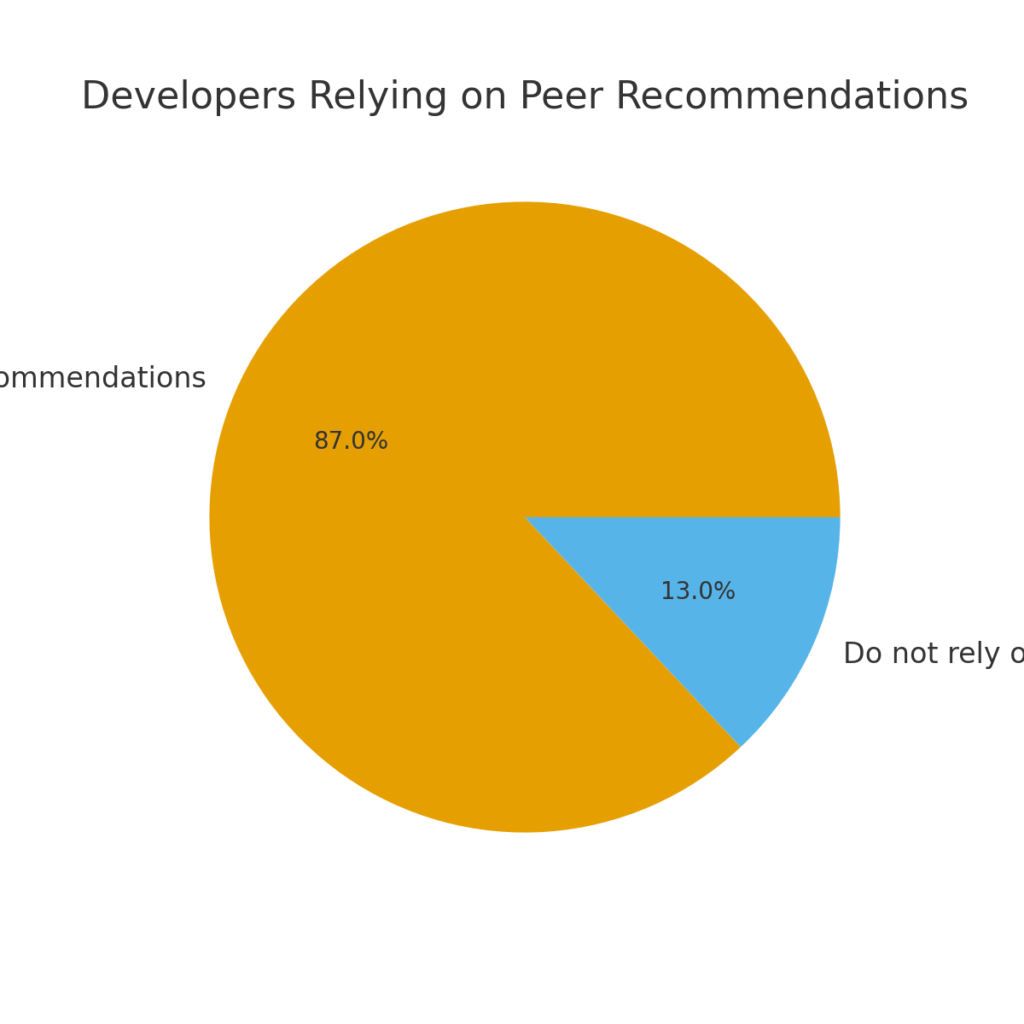
Developer Marketing Statistics #1: 87% Of Developers Rely On Peer Recommendations Before Adopting A New Tool
Developers trust each other more than traditional advertisements, which makes peer reviews a critical influence point. When a developer hears from colleagues or community members that a tool works well, adoption rates rise significantly. This reliance on peers emphasizes the power of word-of-mouth marketing within technical circles. Companies that foster strong communities often see their products shared organically. This means investing in credibility and authenticity pays off more than flashy promotions.
Developer Marketing Statistics #2: 72% Of Developers Prefer Learning Through Documentation Rather Than Sales Pitches
Clear, well-structured documentation has become the backbone of developer marketing. Developers want to understand how a tool works before committing to it, which makes sales-heavy content less effective. Marketing teams that prioritize creating detailed documentation often see higher engagement and adoption. This shift shows that transparency and practicality win over persuasion in developer marketing. Ultimately, documentation doubles as both marketing and onboarding material.
Developer Marketing Statistics #3: 65% Of Developers Are Influenced By Open-Source Contributions When Considering A Vendor
Open-source engagement signals credibility and technical strength to developers. When a company contributes code, developers feel more confident in its expertise and commitment to community growth. These contributions not only improve brand visibility but also foster trust among technical users. Developers see open-source activity as proof that a brand “walks the talk.” For marketing, highlighting these contributions can become a key differentiator.
Developer Marketing Statistics #4: Developer Advocates Increase Product Adoption By 40% Compared To Standard Marketing
Developer advocates play a unique role in bridging the gap between marketing and engineering. They provide authentic, technical guidance that resonates more than generic campaigns. This personal approach creates stronger emotional and professional connections with developers. Companies that invest in advocacy programs often see faster adoption cycles. In short, humanized voices carry more weight in technical communities.
Developer Marketing Statistics #5: 78% Of Developers Discover New Tools Through GitHub And Stack Overflow
Platforms where developers already spend their time have become prime marketing spaces. GitHub repositories, project stars, and Stack Overflow answers often act as “entry points” to new products. Developers naturally explore these spaces when solving problems, so discovery feels organic. Brands that actively participate in these communities improve visibility without seeming intrusive. The key is adding genuine value instead of pushing sales.
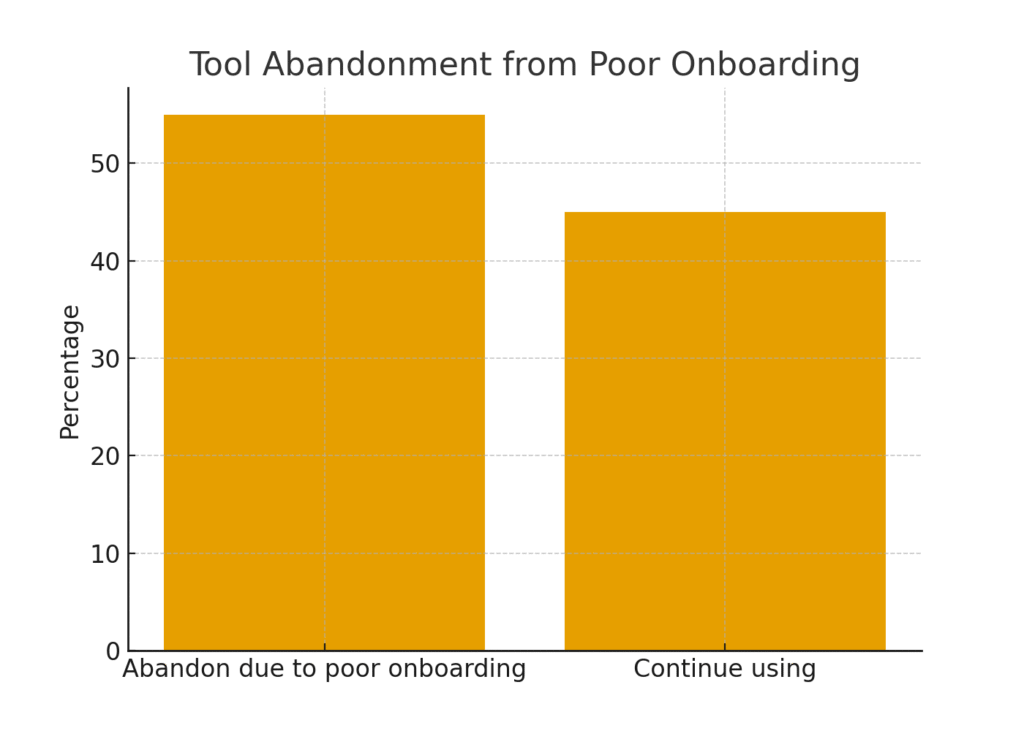
Developer Marketing Statistics #6: 55% Of Developers Abandon Tools With Poor Onboarding In The First Week
Onboarding is a make-or-break stage for any developer tool. If the experience is clunky or unclear, developers quickly move on to alternatives. This statistic highlights how crucial the first impression is in developer marketing. Easy-to-follow setup guides and sandbox environments reduce friction. Companies that get onboarding right often see long-term loyalty.
Developer Marketing Statistics #7: 63% Of Developers Engage More With Brands Offering Interactive Tutorials And Sandboxes
Hands-on experiences help developers quickly understand the value of a product. Tutorials that allow experimentation shorten the learning curve and reduce frustration. Brands that provide these resources often see higher trial-to-adoption conversions. Interactive demos also build trust by showing that the product delivers on its promises. For developers, being able to “test before trust” is essential.
Developer Marketing Statistics #8: Developer Blogs Drive 3x More Traffic Than Paid Ads In Developer Communities
Educational blogs have become one of the most effective ways to connect with developers. Technical deep dives, tutorials, and case studies attract sustained organic traffic. Unlike ads, blogs provide real value that developers can apply to their projects. Over time, these resources also improve brand authority in the community. This long-term approach beats short-term ad campaigns.
Developer Marketing Statistics #9: 70% Of Developers Join Webinars If They Include Live Coding Sessions
Live coding provides an authentic, practical experience that traditional presentations lack. Developers appreciate being able to see real solutions unfold in real time. These sessions often feel less like marketing and more like collaborative learning. This authenticity makes webinars with live coding highly engaging. For brands, it’s a chance to showcase expertise and usefulness simultaneously.
Developer Marketing Statistics #10: 80% Of Developers Prefer Free Trials Or Freemium Tiers Before Purchase Decisions
Developers want to test tools on their own terms before committing. Free trials or freemium models lower adoption barriers and build confidence in the product. This approach aligns with the developer mindset of experimentation and evaluation. Companies that withhold free access often lose trust before the sales process even begins. Giving developers space to explore makes conversion more natural.

Developer Marketing Statistics #11: 58% Of Developers Say Community Slack Or Discord Channels Improve Brand Trust
Community spaces create opportunities for developers to connect with both peers and company representatives. Real-time discussions often lead to stronger engagement than email or static forums. Developers value being able to get support quickly from both users and staff. These spaces also foster loyalty by making developers feel included in the product journey. For marketers, investing in community management pays off in credibility.
Developer Marketing Statistics #12: 66% Of Developers Expect Companies To Publish API-First Roadmaps
Developers want transparency in how products evolve, especially with APIs. When companies share roadmaps, it builds confidence in long-term stability. This visibility helps developers plan their own projects around the tool. Companies that fail to provide this openness risk losing trust. Publishing API-first roadmaps is no longer optional—it’s expected.
Developer Marketing Statistics #13: Developer-First Brands See 2.7x Higher Retention Rates Compared To Traditional B2B SaaS
Retention often comes down to how well a product aligns with developer needs. Developer-first brands prioritize usability, documentation, and openness. This creates an experience that keeps developers engaged for the long haul. Retention then translates into higher lifetime value for companies. In short, respecting developers pays off in loyalty and revenue.
Developer Marketing Statistics #14: 61% Of Developers Prefer Learning Via YouTube Coding Tutorials Over Text-Heavy Pages
Video tutorials bring concepts to life in a way that static documentation cannot. Developers often turn to YouTube because of its accessibility and variety. Step-by-step coding videos help them quickly grasp complex topics. Brands that invest in video education tap into this preferred learning style. Visual demonstrations make technical marketing more relatable.
Developer Marketing Statistics #15: 49% Of Developers Adopt Tools Showcased At Hackathons Or Coding Events
Hackathons create high-energy environments where tools can shine. Developers test products in real-world scenarios, often leading to adoption. These events act as accelerators for discovery and trial. For companies, sponsoring or hosting hackathons creates authentic engagement. In many cases, this exposure leads to long-term usage.
Developer Marketing Statistics #16: 75% Of Developers Follow At Least One DevRel Influencer Online
Developer Relations (DevRel) influencers are shaping adoption trends more than ever. These influencers provide trusted opinions that developers value. Following them helps developers stay updated with the latest tools. For marketers, collaborating with DevRel figures is a powerful strategy. Their credibility translates directly into influence.
Developer Marketing Statistics #17: Developer-Focused Content Generates 52% Higher Organic Traffic Growth Year-Over-Year
Content tailored for developers consistently outperforms generic marketing. Technical tutorials, documentation, and blog posts drive steady organic growth. Over time, this builds a sustainable inbound funnel for brands. Unlike paid campaigns, this traffic compounds instead of fading. For marketers, developer-focused SEO is a long-term win.
Developer Marketing Statistics #18: 68% Of Developers Abandon Products With Unclear API Limits Or Pricing Models
Transparency in pricing is non-negotiable for developers. Hidden limits or confusing tiers create immediate distrust. Developers often abandon tools the moment they sense opacity. Clear, upfront communication avoids frustration and churn. Companies that prioritize openness gain more loyal customers.
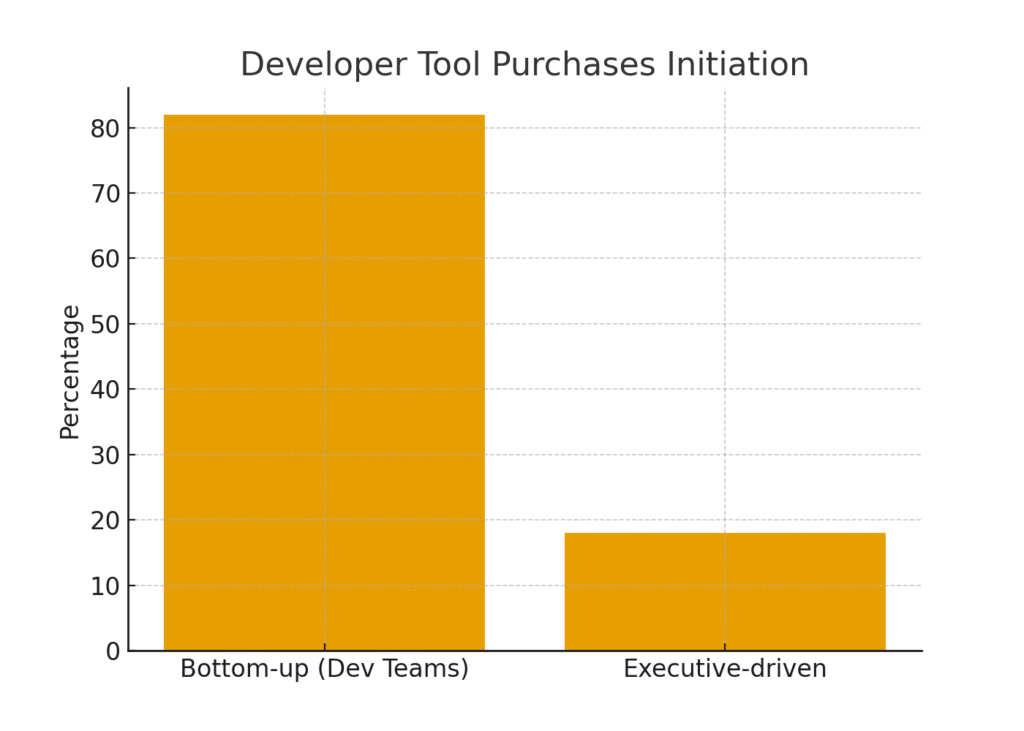
Developer Marketing Statistics #19: 82% Of Developer Tool Purchases Are Initiated Bottom-Up By Dev Teams, Not Executives
Developers often drive purchase decisions through usage and advocacy. This bottom-up trend reshapes how companies should approach B2B sales. Instead of targeting executives first, marketing should focus on developer adoption. Once developers embrace a tool, executive buy-in naturally follows. Ignoring this shift means missing the real decision-makers.
Developer Marketing Statistics #20: Companies Investing In DevRel Report A 35% Faster Developer Adoption Rate
DevRel programs build bridges between brands and developers. By focusing on education, advocacy, and community, they accelerate adoption. Companies that dedicate resources to DevRel often see compounding returns. These programs also humanize the brand, making it more relatable. For developers, DevRel feels less like marketing and more like collaboration.
Why These Developer Insights Matter
Looking at these statistics, I can’t help but feel how much the developer landscape has shifted toward transparency, community, and trust. These numbers aren’t just trends—they’re a reflection of what developers expect from brands today. For me, the biggest takeaway is that the most successful campaigns aren’t about flashy ads, but about creating value and fostering genuine connections. By applying these insights, we can meet developers where they are and build lasting relationships based on respect and shared problem-solving. And that’s exactly why I wanted to write this piece: to give you the same clarity and confidence I’ve found when digging into these stats.
SOURCES
https://www.developermarketing.io/state-of-developer-marketing/
https://www.developermarketing.io/the-state-of-developer-adoption-2025-report/
https://business.daily.dev/blog/top-6-developer-marketing-channels-compared
https://business.daily.dev/blog/2025-developer-tool-trends-what-marketers-need-to-know
https://www.linkedin.com/pulse/developer-marketing-2025-what-works-whats-changing-how-dietrich-seppc
https://evansdata.com/marketing2020/
https://www.optimizely.com/insights/blog/marketing-statistics/
https://contentmarketinginstitute.com/content-marketing-strategy/content-marketing-statistics
https://explodingtopics.com/blog/marketing-trends
https://seoprofy.com/blog/digital-marketing-statistics/
https://blog.hubspot.com/marketing/state-of-blogging
https://www.amraandelma.com/best-blog-traffic-statistics/