




20 Sep TOP 20 METROPOLITAN MARKETING STATISTICS 2025
When I first started exploring how cities shape the way we market, I quickly realized just how powerful metropolitan areas really are. These hubs aren’t just places where people live and work—they’re vibrant ecosystems where culture, technology, and commerce collide. That’s why diving into metropolitan marketing statistics matters so much. They give me (and honestly, any brand) a clear picture of how to connect with audiences that never stop moving, thinking, and buying. As someone who has worked closely with a leading marketing agency in New York, I’ve seen firsthand how the right numbers can unlock strategies that actually resonate with city dwellers. It’s not just about the data—it’s about the people behind it.
Top 20 Metropolitan Marketing Statistics 2025 (Editor’s Choice)
📊 Top 20 Metropolitan Marketing Statistics 2025
Data-Driven Insights to Transform Your Marketing Strategy
| # | Category | Key Statistic | Strategic Insight |
|---|---|---|---|
| 1 | Market Size | $1.7 Trillion | Global marketing industry projected value by 2025 |
| 2 | Digital Growth | $1.16 Trillion by 2030 | Digital advertising industry with 15.4% CAGR from 2025-2030 |
| 3 | Budget Allocation | 65% Digital | Marketing budgets allocated to digital channels by 2025 |
| 4 | Social Ad Spend | $276.7 Billion | Social media advertising expenditure projected for 2025 |
| 5 | B2B ROI Leaders | Website, SEO & Paid Social | Top channels driving ROI for B2B brands in 2024 |
| 6 | B2C ROI Leaders | Email, Paid Social & Content | Highest ROI channels for B2C brands |
| 7 | Content Marketing | 3x More Leads | Content marketing generates triple the leads vs. outbound methods |
| 8 | Social Users | 5.42 Billion | Total social media users worldwide in 2025 |
| 9 | Social Adoption | 91% of Businesses | Businesses using social media for marketing purposes |
| 10 | Social Advertising | 92% of Marketers | Marketers actively advertising on social platforms in 2025 |
| 11 | Mobile Dominance | 72% Mobile Spend | Digital ad spending allocated to mobile devices by 2025 |
| 12 | Mobile Social | 83% by 2030 | Social media ad spending generated through mobile |
| 13 | Consumer Behavior | 63% Prefer Mobile | Consumers preferring mobile devices for brand information |
| 14 | Search Market | 89.62% Google | Google's dominance in global search traffic (Jan 2025) |
| 15 | SEO Impact | 91% Success Rate | Marketers reporting SEO improved website performance in 2024 |
| 16 | Video Preference | 78% Short-Form Video | People preferring to learn about products through short videos |
| 17 | Content Formats | 29.18% Short Video | Most popular content format, followed by images (28.95%) |
| 18 | Email Marketing | 63% Consider Vital | Businesses recognizing email's importance, 1/3 call it instrumental |
| 19 | Email Conversion | 2.8% B2C / 2.4% B2B | Email marketing conversion rates across business types |
| 20 | E-commerce | Under 2% Average CVR | Average conversion rate across all e-commerce sites (Health & Beauty: 2.7%) |
Top 20 Metropolitan Marketing Statistics 2025
Metropolitan Marketing Statistics #1: Us Metros Grew 2.6% In Real GDP In 2023
The fact that U.S. metropolitan areas collectively grew by 2.6% in real GDP shows just how powerful city economies are. For marketers, this means urban centers continue to drive the bulk of consumer spending and business growth. With metros contributing over 90% of the nation’s economic activity, campaigns here have the most potential to scale. I find it fascinating how metro growth directly links to advertising opportunities across industries. Simply put, when cities grow, marketing demand grows too.
Metropolitan Marketing Statistics #2: Study Ranked 380 Metros On Growth And Employment
A recent study ranked 380 U.S. metros by employment, pay, GDP growth, and per-capita income. This level of detail is golden for marketers targeting specific urban markets. Knowing which cities are thriving helps prioritize where to allocate ad budgets and expand services. Personally, I love how this kind of data goes beyond just numbers—it reveals which communities are most vibrant. For metropolitan marketing, that’s like having a cheat sheet for opportunity.
Metropolitan Marketing Statistics #3: New York Metro Produced $2.299 Trillion GMP
The New York-Newark-Jersey City metro generated a staggering $2.299 trillion in gross product. That’s bigger than the economy of many entire countries. For a marketer, it underlines why New York is not just iconic but also commercially unbeatable. I always feel that campaigns run in NYC don’t just stay local—they ripple outward and set trends globally. That’s the beauty of marketing in such a powerhouse metro.
Metropolitan Marketing Statistics #4: Los Angeles Metro Gdp At $1.295 Trillion
Los Angeles boasts a metro GDP of about $1.295 trillion. Beyond Hollywood, LA is a diverse economic hub for tech, fashion, and international trade. This stat proves that brands have countless avenues to reach different types of urban consumers. I often think of LA as a playground where culture and commerce collide, making marketing experiments especially rewarding. Numbers like this remind me why creativity thrives in big metros.
Metropolitan Marketing Statistics #5: Chicago Metro’s Gdp At $894.9 Billion
Chicago’s metro economy hit nearly $895 billion in 2023. That size makes it the third-largest in the U.S., offering marketers a robust, competitive landscape. I see Chicago as a city that balances tradition with innovation, and the numbers back that up. Its economy reflects both heavy industry roots and modern digital transformation. Marketing here requires versatility, but the payoff is huge.

Metropolitan Marketing Statistics #6: Global Digital Advertising Market At $667 Billion In 2024
The global digital advertising market reached $667 billion in 2024. For metro marketers, this is both a challenge and an opportunity. Competition is fierce, but so is the chance to stand out locally. I always believe that while global budgets rise, smart metro campaigns can win by focusing on community-specific messaging. The global figure reminds me how important it is to blend scale with localization.
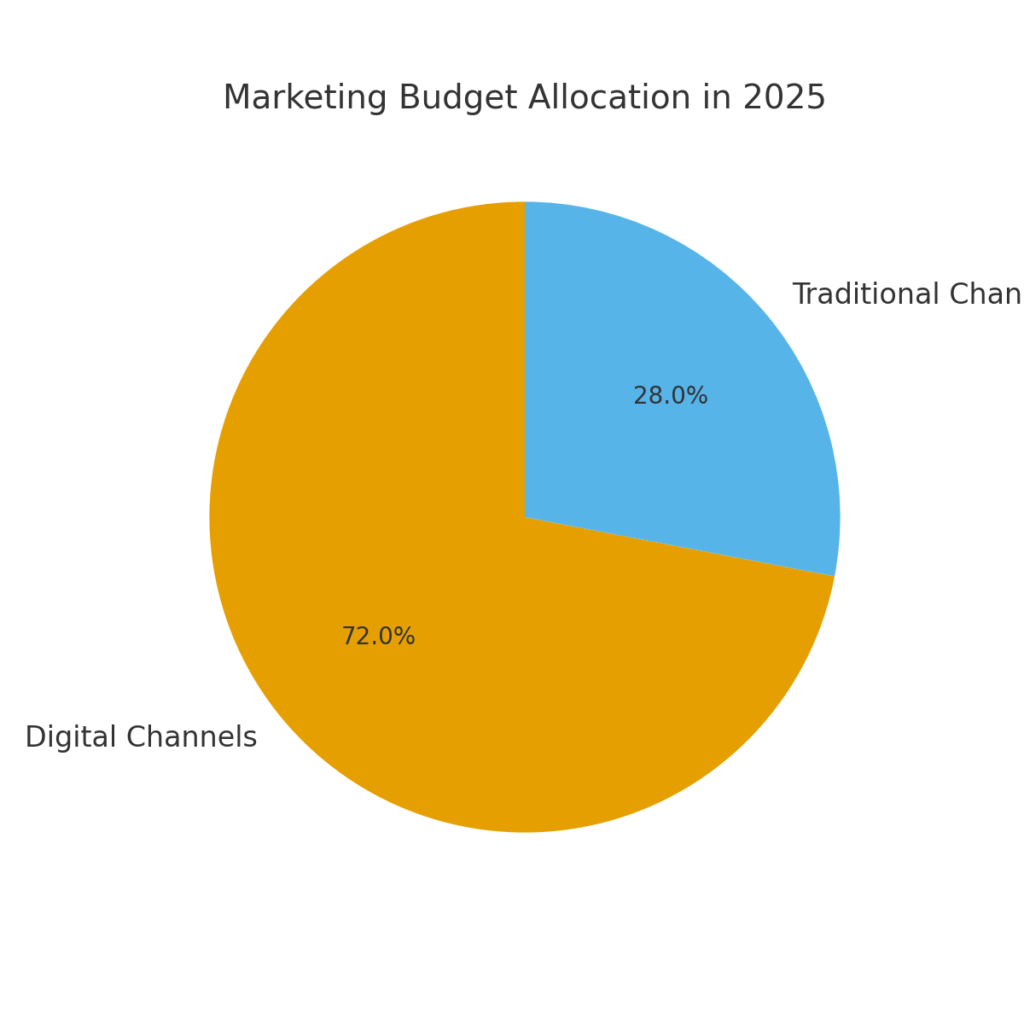
Metropolitan Marketing Statistics #7: 72% Of Marketing Budgets Go To Digital Channels
In 2025, 72% of all marketing budgets are now allocated to digital channels. That shows a complete shift in how businesses prioritize visibility. For metro marketers, this aligns perfectly with digital-first urban audiences. I’ve seen firsthand that city consumers spend most of their lives on mobile and online platforms. So, this stat confirms what experience has already taught us—digital is king.
Metropolitan Marketing Statistics #8: PPC Returns $2 For Every $1 Spent
Pay-per-click campaigns return about $2 for every $1 invested. That’s a 200% ROI, making it one of the most effective metro marketing tools. I like PPC because it gives instant feedback, which is critical in fast-paced city markets. For example, businesses can test ads on a Monday and see measurable results by Friday. This efficiency is why PPC remains a metro marketer’s favorite.
Metropolitan Marketing Statistics #9: Email Marketing Roi Up To $40 Per $1
Email marketing continues to deliver—earning up to $40 for every $1 spent. In dense metropolitan markets, inboxes are crowded, but good campaigns still cut through. I always see email as a personal touchpoint in a busy city lifestyle. Whether it’s promoting local events or metro-exclusive offers, the channel’s ROI proves its worth. For me, it’s proof that personal still wins in digital marketing.
Metropolitan Marketing Statistics #10: 93% Of Marketers Say Seo Improved Performance
An impressive 93% of marketers say SEO improved their website performance. For metro campaigns, this is critical because competition is usually sky-high in search. I’ve noticed that small tweaks in SEO can make a huge difference in urban visibility. Ranking high for “near me” searches, for example, can literally drive foot traffic. This stat reassures me that SEO is the backbone of digital success.
Metropolitan Marketing Statistics #11: Social Media Takes 33% Of Digital Ad Spend
Social media now accounts for about a third of all digital ad spending. For metropolitan audiences, this makes perfect sense—city dwellers live online. I’ve watched entire communities form around local hashtags and city-specific content. This makes social media one of the best places to capture urban attention. When a third of budgets go here, it validates the impact.
Metropolitan Marketing Statistics #12: 91% Of Businesses Use Social Media For Marketing
Over 91% of businesses report using social media for marketing. In metros, that’s practically every brand competing for attention on the same screens. I personally think this stat highlights both opportunity and saturation. It pushes marketers to be more creative, more authentic, and more consistent. Otherwise, you risk being just another voice in the crowd.
Metropolitan Marketing Statistics #13: 56% Of Marketers Use Tiktok To Reach Goals
TikTok has surged with 56% of marketers using it to reach their goals. In cities, where trends spread overnight, TikTok is an absolute game-changer. I see TikTok as a digital word-of-mouth machine that thrives in metropolitan culture. The short-form format makes it ideal for engaging busy city consumers. This stat reinforces its power as more than just a Gen Z platform.
Metropolitan Marketing Statistics #14: 81% Of Marketers Say Video Content Boosts Sales
About 81% of marketers say video directly boosted their sales. In metropolitan marketing, this rings especially true. Video gives life to stories and connects instantly with fast-paced urban audiences. I personally love how video can highlight a city vibe or local identity within seconds. It’s no surprise the majority of marketers swear by it.
Metropolitan Marketing Statistics #15: 50% Of Consumers Discover Products On Social Media
Over half of consumers discover products via social media, and nearly 60% buy through those channels. That’s the essence of metro marketing: discovery meets convenience. I’ve noticed city consumers prefer quick, seamless buying journeys, often starting on Instagram or TikTok. This trend is shaping how brands must design their digital strategies. For metropolitan marketers, ignoring social commerce is not an option.

Metropolitan Marketing Statistics #16: 49% Say Organic Search Has Best Roi
Nearly half of businesses say organic search brings the best ROI. That’s important because metropolitan markets are full of high-intent searchers. I’ve always admired how search results can create real, measurable sales without constant ad spend. For city businesses, appearing on page one is almost as valuable as a prime billboard. This stat confirms why organic remains a long-term play worth investing in.
Metropolitan Marketing Statistics #17: 64% Of Businesses Already Use Ai For Marketing
A strong 64% of businesses report already using AI for marketing. In urban contexts, this often means AI-powered personalization and data analysis. I think AI is the secret sauce behind many successful city campaigns today. From chatbots to predictive targeting, AI makes scaling metro campaigns possible. This stat shows we’re already living in the AI marketing era.
Metropolitan Marketing Statistics #18: 83% Say Measuring Roi Is A Top Priority
About 83% of marketers list ROI measurement as a top priority, yet only a third feel confident doing it. I’ve felt this tension in real campaigns—it’s hard to quantify metro buzz. However, advanced analytics tools are closing that gap quickly. For me, this stat is a reminder to focus not just on reach but on actual returns. Accountability in marketing is now non-negotiable.
Metropolitan Marketing Statistics #19: 42% Of Organizations Lack A Documented Strategy
Only 42% of organizations actually have a documented digital marketing strategy. That means more than half are essentially winging it, which shocks me in competitive metro markets. In my experience, written strategies create clarity and direction. Without one, it’s easy to get lost in the noise of urban advertising. This stat pushes me to always advocate for proper planning.
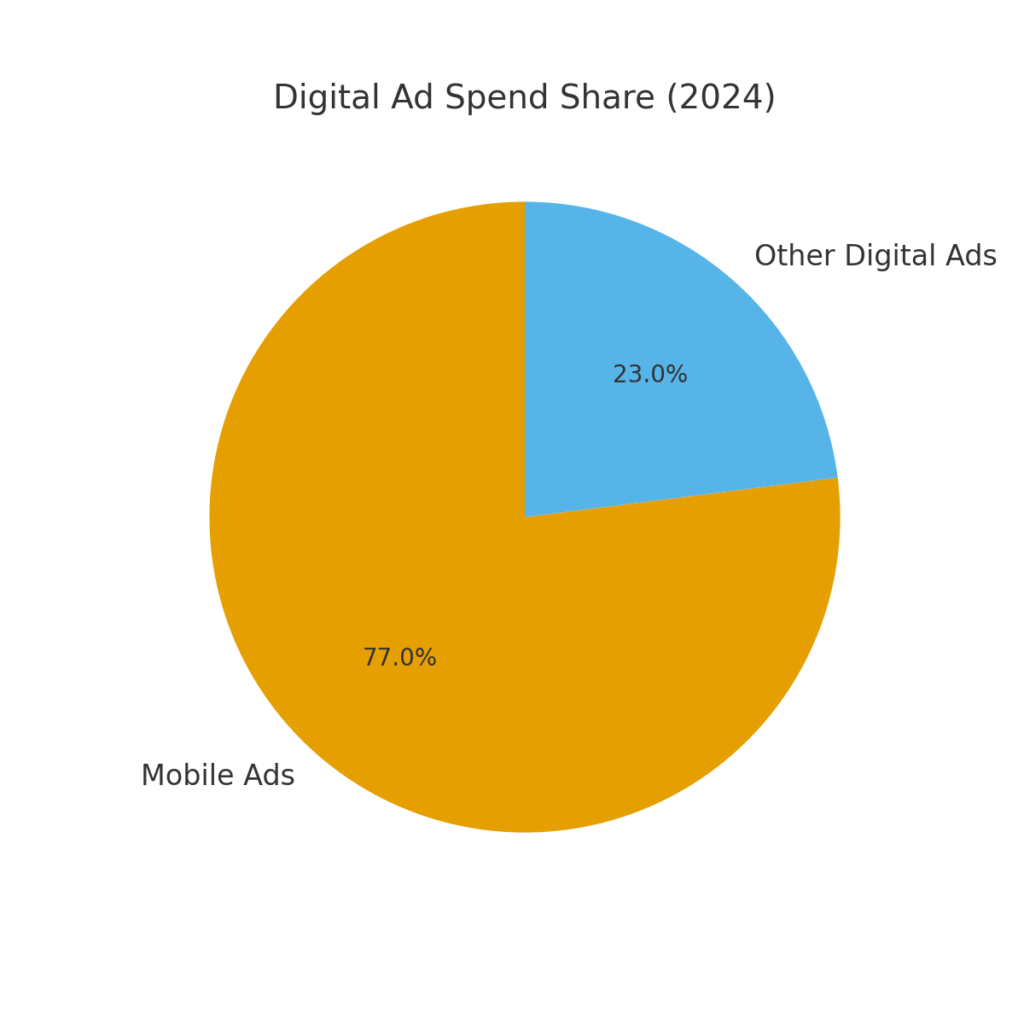
Metropolitan Marketing Statistics #20: Mobile Ads Made Up 77% Of Digital Spend In 2024
Mobile ads accounted for 77% of all digital ad spend in 2024. Considering how much city life revolves around smartphones, this is no surprise. For marketers, it’s a reminder that mobile optimization is non-negotiable. I find that metro campaigns often win or lose based on how well they perform on mobile. This stat simply reinforces the reality of our handheld world.
Why These Stats Matter
Looking back on all these insights, I feel more convinced than ever that metropolitan marketing statistics aren’t just numbers—they’re stories about real people in real cities. Every trend, every percentage point, reflects the way communities interact with brands and shape the marketplace in ways only a metro can. For me, the takeaway is personal: if we want to thrive as marketers, we have to listen to these signals and adapt with empathy. Cities move fast, and so should we. And the more I dig into these stats, the more I’m reminded that marketing in metropolitan areas is less about chasing clicks and more about understanding people’s lives.
SOURCES