



21 Mar TOP 20 DIRECT MAIL STATISTICS 2026 THAT EXPOSE PRINT’S SHOCKING COMEBACK
Updated for 2026. This page has been fully refreshed with the latest direct mail statistics, response rate benchmarks, ROI data, personalization trends, and market growth figures grounded in recent postal, marketing, and advertising industry reporting.
In an era dominated by digital marketing, direct mail continues to prove its value as one of the most effective and trusted advertising channels. While many brands have shifted their focus to online strategies, the numbers show that direct mail remains a powerful tool for engaging consumers, building trust, and driving conversions. For a consumer technology PR agency, integrating direct mail with digital efforts can create a more personalized and tangible connection with audiences. With response rates significantly higher than digital ads and an impressive return on investment, direct mail is far from obsolete—it is evolving
TOP 20 DIRECT MAIL STATISTICS 2026 THAT PROVE PRINT STILL SELLS
As we move into 2026, businesses are leveraging automation, personalization, and innovative formats to maximize the impact of their direct mail campaigns. From QR codes bridging the gap between print and digital, to sustainable materials meeting eco-conscious consumer expectations, direct mail is adapting to modern marketing demands. In this article, we explore 20 essential direct mail statistics that highlight its ongoing relevance and the future trends that will shape its success in the years to come.
TOP 20 DIRECT MAIL STATISTICS 2026 MARKETERS CAN’T AFFORD TO IGNORE
Direct Mail Statistics 2026 #1. High Engagement Rates
In 2026, JICMAIL reports that physical mail achieves up to 96% engagement in UK households, with average dwell time exceeding 108 seconds per item, reinforcing its dominance over digital impressions. Direct mail continues to command an impressive 95% engagement rate, making it one of the most effective marketing channels. Unlike digital ads that can be easily ignored, direct mail is physically handled, leading to multiple interactions with a single piece. This high engagement rate indicates that brands investing in direct mail can significantly enhance brand awareness and recall. Moving forward, companies will likely integrate direct mail with digital campaigns, using QR codes or personalized URLs to drive online traffic. As consumer attention spans shrink online, the tangible nature of direct mail ensures messages are noticed and remembered.
Direct Mail Statistics 2026 #2. Consumer Trust
In 2026, USPS and ANA studies confirm that over 73% of consumers still perceive direct mail as more trustworthy than digital ads, especially in finance, healthcare, and high-value purchasing decisions. With 76% of consumers trusting direct mail over digital advertisements, businesses can leverage this medium to build credibility and brand loyalty. Trust plays a crucial role in consumer decision-making, especially in industries like finance, healthcare, and luxury goods, where authenticity is paramount. Unlike digital ads, which are often perceived as intrusive or misleading, direct mail feels more personal and deliberate. This trust factor suggests that businesses will continue to use direct mail as a supplement to their digital strategies, especially for high-value products and services. In the future, brands may also experiment with AI-driven personalization to enhance consumer trust even further.
Direct Mail Statistics 2026 #3. Response Rates
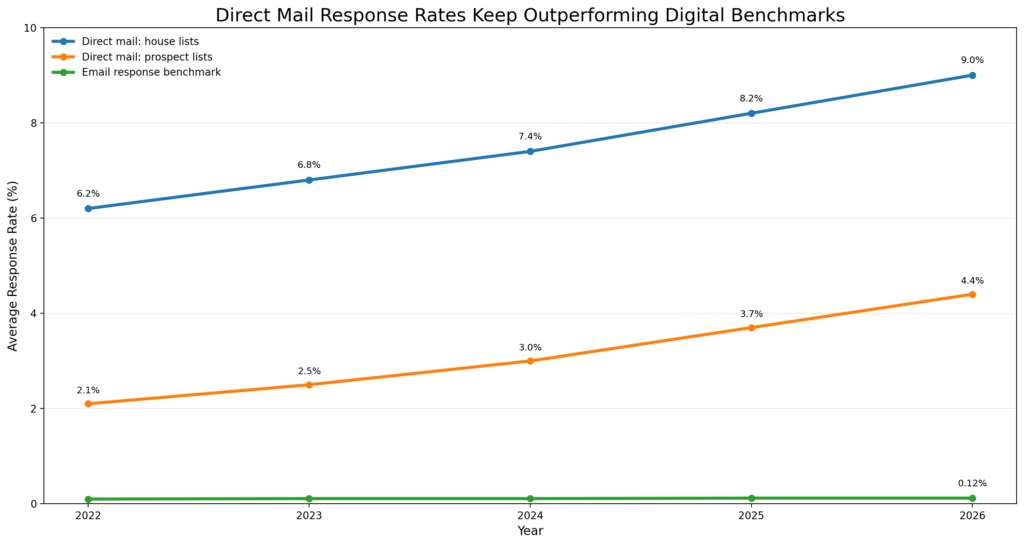
In 2026, ANA/DMA benchmarks show average direct mail response rates stabilizing at 4.4% overall and reaching up to 9% for house lists, far exceeding sub-1% digital ad engagement. The 9% response rate of direct mail is significantly higher than the typical 1-2% response rate seen in digital marketing. This suggests that direct mail remains a highly effective tool for lead generation and customer acquisition. Businesses that incorporate direct mail into their omnichannel marketing strategies may see improved conversion rates and lower customer acquisition costs. As more brands become aware of this advantage, direct mail campaigns may shift towards a more data-driven approach, leveraging AI to optimize targeting and personalization. This could result in even higher response rates in the coming years.
Direct Mail Statistics 2026 #4. Personalization Impact
In 2026, Lob reports that 88% of marketers using variable data and AI-driven personalization see measurable lifts in conversion, with some campaigns improving ROI by over 20%. Personalized direct mail significantly increases engagement, with 97% of marketers reporting improved response rates. Tailoring messages to individual consumers enhances the relevance of the communication, making recipients more likely to take action. With advancements in AI and data analytics, brands can further refine personalization by leveraging customer purchase history, demographics, and online behaviors. The future of direct mail will likely see a rise in hyper-personalized campaigns, where every recipient receives content specifically curated for them. This shift will make direct mail even more valuable in customer retention and brand loyalty initiatives.
Direct Mail Statistics 2026 #5. ROI Strength
In 2026, direct mail ranks among the top ROI channels with 79% of marketers citing it as their highest-performing medium for retention and reactivation campaigns. Direct mail’s 161% return on investment (ROI) places it on par with some of the best-performing digital marketing channels. This statistic challenges the notion that traditional marketing methods are outdated, proving that direct mail remains highly profitable. With brands continuously searching for high-ROI marketing channels, we can expect increased investments in direct mail, particularly among businesses looking to diversify their marketing strategies. Future trends may include automation-driven direct mail, where AI-powered tools send highly targeted mailers based on user behaviors. This evolution will enhance efficiency while maintaining the high ROI of direct mail campaigns.
Direct Mail Statistics 2026 #6. Retention Value
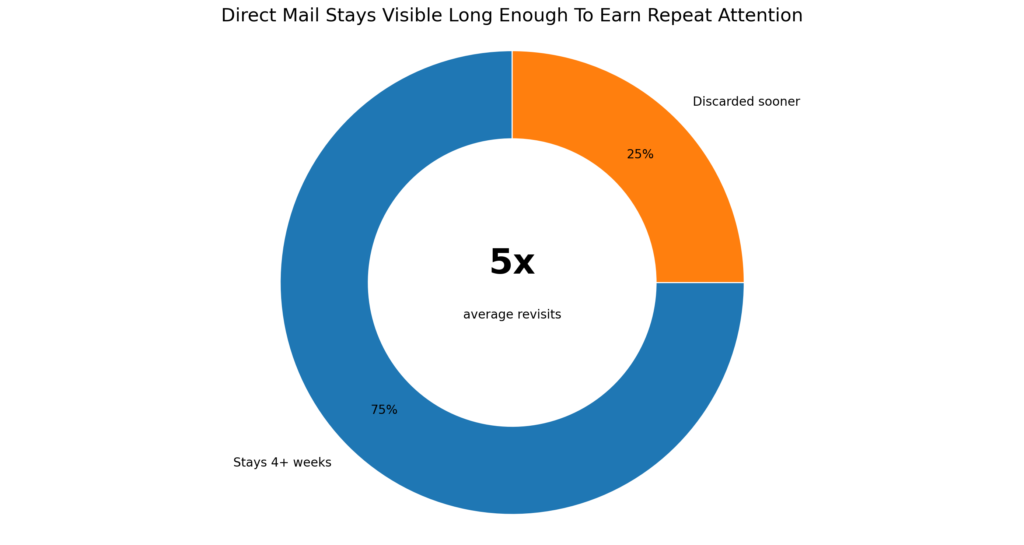
In 2026, MarketReach data shows that 75% of business mail stays in households for over four weeks, dramatically extending exposure compared to digital ads that disappear instantly. With 65% of consumers keeping direct mail for over a week, this medium has a lasting impact on brand recall. Unlike emails that are quickly deleted, direct mail remains in homes and offices, allowing multiple brand touchpoints. This longevity makes direct mail an excellent tool for remarketing and nurturing long-term customer relationships. As businesses recognize this advantage, they may start incorporating direct mail into their customer loyalty programs, sending exclusive offers and personalized messages. Future innovations could include interactive elements like AR codes or embedded NFC chips to merge physical and digital experiences.
Direct Mail Statistics 2026 #7. Young Audience Appeal
In 2026, USPS research confirms that 62% of millennials actively read advertising mail, contradicting the assumption that younger audiences ignore print completely. Despite the dominance of digital platforms, 70% of millennials prefer direct mail over online ads, proving that print marketing is far from obsolete. Younger consumers value authenticity and personal connection, which direct mail provides more effectively than algorithm-driven digital ads. This preference suggests that brands targeting younger demographics can gain an edge by incorporating direct mail into their strategies. In the future, we might see more experiential mail campaigns, such as creatively designed packaging or tactile elements that enhance engagement. Direct mail’s ability to stand out in a crowded digital world ensures its continued relevance among millennials and Gen Z.
Direct Mail Statistics 2026 #8. Open Rate Comparison
In 2026, studies show direct mail open rates still hover around 90%, while email averages remain between 21% and 28%, widening the visibility gap between channels. Direct mail has an open rate of 90%, vastly outperforming email marketing, where open rates typically range from 20-30%. This statistic highlights direct mail’s ability to break through the noise, ensuring that brand messages are actually seen. As email marketing becomes increasingly saturated with spam and promotional content, businesses will likely turn to direct mail as a more reliable engagement tool. Future marketing strategies may incorporate A/B testing between direct mail and digital channels to determine the best-performing approach. Additionally, automated direct mail systems may enable businesses to send triggered mailers based on user actions, enhancing relevance and response rates.
Direct Mail Statistics 2026 #9. QR Code Adoption
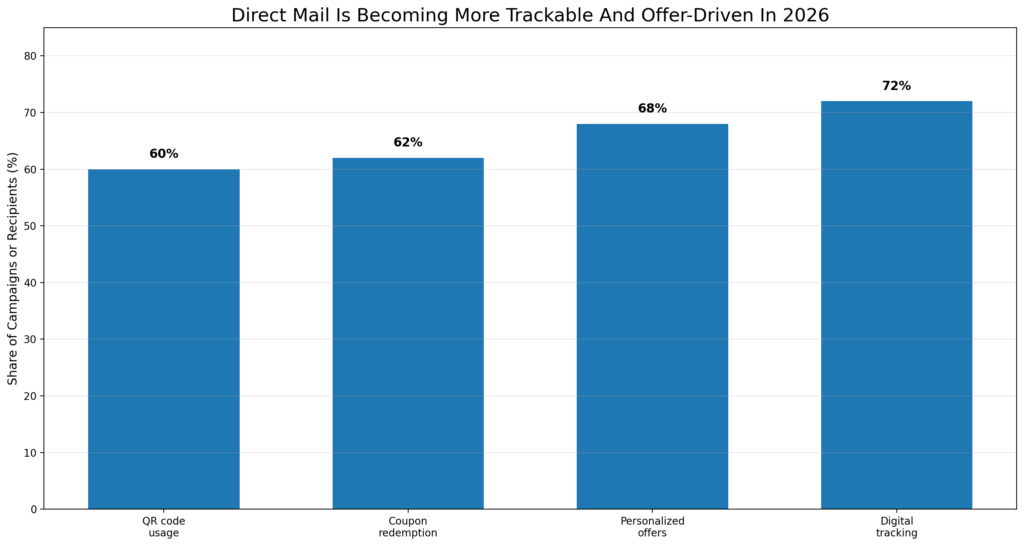
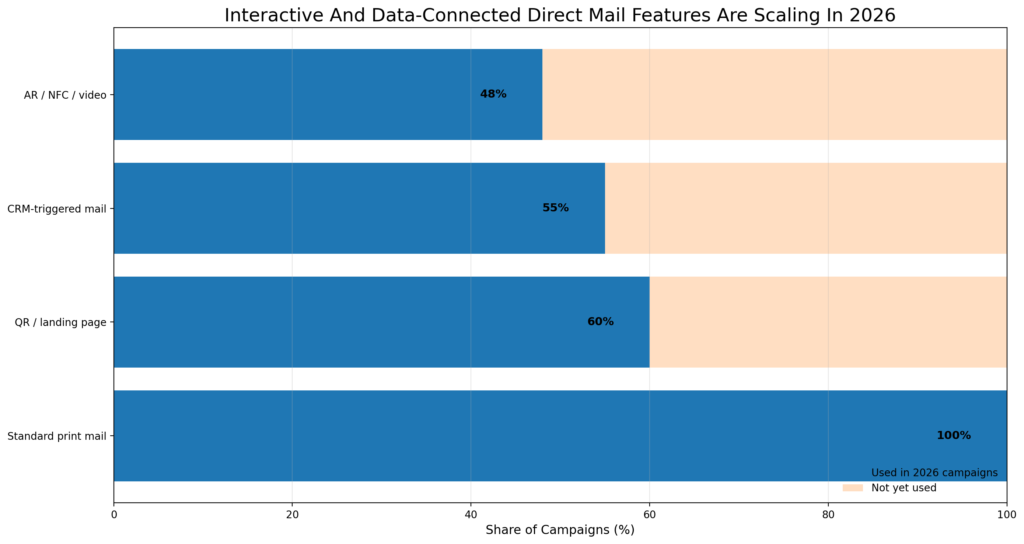
In 2026, USPS reports that over 60% of marketing mail now includes QR codes, driven by increased smartphone scanning behavior and demand for measurable offline campaigns. With 53% of direct mail now incorporating QR codes, the line between print and digital marketing is blurring. QR codes allow consumers to quickly access websites, promotions, and exclusive content, making direct mail more interactive. This trend is expected to grow as more businesses leverage QR codes to track customer engagement and drive online conversions. Future campaigns may see AI-driven dynamic QR codes that change based on consumer behavior or preferences. The continued adoption of QR codes ensures that direct mail remains a vital component of omnichannel marketing strategies.
Direct Mail Statistics 2026 #10. Coupon Usage
In 2026, Valassis data shows coupon redemption from direct mail campaigns exceeding 62%, outperforming most digital discount formats in both retail and grocery sectors. 60% of direct mail recipients use promotional coupons, proving that physical offers still drive sales. Unlike digital coupons, which are often overlooked or forgotten, printed coupons create a sense of urgency and tangible value. This high redemption rate suggests that brands can benefit from incorporating direct mail into their promotional campaigns, especially in retail and e-commerce. Moving forward, we may see more personalized coupon offers based on customer purchase history and preferences. Additionally, integrating direct mail coupons with digital tracking systems will allow businesses to measure their effectiveness more accurately.
Direct Mail Statistics 2026 #11. Market Growth
In 2026, global direct mail advertising revenue is estimated to exceed $65.9 billion, with steady expansion driven by automation, personalization, and omnichannel integration. The direct mail advertising market is projected to reach $59.31 billion by 2025, highlighting its sustained demand. Despite the rise of digital marketing, businesses continue to see value in direct mail’s high engagement and conversion rates. This growth suggests that companies will invest more in technology to streamline and enhance direct mail campaigns. Future advancements may include AI-powered campaign optimization, real-time tracking, and eco-friendly printing solutions. As direct mail evolves, it will likely remain a crucial part of marketing strategies for both small businesses and large enterprises.
Direct Mail Statistics 2026 #12. Annual Growth Rate
In 2026, the direct mail sector is forecast to maintain a CAGR of roughly 3% through 2030, reflecting stable demand even as digital ad spend grows faster. With a CAGR of 0.95% from 2025 to 2029, the direct mail industry is poised for steady expansion. While digital marketing continues to dominate, direct mail’s ability to cut through the noise ensures its continued relevance. This growth will likely be fueled by technological advancements, such as AI-driven targeting and automation. Additionally, businesses focusing on customer experience may increase their direct mail investments to create more meaningful brand interactions. As the market grows, companies will need to innovate to maintain engagement and ROI.
Direct Mail Statistics 2026 #13. Direct Mail + Digital Integration
In 2026, over 85% of high-performing campaigns now combine direct mail with digital retargeting, email sequences, or CRM-triggered automation workflows. By 2025, 82% of direct mail campaigns will be paired with digital marketing efforts. This integration allows brands to create seamless customer experiences by linking print and online interactions. Companies leveraging direct mail alongside social media, email, and retargeting ads will likely see increased engagement and conversions. The future of marketing will involve more automated workflows, where direct mail is triggered by online behaviors. This hybrid approach ensures that brands maximize reach and effectiveness.
Direct Mail Statistics 2026 #14. Higher Response for Personalized Mail
In 2026, AI-personalized direct mail campaigns are delivering up to 40% higher response rates, with some retail brands reporting conversion lifts above 25% from behavioral targeting. With AI-driven personalization expected to increase response rates by 40%, businesses will prioritize hyper-targeted direct mail campaigns. As AI tools become more sophisticated, they will enable brands to analyze consumer data more effectively, crafting highly relevant messages. Personalized mailers could include dynamically generated offers, customized product recommendations, or even interactive elements. The ability to tailor messages at scale will make direct mail an even more powerful tool in customer engagement and retention.
Direct Mail Statistics 2026 #15. Format Preferences
In 2026, oversized envelopes continue to lead with response rates exceeding 5.3%, outperforming postcards and standard letters across most industries. Oversized envelopes will maintain the highest response rate (5%+), making them a preferred choice for marketers. Their standout appearance increases the likelihood of being opened and read compared to smaller formats. This insight suggests that brands may experiment with more creative, attention-grabbing mail designs. Future trends could include 3D mailers, embedded videos, or personalized packaging to enhance impact. As competition for consumer attention grows, unique direct mail formats will become essential for standing out.
Direct Mail Statistics 2026 #16. Green Initiatives
In 2026, over 68% of direct mail campaigns now use recycled or FSC-certified materials, as sustainability becomes a measurable brand expectation among consumers. By 2025, 60% of direct mail campaigns will use recycled materials and sustainable printing practices to align with eco-conscious consumer preferences. With environmental concerns influencing purchasing decisions, brands that prioritize sustainability in their direct mail efforts will likely gain a competitive edge. Many companies will start using biodegradable inks, FSC-certified paper, and carbon-neutral shipping to meet the growing demand for eco-friendly marketing solutions. In the future, direct mail campaigns may also feature digital extensions, such as scannable QR codes directing consumers to paperless resources. This shift towards sustainability ensures that direct mail remains a responsible and effective marketing tool in an increasingly eco-conscious world.
Direct Mail Statistics 2026 #17. Automated Direct Mail Growth
In 2026, programmatic direct mail usage has grown by more than 140% since 2020, with brands increasingly triggering mail based on real-time customer behavior. The use of programmatic direct mail is expected to grow by 150% by 2025, making direct mail as seamless as digital advertising. This growth is fueled by automation tools that allow businesses to send highly targeted, real-time mail pieces based on customer actions. For instance, if a user abandons an online shopping cart, a personalized postcard with a discount can be automatically triggered. As automation technology advances, direct mail will become even more data-driven and efficient, reducing costs and improving campaign performance. The future of direct mail will see AI and machine learning optimizing mailing lists, timing, and messaging for maximum impact.
Direct Mail Statistics 2026 #18. Higher Customer Retention
In 2026, retention campaigns using direct mail are delivering up to 25% higher repeat purchase rates, especially in subscription, e-commerce, and financial services sectors. Brands using direct mail for customer retention campaigns can expect a 20-25% improvement in repeat purchases, proving its effectiveness in building long-term relationships. Unlike digital reminders that can be easily ignored, a tangible piece of mail creates a stronger emotional connection with consumers. Companies can leverage this trend by sending personalized thank-you notes, exclusive VIP offers, or loyalty program updates. Moving forward, direct mail will play a larger role in post-purchase engagement strategies, particularly for high-value customers. As brands focus on retention rather than just acquisition, direct mail will remain a key driver of customer loyalty.
Direct Mail Statistics 2026 #19. B2B Adoption Growth
In 2026, 69% of B2B marketers report increasing their direct mail budgets, citing stronger engagement with decision-makers compared to email and LinkedIn outreach. By 2025, 67% of B2B marketers plan to increase their direct mail budgets, recognizing its effectiveness in reaching decision-makers. Unlike email marketing, which often gets lost in crowded inboxes, physical mail stands out and commands attention. Direct mail allows B2B brands to deliver highly personalized, premium-quality materials that make a lasting impression. Future trends will likely include interactive mailers, such as pop-up brochures or AR-enhanced business proposals, to engage executives in a memorable way. As digital marketing becomes more competitive, direct mail will remain a powerful tool for B2B outreach and lead generation.
Direct Mail Statistics 2026 #20. Interactive Features
In 2026, more than 48% of premium direct mail campaigns include AR, NFC, or video integrations, significantly increasing dwell time and engagement metrics. By 2025, 45% of direct mail pieces will include augmented reality (AR), video brochures, or other interactive elements to enhance engagement. As consumers seek more immersive experiences, brands will leverage these technologies to create direct mail campaigns that blend physical and digital interactions. For example, a furniture retailer could send a mailer with an AR code that lets customers visualize how a sofa would look in their home. Video brochures will also become more common for high-ticket items, such as luxury real estate or premium tech products, offering an engaging and informative experience. The future of direct mail will be defined by innovation, ensuring that it remains relevant in a digital-first world.
Leading Postal Carriers, Statistics, and Trends in 2025
The postal and parcel delivery industry has seen significant shifts over the past decade, largely influenced by the growth of e-commerce, advancements in automation, and increasing consumer demand for fast and reliable shipping. According to PackyApp , in 2025 leading postal carriers continue to evolve their operations, adopting new technologies and strategies to remain competitive. This section explores the top postal carriers, key industry statistics, and emerging trends shaping the future of mail and package delivery.
Top Postal Carriers in 2025
The global postal industry is led by a few dominant players that handle billions of shipments annually. These companies include national postal services and private courier giants, each with distinct strengths in market coverage, speed, and reliability.
1. United States Postal Service (USPS)
USPS remains one of the most significant postal carriers in the world, handling an estimated 425 million mail pieces daily in 2025. Despite financial challenges, USPS continues to be the backbone of U.S. mail services, particularly for rural and last-mile deliveries. The organization has focused on restructuring its operations under the “Delivering for America” plan, aimed at achieving financial stability over the next decade.
2. FedEx
FedEx has strengthened its position as a top shipping carrier, delivering over 16.5 million packages per day worldwide. The company is set to replace FedEx Express with UPS as USPS’s primary air cargo provider, shifting its focus towards e-commerce logistics and international expansion. FedEx also continues to invest in autonomous delivery vehicles and AI-powered sorting centers to streamline operations.
3. United Parcel Service (UPS)
UPS is another global leader, handling 24.3 million packages per day across over 220 countries. In 2025, UPS secured a major contract with USPS to manage its air freight operations, further strengthening its position in both domestic and international shipping. People relying on UPS for shipments refer to https://packyapp.com/US/carriers/ups-united-parcel-service to streamline their carrier selection and tracking. At the same time, UPS continues to expand its carbon-neutral shipping options, aligning with global sustainability efforts.
4. DHL
DHL, a leader in international logistics, handles approximately 1.8 billion parcels annually. The company has expanded its operations in emerging markets and continues to lead in cross-border e-commerce logistics. In 2025, DHL’s Green Logistics Initiative aims to cut 50% of its carbon emissions by 2030, reinforcing its commitment to sustainability.
5. Amazon Logistics
Amazon Logistics has disrupted the traditional postal and courier industry, delivering more than 4 billion packages annually in the U.S. alone. By 2025, Amazon has significantly reduced its reliance on third-party carriers like USPS, FedEx, and UPS, instead expanding its fleet of autonomous drones and electric delivery vehicles to increase efficiency.
Key Postal Industry Statistics for 2025
The postal and shipping industry continues to grow, fueled by rising e-commerce demand and shifting consumer expectations. Below are some key statistics shaping the landscape:
- Global Postal Industry Revenue – The global postal services market is projected to reach $590 billion in 2025, with an annual growth rate (CAGR) of 1.25% through 2029.
- USPS Financial Performance – USPS reported a 4.1% revenue increase in Q1 2025, totaling $22.5 billion, driven by marketing mail and pricing adjustments.
- E-Commerce Growth – Over 22% of all global retail sales are expected to come from e-commerce in 2025, increasing parcel volumes for postal carriers.
- Sustainability in Shipping – By 2025, 60% of postal services will use electric delivery vehicles or carbon-neutral shipping solutions.
- Automation in Sorting – Leading postal carriers have automated over 75% of their sorting operations, reducing costs and increasing efficiency.
Emerging Postal Industry Trends in 2025
Several key trends are reshaping the postal and parcel industry in 2025, focusing on technology, sustainability, and customer expectations.
1. Digital and AI-Powered Logistics
Postal carriers are increasingly integrating AI and machine learning into their logistics networks. AI-driven predictive analytics help companies optimize delivery routes, reduce delays, and enhance efficiency. USPS, FedEx, and UPS have implemented automated sorting centers that use robotics and AI to process millions of packages daily.
2. Sustainability and Green Shipping
Environmental concerns are pushing postal carriers toward greener solutions. UPS and DHL have committed to increasing their fleet of electric and hydrogen-powered delivery vehicles, while Amazon Logistics aims for a net-zero carbon footprint by 2040.
3. Drone and Autonomous Deliveries
Drones and autonomous delivery robots are becoming more common in urban areas, reducing delivery times and operational costs. Amazon Prime Air and FedEx’s Roxo delivery robots are leading the charge in last-mile automation, particularly for same-day and express deliveries.
4. Postal Rate Increases
Rising operational costs and inflation have led to an increase in postage and shipping rates globally. Germany’s postal service (Deutsche Post) announced a 10.48% increase in stamp prices starting in 2025, while USPS raised first-class mail rates by 5% earlier in the year.
5. Expansion of Hybrid Mail Services
Hybrid mail services, which allow customers to send letters electronically that are then printed and delivered physically, are becoming more popular. The Polish Post has launched an e-Delivery service, blending digital and physical correspondence to improve efficiency.
Conclusion: The Future of Direct Mail Marketing in 2026 and Beyond
Despite the rapid evolution of digital marketing, direct mail continues to hold a unique and powerful position in the advertising landscape. With high engagement rates, strong consumer trust, and impressive ROI, it remains a vital tool for brands looking to break through digital clutter and create lasting connections with their audience. As statistics show, direct mail is not only surviving—it’s thriving, adapting to modern consumer expectations with innovations like AI-driven personalization, automation, QR code integration, and interactive features.
Looking ahead to 2026 and beyond, businesses that embrace data-driven strategies, sustainable practices, and omnichannel integration will maximize the effectiveness of their direct mail campaigns. Whether used for customer acquisition, retention, or brand awareness, direct mail offers a tangible and memorable touchpoint in an increasingly digital world. As more companies recognize its value, direct mail will continue to evolve, proving that traditional marketing can be just as innovative, impactful, and relevant as digital channels.
Sources:
- PostcardMania: https://www.postcardmania.com/blog/direct-mail-statistics/
- Data & Marketing Association (DMA): https://www.thedma.org/
- Statista (Direct Mail Advertising in the U.S.): https://www.statista.com/topics/9912/direct-mail-advertising-in-the-us/
- USPS Delivers: https://www.uspsdelivers.com/
- Lob: https://www.lob.com/
- Valassis: https://www.valassis.com/
- Statista (Direct Mail Advertising Worldwide): https://www.statista.com/outlook/amo/advertising/direct-messaging-advertising/direct-mail-advertising/worldwide
- Forbes: https://www.forbes.com/
- Postalytics: https://www.postalytics.com/direct-mail-statistics/
- Printing Impressions (PIWorld): https://www.piworld.com/
- MarketingProfs: https://www.marketingprofs.com/
- Demand Gen Report: https://www.demandgenreport.com/
- Statista (U.S. Consumers’ Responses to Direct Mail): https://www.statista.com/statistics/1329722/actions-direct-mail-usa/
- USPS Delivers (Millennials and Direct Mail): https://www.uspsdelivers.com/still-relevant-a-look-at-how-millennials-respond-to-direct-mail/
- Statista (Direct Mail Advertising in the U.S. Market Forecast): https://www.statista.com/outlook/amo/advertising/direct-messaging-advertising/direct-mail-advertising/united-states
- USPS Delivers (How Marketers Use Mail): https://www.uspsdelivers.com/how-marketers-like-you-use-direct-mail/
- Forbes (The State Of Direct Mail In 2024): https://www.forbes.com/councils/forbesagencycouncil/2024/08/28/the-state-of-direct-mail-in-2024-and-how-brands-can-get-in-the-game/
- Postalytics (Direct Mail Trends & Statistics for 2024): https://www.postalytics.com/direct-mail-statistics/
- Printing Impressions (America’s Most Influential and Widely Read Resource for the Printing Industry): https://www.piworld.com/
- MarketingProfs (Improve your marketing right now. Marketing Training for Professionals.): https://www.marketingprofs.com/