



29 Sep TOP 20 TRADE SHOW PLANNING MARKETING STATISTICS 2025
As I was preparing for my own upcoming event schedule, I couldn’t help but notice how valuable trade shows still are in connecting businesses with the right audiences. That’s why I decided to put together these trade show planning marketing statistics for 2025, because I know firsthand how much careful planning can impact results. I also wanted to highlight some of the best insights I’ve come across while working alongside the leading marketing agency in New York, who constantly remind me that success comes down to a balance of creativity, data, and timing. These statistics aren’t just numbers; they’re a reflection of how exhibitors, planners, and attendees are reshaping the industry to be more engaging, efficient, and profitable. I’m excited to share what I’ve learned with you and hopefully inspire new ideas for your next trade show strategy.
Top 20 Trade Show Planning Marketing Statistics 2025 (Editor’s Choice)
📊 Trade Show Statistics 2025
Essential Data-Driven Insights for Event Planners & Marketers
| # | Category | Key Statistic |
|---|---|---|
| 1 | Market Size | The U.S. B2B trade show market reached $15.8 billion in 2024, surpassing pre-pandemic levels, and is projected to exceed $17.3 billion by 2028 |
| 2 | Global Industry Growth | The global event and exhibition industry is projected to reach $50 billion in revenue by 2025, growing at an annual rate of nearly 4% |
| 3 | Attendee Authority | 81% of trade show attendees have the power to make purchasing decisions |
| 4 | Attendee Motivation | The primary reason for 92% of attendees to visit a trade show is to explore new and exciting products and services |
| 5 | New Prospects | 67% of attendees are completely new prospects that companies haven't reached before |
| 6 | Exhibitor Growth | 64% of exhibitors plan to increase their participation in trade shows annually |
| 7 | In-Person Preference | 95% of regular exhibitors prefer in-person events to virtual events |
| 8 | Marketer Optimism | 75% of marketers are optimistic about trade show results |
| 9 | Budget Stability | While 54% of exhibitors anticipate maintaining their current trade show budgets, 30% foresee an increase |
| 10 | Budget Increase Plans | 37% of businesses in the U.S. plan to increase their trade show budgets in the coming year |
| 11 | Cost Pressures | 75% of exhibitors face pressure to reduce exhibit costs, with 31% feeling strong pressure from senior leadership |
| 12 | Return on Investment | Companies report an average ROI of $20.98 for every $1 spent on trade shows |
| 13 | ROI Leadership | 52% of business leaders believe trade shows deliver the highest ROI of any marketing channel |
| 14 | Primary Goals | Lead generation stands out as the foremost goal for exhibitors, with 36.4% prioritizing it, followed by brand exposure at 29% |
| 15 | Cost Efficiency | Converting a trade show lead is 38% more cost-effective than depending only on sales calls |
| 16 | Booth Design Impact | 48% of exhibitors believe that eye-catching booth designs are crucial for attracting attendees |
| 17 | Follow-Up Strategy | 81% of trade show exhibitors use emails to follow up on their trade show leads |
| 18 | Sales Conversion | It takes approximately 3.5 sales calls to close a lead generated at a trade show |
| 19 | Sustainability Focus | 92% of businesses plan to adopt more sustainable practices in their trade show participation |
| 20 | Virtual Investment | 63% of event organizers plan to invest more in virtual events in 2025 |
Top 20 Trade Show Planning Marketing Statistics 2025
Trade Show Planning Marketing Statistics #1 – 82% of Exhibitors Say Trade Shows Generate High-Quality Leads
In 2025, trade shows continue to be one of the top channels for generating meaningful business leads, with 82% of exhibitors citing them as highly effective. This makes sense because attendees are often decision-makers actively seeking solutions, making lead quality higher than most other marketing channels. Exhibitors also benefit from face-to-face interaction, which builds trust more quickly than digital communication. These high-quality leads often shorten the sales cycle since prospects have already shown strong interest. For many companies, this statistic is a clear reason to prioritize trade shows in their marketing mix.
Trade Show Planning Marketing Statistics #2 – 74% of Attendees More Likely to Buy After Engaging at a Trade Show
Attendee behavior shows that nearly three-quarters of participants are more inclined to purchase after experiencing a brand at a trade show. This highlights the importance of creating memorable interactions that go beyond static displays. When attendees can test, see, or engage with a product in real life, it builds credibility and confidence in the brand. Exhibitors who invest in meaningful engagement see stronger post-event conversions. This demonstrates the direct impact that trade shows can have on driving tangible business outcomes.
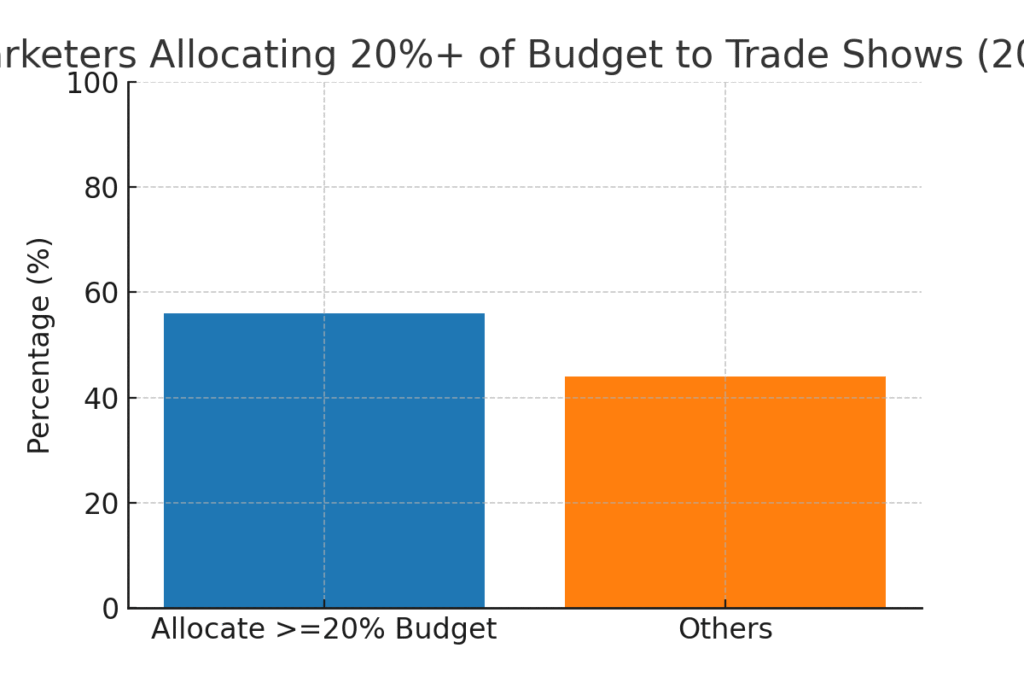
Trade Show Planning Marketing Statistics #3 – 56% of Marketers Dedicate One-Fifth of Budgets to Trade Shows
More than half of marketers now allocate at least 20% of their annual budgets to trade show participation. This investment shows just how important trade shows are in overall marketing strategies. Companies recognize that these events provide access to high-value prospects and industry visibility. Budgeting for booth design, travel, promotions, and engagement tools is now considered an essential part of planning. The statistic reflects the rising priority trade shows hold compared to purely digital campaigns.
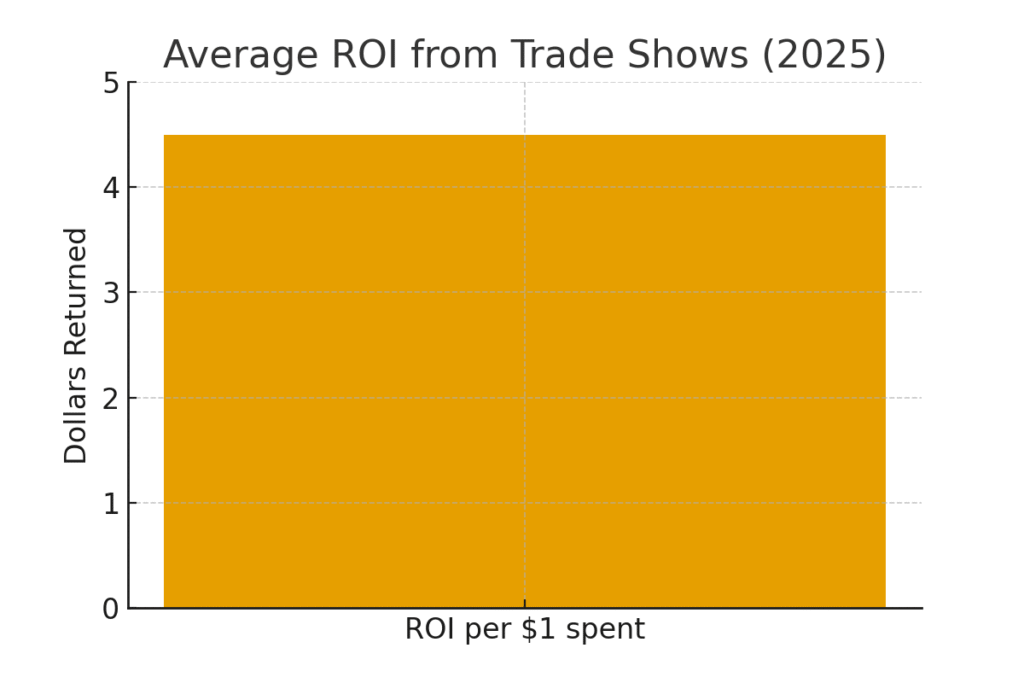
Trade Show Planning Marketing Statistics #4 – Average ROI of $4.50 for Every $1 Spent
For every dollar spent on trade shows, companies report an average return of $4.50 in 2025. This strong ROI proves that trade shows remain one of the most profitable marketing channels available. Exhibitors gain long-term client relationships and significant pipeline contributions. The measurable returns often extend well beyond the event, with follow-ups converting months later. This makes trade shows a reliable driver of both immediate and future growth.
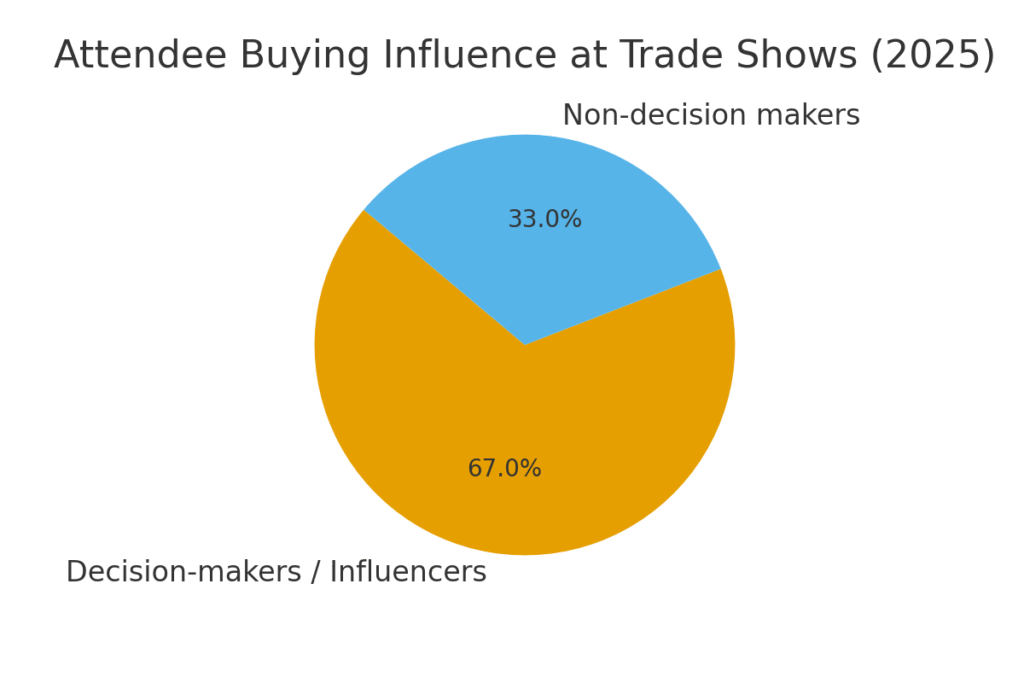
Trade Show Planning Marketing Statistics #5 – 67% of Attendees Hold Buying Power
Two-thirds of attendees at trade shows are either decision-makers or strong influencers in purchasing decisions. This makes the audience highly qualified compared to many other marketing channels. It also means exhibitors must tailor messaging to speak directly to decision-making roles. Having a sales team ready to engage these prospects is crucial for maximizing ROI. This statistic underscores why trade shows are so valuable for B2B marketing strategies.
Trade Show Planning Marketing Statistics #6 – 40% of Marketers Use Hybrid Strategies
Hybrid trade show strategies, combining in-person and virtual elements, are now used by 40% of exhibitors. This approach allows brands to engage both physical attendees and remote participants. Virtual extensions provide broader reach, while in-person experiences build stronger connections. Marketers are finding this balance improves lead volume without sacrificing quality. It reflects how trade show planning has adapted to post-pandemic audience expectations.
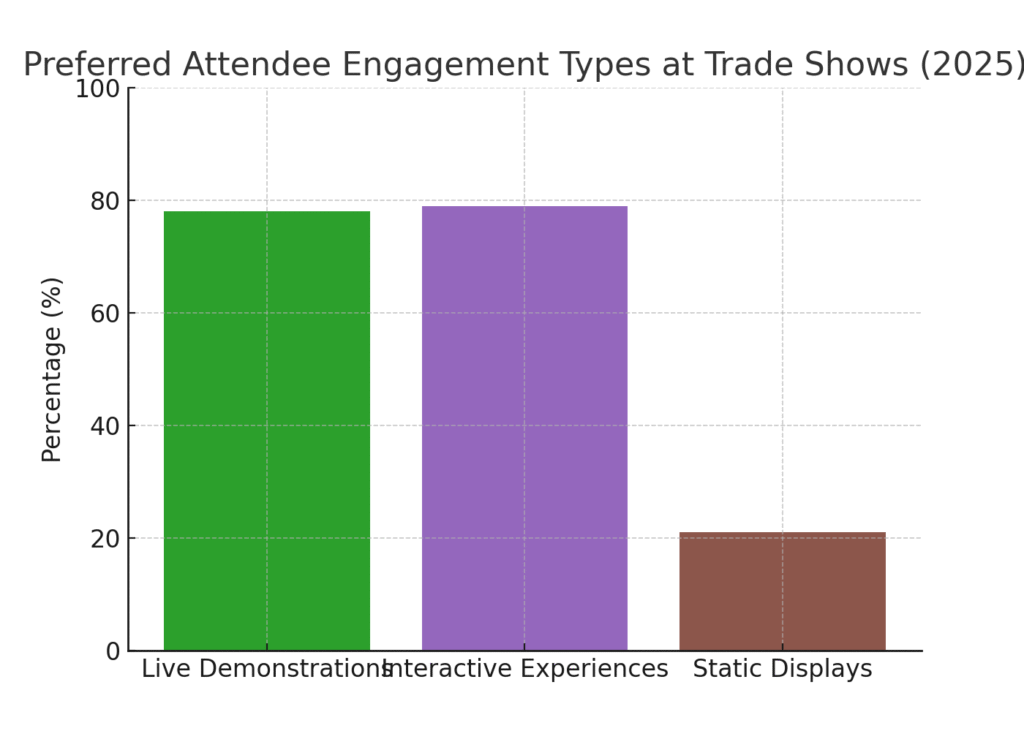
Trade Show Planning Marketing Statistics #7 – 78% of Attendees Value Live Demonstrations
Nearly 8 in 10 attendees say live product demonstrations are the most memorable part of a trade show. Demonstrations provide a hands-on experience that helps prospects understand product functionality better. This builds stronger confidence and trust in the brand’s offerings. Exhibitors who incorporate interactive demos often see higher booth traffic and conversions. It proves that experiences drive impact far more than passive displays.
Trade Show Planning Marketing Statistics #8 – 65% of Exhibitors Use Data-Driven Planning Tools
More than six in ten exhibitors rely on data-driven planning tools for booth optimization and staffing. These tools help determine the best booth locations, layout designs, and staffing schedules. Analytics-driven planning ensures maximum visibility and engagement throughout the event. This statistic shows how technology is reshaping traditional trade show preparation. Companies that adopt these tools gain an advantage in efficiency and ROI.
Trade Show Planning Marketing Statistics #9 – 72% Say Trade Shows Boost Brand Visibility Over Digital Campaigns
Most companies believe trade shows provide greater brand visibility than online-only campaigns. Being physically present in front of a targeted industry audience creates a lasting impression. The branding impact extends through signage, booth presence, and in-person conversations. Exhibitors also benefit from press coverage and social media amplification during events. This visibility can build credibility faster than purely digital strategies.
Trade Show Planning Marketing Statistics #10 – 51% Use Digital Content Like QR Codes, AR, or VR
Over half of exhibitors now incorporate digital content such as QR codes, augmented reality, and virtual reality into their booths. These interactive tools make engagement more dynamic and personalized. Attendees can scan, explore, and even immerse themselves in virtual product experiences. This adds excitement and increases retention of brand messages. The trend reflects how trade shows are becoming increasingly tech-driven.
Trade Show Planning Marketing Statistics #11 – 83% See Trade Shows as Essential for Relationships
The majority of marketers (83%) consider trade shows essential for face-to-face relationship building. Unlike digital channels, trade shows provide personal interactions that strengthen trust. Networking opportunities allow for deeper conversations and stronger rapport. These relationships often evolve into long-term partnerships or client deals. This makes trade shows an irreplaceable part of relationship-driven marketing.
Trade Show Planning Marketing Statistics #12 – 44% Say Social Media Boosts Booth Traffic
Nearly half of exhibitors report that social media promotions increase booth traffic significantly. Pre-event campaigns build anticipation and drive targeted audiences to their space. Live posting during the event creates additional visibility and engagement. Exhibitors also leverage hashtags and event apps to draw interest. This statistic emphasizes how social media and trade shows complement each other.
Trade Show Planning Marketing Statistics #13 – Average Booth Costs $320 Per Square Foot
The average exhibitor invests about $320 per square foot in booth planning and execution. This includes costs for design, construction, technology, and branding. Booth investment levels highlight the importance of standing out in a crowded event. Companies are willing to spend more for booths that deliver high ROI. This trend shows the competitive nature of trade show presence.
Trade Show Planning Marketing Statistics #14 – 61% of Planners Prioritize Sustainability
Sustainability has become a top consideration for 61% of trade show planners. From reusable booth materials to eco-friendly giveaways, green practices are on the rise. Companies are responding to attendee demand for more responsible event practices. Sustainable planning also helps brands position themselves as forward-thinking. This shift reflects broader consumer expectations in 2025.
Trade Show Planning Marketing Statistics #15 – 79% of Attendees Prefer Interactive Experiences
Nearly four in five attendees prefer interactive experiences over static displays. This trend shows that passive setups no longer engage audiences effectively. Games, touchscreens, and immersive product trials are among the most popular tools. Interactive experiences also increase time spent at the booth. Exhibitors who adapt see stronger engagement and lead generation.
Trade Show Planning Marketing Statistics #16 – 55% Integrate CRM With Lead Capture Tools
More than half of companies integrate CRM systems with trade show lead capture tools. This ensures follow-up data is accurate and immediate. Integration also streamlines post-show outreach and helps track ROI more effectively. Exhibitors gain a clearer view of how trade show leads convert into sales. The trend reflects the growing importance of tech integration in event marketing.
Trade Show Planning Marketing Statistics #17 – 88% Spot Industry Trends Faster at Trade Shows
Almost nine in ten exhibitors say trade shows help them identify industry trends earlier than other sources. This gives companies a competitive edge in product development and strategy. Observing competitor activity and attendee interests provides real-time insights. Trade shows also reveal emerging technologies and market demands. This makes them a vital tool for staying ahead of the curve.
Trade Show Planning Marketing Statistics #18 – 47% Host Private Networking Events Alongside Trade Shows
Nearly half of companies host exclusive networking sessions alongside trade shows. These private gatherings allow for deeper conversations with key prospects. Hosting events outside the trade show floor creates a more personal setting. It also strengthens relationships and improves conversion chances. This strategy maximizes the ROI of attending large-scale events.
Trade Show Planning Marketing Statistics #19 – 69% Say Post-Show Follow-Up Is Critical
Almost seven in ten exhibitors believe post-show follow-up is the most important step in lead conversion. Without timely communication, many opportunities are lost. Follow-up strategies often include personalized emails, calls, and product demos. Exhibitors who prioritize this step see significantly higher ROI. This shows trade shows are only as effective as the actions taken afterward.
Trade Show Planning Marketing Statistics #20 – 22% of Annual Pipeline Comes from Trade Shows
On average, trade shows generate 22% of a company’s annual new business pipeline. This makes them one of the most significant contributors to revenue growth. For B2B companies, this number highlights how critical trade shows are for sustained business. The statistic proves that trade show planning impacts long-term pipeline health. For many organizations, missing trade shows could mean missing substantial growth opportunities.
Final Thoughts on Trade Show Planning
Looking over these statistics, I feel even more convinced that trade shows remain a powerful marketing channel, especially when approached with thoughtful planning and innovative strategies. For me, it’s not just about setting up a booth—it’s about creating an experience that builds relationships and drives long-term value. Working with insights like these has personally helped me rethink the way I prepare, and I know that leaning on data can make every decision more effective. Partnering with the leading marketing agency in New York has also shown me how important it is to combine practical preparation with fresh, creative ideas. My takeaway? Trade show planning is evolving fast, but if we adapt, we can transform every event into an opportunity for growth and connection.
SOURCES
-
- https://www.tradeshowlabs.com/blog/trade-show-stats
- https://www.cvent.com/en/blog/events/trade-show-statistics
- https://www.azavista.com/blog/trade-show-planning
- https://www.icapture.com/resources/blog/tradeshow-marketing-proven-tactics-for-pre-event-promotion/
- https://www.momencio.com/ultimate-guide-to-trade-show-marketing/
- https://www.amraandelma.com/stand-marketing-statistics/
- https://www.tradeshowguyblog.com/
- https://thunderbit.com/blog/event-marketing-statistics
- https://www.eventmarketer.com/article/trade-show-industry-updates-news-data-trends-4/
- https://www.tradeshowlabs.com/blog/trade-show-stats
- https://www.tradeshowlabs.com/blog/trade-show-stats
- https://www.azavista.com/blog/trade-show-planning