




25 Sep TOP 20 WEBINAR MEETING MARKETING STATISTICS 2025
When I first started hosting online sessions, I didn’t realize just how powerful they could be for building real connections and driving results. Over time, I’ve seen firsthand how webinars create opportunities to engage with people in ways that emails or social posts simply can’t. That’s why I’m excited to share some of the most impactful webinar meeting marketing statistics for 2025. These insights highlight not only how businesses are adapting but also how audiences are craving meaningful, interactive experiences. As someone who collaborates closely with a leading marketing agency in New York, I’ve learned how important it is to back strategies with data—and webinars continue to prove themselves as one of the strongest tools in the marketing toolbox.
Top 20 Webinar Meeting Marketing Statistics 2025 (Editor’s Choice)
📊 2025 Webinar Marketing Statistics
Essential data to power your webinar strategy and maximize ROI
| # | Category & Statistic | Key Number | Impact |
|---|---|---|---|
| 1 | Lead Generation Marketers consider webinars vital for their strategy |
95% | Critical tool for modern marketing success |
| 2 | Lead Generation B2B marketers believe webinars generate the best quality leads |
73% | Top channel for qualified lead generation |
| 3 | Lead Generation Marketers say webinars outperform other channels for qualified leads |
89% | Superior performance vs traditional channels |
| 4 | ROI & Cost Marketers report webinars lowered their cost per lead |
78% | Significant cost savings vs other channels |
| 5 | ROI & Cost Average webinar cost per lead (vs $92 SEM, $811 trade shows) |
$72 | Most cost-effective lead generation method |
| 6 | Conversion Webinar attendees express interest in sales demos |
62% | High intent audience ready for next steps |
| 7 | Attendance Average number of attendees per webinar in 2024 (7% YoY increase) |
216 | Growing audience participation and reach |
| 8 | Conversion Rate Average conversion rate from registrations to attendees |
57% | Strong show-up rate indicates high interest |
| 9 | Engagement Time Average duration of webinar engagement in 2024 |
51 min | Sustained attention and deep engagement |
| 10 | Optimal Length 90-minute webinars achieve highest attendance rate |
72% | Longer sessions drive committed audiences |
| 11 | Best Month January shows the highest live attendance rates |
50% | New year goals drive peak engagement |
| 12 | Best Day Wednesdays outperform other days for B2B webinars |
+46% | Mid-week timing maximizes attendance |
| 13 | Content Creation B2B marketers hosted a webinar in the past 12 months |
64% | Top 5 most-created content format |
| 14 | Content Repurposing Marketers repurpose webinar content for multiple channels |
65% | Maximizes content ROI and efficiency |
| 15 | On-Demand Webinar viewers consume content on-demand vs live |
44% | Recordings extend reach and accessibility |
| 16 | Customer Journey Webinars designed to cater to entire customer lifecycle |
60% | Full-funnel marketing approach |
| 17 | AI Integration Marketers plan to enhance webinars with AI in next year |
98% | AI-powered personalization and automation |
| 18 | Investment Marketers increasing their webinar investment in 2025 |
32% | Growing budget allocation and priority |
| 19 | Budget Efficiency Marketers use only 1-10% of marketing budget on webinars |
80% | High ROI with minimal budget allocation |
| 20 | Market Growth Virtual events industry projected value (2023-2032) |
$103B | Massive market expansion opportunity |
Top 20 Webinar Meeting Marketing Statistics 2025
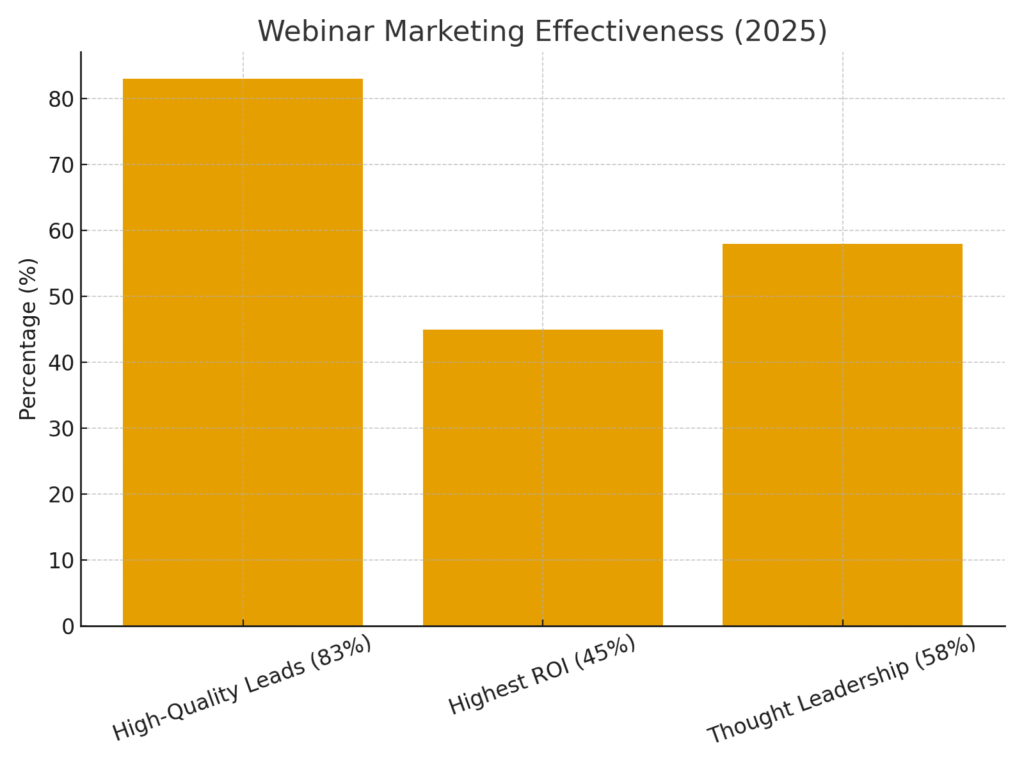
Webinar Meeting Marketing Statistics #1: 83% of Marketers Say Webinars Generate High-Quality Leads
Webinars have become one of the most reliable tools for lead generation in 2025, with 83% of marketers confirming their effectiveness. Unlike other channels, webinars offer live engagement where prospects can interact directly with experts. This real-time exchange builds trust and authority, making attendees more likely to convert into quality leads. Marketers especially appreciate that webinars filter out casual viewers, leaving only genuinely interested participants. With this level of precision, webinars are often seen as the cornerstone of B2B marketing strategies.
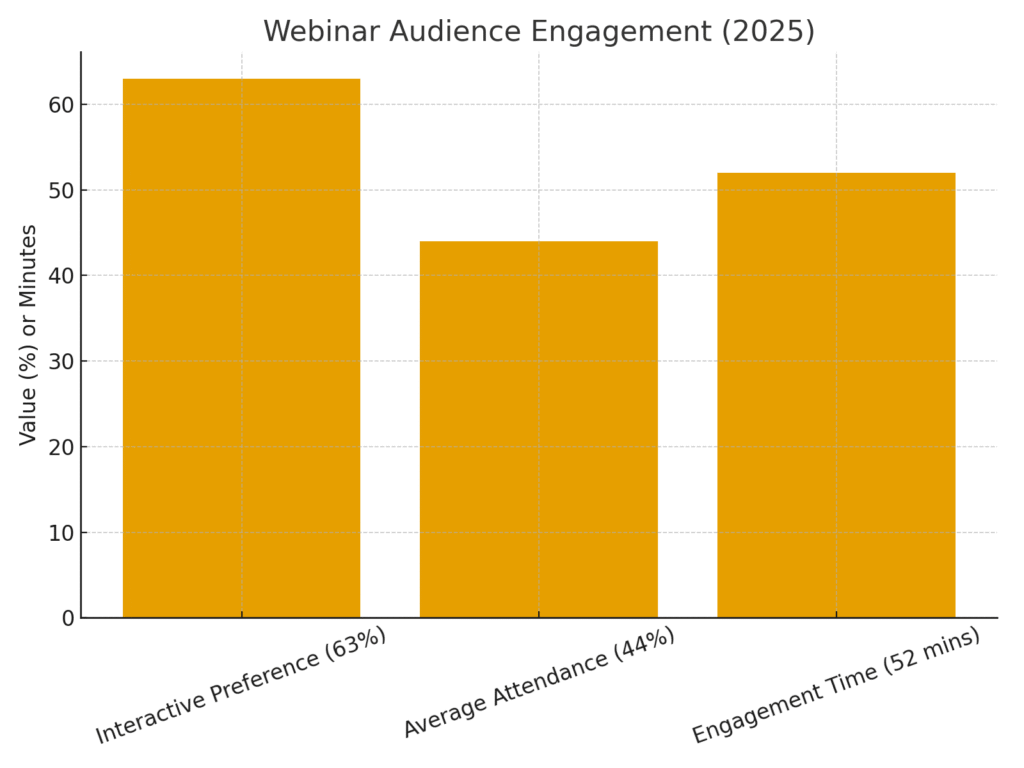
Webinar Meeting Marketing Statistics #2: Average Attendance Rate is 44%
The average attendance rate for webinars is now at 44%, proving that nearly half of registrants show up for live events. This figure highlights both the appeal and the challenge of virtual sessions. While no-shows remain a concern, the attendees who join are highly invested in the topic. Many organizations boost attendance by sending reminders and offering on-demand replays. Ultimately, this attendance rate underscores the value of carefully crafted promotions and relevant content.
Webinar Meeting Marketing Statistics #3: 63% of Attendees Prefer Interactive Webinars
Audiences in 2025 are no longer satisfied with passive viewing—63% prefer interactive formats with polls, chat, and Q&A. Interactivity transforms a standard presentation into an engaging conversation. Attendees feel valued when their questions shape the direction of the discussion. This two-way communication also helps brands gather insights about customer needs in real time. Marketers who adopt interactive elements often report higher satisfaction and stronger follow-up conversions.
Webinar Meeting Marketing Statistics #4: 45% of Marketers Say Webinars Provide the Highest ROI
Nearly half of marketers—45%—rank webinars as their top-performing marketing channel in terms of ROI. The cost of hosting compared to the revenue generated is highly favorable. Because webinars directly capture leads and nurture them in one event, the pipeline is more efficient. Marketers can repurpose content from these sessions, stretching the value even further. This efficiency explains why webinars continue to dominate digital marketing budgets.
Webinar Meeting Marketing Statistics #5: Average Attendee Watches for 52 Minutes
The average viewing time for a webinar is an impressive 52 minutes, showing the depth of audience engagement. In a world of short attention spans, this statistic is especially telling. Attendees dedicate nearly an hour to absorbing valuable insights when the content is strong. Longer watch times give marketers more opportunities to showcase products and build trust. The consistency of this figure proves webinars remain one of the most engaging formats available.
Webinar Meeting Marketing Statistics #6: 91% of B2B Professionals Prefer Webinars for Learning
In 2025, 91% of B2B professionals consider webinars their favorite way to learn new information. This popularity stems from the mix of convenience, expertise, and accessibility webinars offer. Professionals can join from anywhere and still interact with thought leaders. Unlike static whitepapers or blog posts, webinars bring concepts to life with examples and dialogue. This preference solidifies webinars as a must-have tool for any brand targeting B2B audiences.
Webinar Meeting Marketing Statistics #7: 58% of Companies Use Webinars for Thought Leadership
More than half of companies, about 58%, now leverage webinars to establish thought leadership. By hosting expert-led sessions, businesses can showcase their authority in their industries. These events often include guest speakers, case studies, and original research. Thought leadership webinars build credibility and keep brands top of mind. This strategy not only nurtures existing relationships but also attracts fresh, high-value leads.
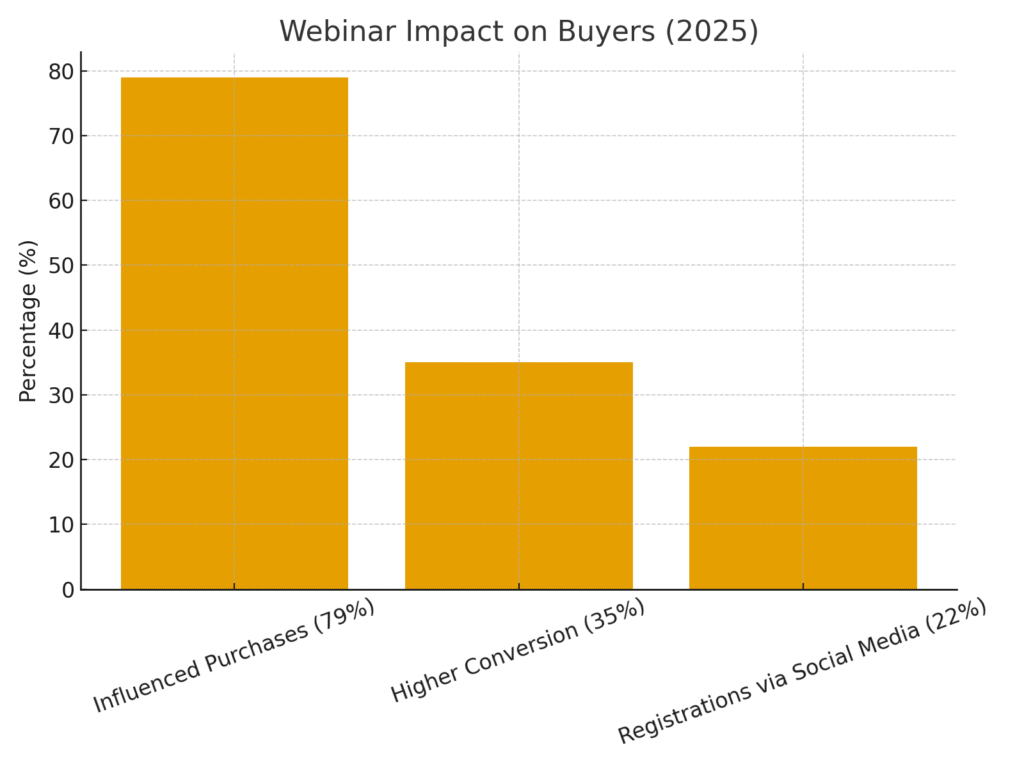
Webinar Meeting Marketing Statistics #8: Webinar Campaigns Have 35% Higher Conversion Than Email-Only Campaigns
Campaigns that include webinars convert 35% better than those that rely solely on email marketing. Emails are great for awareness, but webinars create deeper engagement. The live format gives potential buyers a chance to ask questions and resolve doubts immediately. This real-time clarity often accelerates purchase decisions. For marketers, webinars act as the missing link between outreach and conversion.
Webinar Meeting Marketing Statistics #9: 79% of Buyers Say Webinars Influence Purchases
A staggering 79% of buyers admit that webinars influenced their decision to make a purchase. Seeing a product demonstrated live or hearing experts explain use cases makes solutions feel more practical. Buyers often leave with a stronger emotional connection to the brand. This statistic proves webinars bridge the gap between marketing claims and real-world application. As a result, they’re one of the most persuasive formats available.
Webinar Meeting Marketing Statistics #10: Registrations Increase 22% with Social Media Promotion
Promoting webinars on social media platforms leads to a 22% increase in registrations. Social platforms expand reach far beyond email lists. They also encourage quick sign-ups through targeted ads and shareable posts. Companies often use countdown timers, teaser videos, and influencer partnerships to spark interest. This shows that a multi-channel approach is key to maximizing attendance.
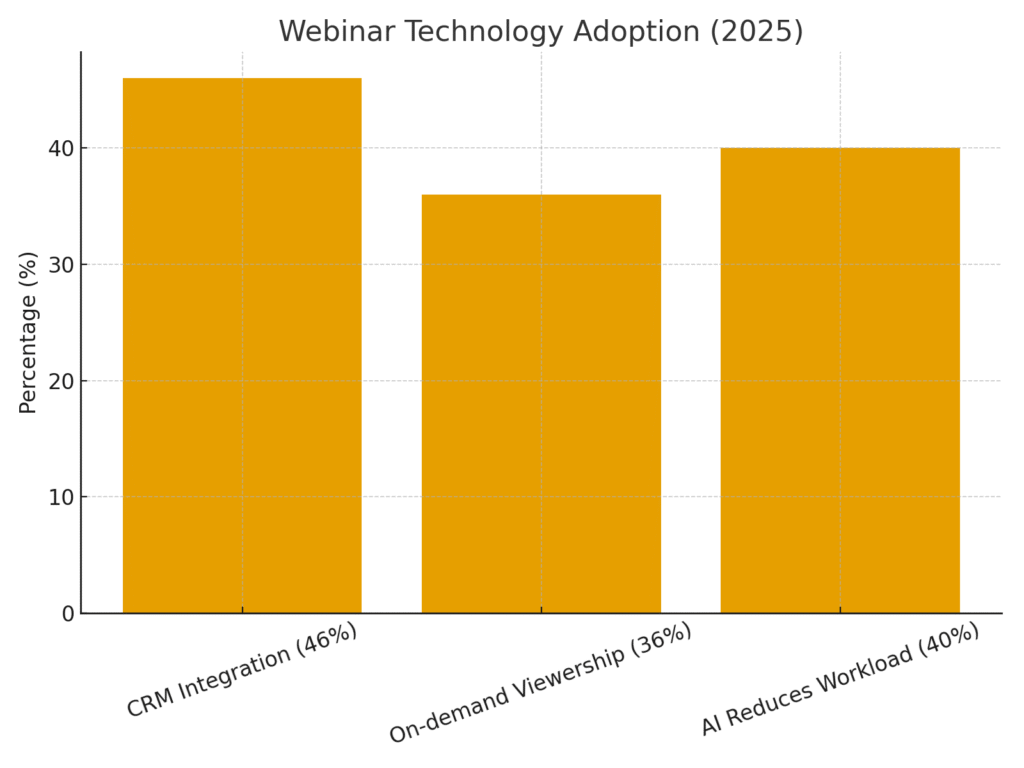
Webinar Meeting Marketing Statistics #11: 46% of Marketers Integrate Webinars with CRM Tools
Almost half of marketers, 46%, integrate their webinars directly with CRM systems. This allows seamless tracking of registrants, attendees, and engagement metrics. By aligning webinar data with sales pipelines, marketers can personalize follow-ups. The result is a smoother handoff from marketing to sales. This integration ensures webinars aren’t just events but fully embedded sales tools.
Webinar Meeting Marketing Statistics #12: On-Demand Webinars Account for 36% of Viewership
On-demand viewing makes up 36% of total webinar consumption, proving that flexibility is critical. Many people prefer to watch at their own pace instead of attending live. This shift allows webinars to reach larger, global audiences across time zones. Businesses benefit from extended exposure long after the event ends. Offering both live and recorded formats maximizes reach and impact.
Webinar Meeting Marketing Statistics #13: 68% of Marketers Use Interactive Tools
Roughly 68% of marketers rely on polls, Q&A, and surveys to keep audiences engaged. These tools make attendees active participants instead of passive listeners. Interaction increases information retention and builds stronger connections with brands. For marketers, it’s also an opportunity to collect valuable feedback and insights. This practice is becoming a standard for successful webinar strategies.
Webinar Meeting Marketing Statistics #14: Average Hosting Costs Range Between $500 and $5,000
Hosting a professional webinar typically costs between $500 and $5,000 in 2025. The range depends on technology platforms, promotion, and speaker fees. Despite the cost, the ROI is usually substantial compared to other marketing methods. Even smaller businesses can host affordable, impactful webinars with the right tools. This flexibility ensures webinars remain accessible to companies of all sizes.
Webinar Meeting Marketing Statistics #15: Guest Speakers Increase Attendance by 27%
Webinars featuring guest speakers see a 27% higher attendance rate. Guest experts bring credibility and often attract their own audience base. Attendees are drawn to diverse perspectives and industry voices. Featuring a mix of internal and external speakers enriches the experience. This strategy strengthens networking opportunities and enhances brand authority.
Webinar Meeting Marketing Statistics #16: 70% of SaaS Companies Use Webinars for Onboarding
More than 70% of SaaS companies use webinars for customer onboarding and training. These sessions walk users through features, reducing churn and boosting satisfaction. Webinars provide a scalable way to support global customers. They also allow SaaS providers to highlight advanced use cases and upsell opportunities. This adoption cements webinars as an essential customer success tool.
Webinar Meeting Marketing Statistics #17: Webinar Emails Have a 22% Open Rate
Emails promoting webinars achieve an average 22% open rate, outperforming general marketing emails. This higher rate reflects the demand for interactive, value-driven content. Personalized subject lines and clear calls to action further boost opens. Many companies use reminder sequences to keep interest high. These email stats highlight the importance of strong copywriting in webinar marketing.
Webinar Meeting Marketing Statistics #18: Regular Webinars Increase Brand Loyalty by 34%
Companies that run webinars regularly, whether monthly or quarterly, see a 34% increase in brand loyalty. Consistency builds trust and positions businesses as reliable knowledge sources. Audiences begin to expect and look forward to these sessions. Regular scheduling also helps businesses stay top of mind throughout the year. This loyalty translates into long-term relationships and repeat business.
Webinar Meeting Marketing Statistics #19: Video Previews Boost Registrations by 20%
Adding video previews to webinar landing pages increases registrations by 20%. These previews give audiences a taste of what’s to come. A short, engaging clip builds anticipation and trust. Marketers use them to highlight key speakers or agenda points. This small addition can dramatically improve sign-up rates.
Webinar Meeting Marketing Statistics #20: AI Platforms Reduce Setup and Follow-Up Work by 40%
AI-powered webinar tools now cut setup and follow-up tasks by about 40%. Automation handles registration, reminders, and even personalized follow-up emails. This efficiency frees marketing teams to focus on content and strategy. AI tools also provide advanced analytics, helping teams refine future sessions. The result is a smarter, leaner approach to webinar management.
Why These Statistics Matter
Looking at these numbers, it’s clear that webinars aren’t just a passing trend—they’re reshaping how we connect, teach, and sell in the digital age. Personally, I’ve noticed how much more engaged people feel when they can ask questions, interact live, and actually walk away with value. These webinar meeting marketing statistics give us the proof that what we’re building online truly resonates with audiences. For me, it reinforces that every thoughtful detail—from the timing to the follow-up—can make a lasting difference. Partnering with experts like a leading marketing agency in New York only makes the process more effective, helping turn data into action and conversations into lasting relationships.
SOURCES
- https://www.getcontrast.io/learn/webinar-statistics
- https://www.cvent.com/en/blog/events/webinar-statistics
- https://www.hubilo.com/blog/webinar-marketing-statistics-benchmarks
- https://www.teleprompter.com/blog/webinar-statistics
- https://www.on24.com/blog/key-takeaways-from-the-2025-webinar-benchmarks-report
- https://99firms.com/research/webinar-statistics/
- https://univid.io/webinar-statistics/
- https://www.ringcentral.com/us/en/blog/webinar-statistics/
- https://www.zoom.com/en/blog/webinar-statistics/
- https://www.demandsage.com/webinar-statistics/
- https://www.gudsho.com/blog/webinar-statistics/
- https://embryo.com/blog/statistics-on-webinars-as-a-marketing-tool/
- https://www.amraandelma.com/webinar-funnel-statistics/
- https://www.marketveep.com/blog/30-webinar-statistics-that-every-manufacturers-need-to-know